As an Amazon Associate, we earn from qualifying purchases. Some links on this site are affiliate links at no extra cost to you. Our recommendations are based on thorough research and editorial judgment.


3 Best Stainless Steel Weeders for Effortless, Long-Lasting Weed Removal

You’ll get reliable, low-effort weed removal with three stainless tools. Grampa’s Stand-Up Puller has a 45-inch bamboo handle and 4-claw steel head, giving standing leverage to extract roots without bending. The WORKPRO 12-inch hand puller is compact, 6.3 oz, for tight spots. WORKPRO’s two-prong weeder uses hardened stainless tines and a hardwood handle to pry deep dandelion roots without harming nearby seedlings. Pick 304–316 stainless for corrosion resistance, and follow basic care; practical tips await.
Key Takeaways
- Grampa’s Weeder Stand Up Weed Puller: 45″ handle and 4-claw head for back-friendly, chemical-free extraction in soft, recently watered soil.
- WORKPRO Weed Puller: compact 12″ lever tool with non-slip grip, ideal for tight spaces and precision pulling.
- WORKPRO Two-Pronged Dandelion Weeder: stainless two-prong fork for deep-rooted thistles and dandelions, best in loose soil.
- Choose 304 or 316 stainless steel and a sturdy shaft for corrosion resistance and long-lasting leverage in damp or salty conditions.
- Clean, dry, and lightly oil tools after use to prevent rust and preserve performance for effortless, long-term weed removal.
Grampa’s Weeder Stand Up Weed Puller with Bamboo Handle and 4-Claw Steel Head

Grampa's Weeder - The Original Stand Up Weed Puller Tool with Long Handle - Made with Real Bamboo...
- Old-School, Easy-To-Use Design That's Been Around Since 1913. Please Review Instructions on How To Use The Tool Properly & Watch Product Videos. It's Almost So Simple...
- Easy & Simple Weeding Tool That Saves Your Back & Knees With Grampa's 45" Stand Up Long Handle. Remove Weeds Without Bending, Pulling, Or Kneeling.
- Grampa’s Weeder Is The Original Garden Weeder & Has Been Removing Weeds & Their Roots For Over 100 Years. Strong & Durable Weed Puller That's Built To Last.
You may be interested


If you need a back-friendly puller for frequent weeding, this tool fits. You get a 45-inch bamboo handle and a 4-claw steel head, removing roots best in soft soil after watering or rain. Invented in 1913, its simple mechanism often comes to your rescue. You benefit from control without chemicals, safe for children and pets, made by an American family company in the Pacific Northwest, durable. Expect reduced performance on hard clay or rocky ground surfaces. Insert the claws into softened soil, use pressure and a straight pull to extract roots, then clear debris before storing to prevent rust.
Best For: gardeners who want a back-friendly, chemical-free tool for removing weeds and roots in softer, recently watered soil without bending or kneeling.
Pros:
- Long 45-inch bamboo handle and 4-claw steel head let you pull weeds standing up, reducing strain on back and knees.
- Effective at extracting roots in soft soil (best after watering or rain) for thorough weed control.
- Chemical-free, safe for children and pets, made by a durable, American family-owned company in the Pacific Northwest.
Cons:
- Performance drops on hard clay or rocky ground; may struggle to penetrate compacted soil.
- Steel head can rust if debris and moisture aren’t cleared before storing.
- Simple, manual design may be less efficient than powered or more specialized tools for large or stubborn infestations.
WORKPRO Weed Puller Tool Manual Hand Weeder for Gardening
Sale


WORKPRO Weed Puller Tool, Metal Leverage Base and V-Shaped Forks
- Effortlessly Eliminate Weeds: With our weed puller tool, you can easily remove weeds by simply resting the curved metal base on the ground and digging around the roots to...
- Robust and Sturdy: Made of high hardness polished stainless steel, the weed puller is extremely resistant to rust and corrosion, ensuring longevity and reliability. And...
- Ergonomic Soft-Grip Handle: Non-slip and comfortable plastic handle is gentle on hands and improves control while reducing hand and wrist fatigue, which is a good helper...

Gardeners who need precision in tight spaces will find this tool ideal. It features a metal leverage base and V-shaped forks, made from hardened stainless steel, 12 inches long and 6.3 ounces. You get a non-slip soft-grip handle that reduces hand and wrist fatigue. Place the curved base on soil, dig around roots, use the V-shaped forks to pry dandelions, thistles, roots without harming nearby plants. The polished stainless resists rust and corrosion, preventing bending during tough jobs. It includes a hanging hole and lanyard for storage, suits sidewalk cracks, narrow beds, and makes a gift for beginner gardeners.
Best For: Gardeners needing a compact, precise hand tool for removing weeds from tight spaces like sidewalk cracks, narrow beds, and around delicate plants.
Pros:
- Durable stainless steel V-shaped forks and leverage base for effective root removal without bending.
- Non-slip soft-grip handle reduces hand and wrist fatigue during use.
- Lightweight (6.3 oz), 12″ length with hanging hole and lanyard for easy storage and handling.
Cons:
- Manual tool requires kneeling or bending and can be tiring for large areas or heavy-duty weeding.
- Less effective in very compacted or rocky soil where insertion and leverage are difficult.
- Not ideal for removing very large or woody roots that may require heavier-duty tools.
WORKPRO Two-Pronged Stainless Steel Dandelion Weeder with Wood Handle
Sale

WORKPRO Dandelion Weeder Puller Tool with Wood Handle
- Easy to Use: The handheld weeder tool removes weeds from your garden, including stubborn weeds like dandelions and thistles. The stainless steel two-pronged fork cuts...
- Robust and Sturdy: The weed puller tool is made of high-hardness polished stainless steel that is extremely resistant to rust and corrosion, ensuring longevity and...
- Comfortable Wooden Handle: The optimum strength and premium grip allow for easy wrist movement and reduce hand fatigue while working. The weed puller tool is made from...
This two-pronged weeder is ideal for anyone tackling deep-rooted dandelions and thistles. You insert the high-hardness polished stainless steel fork into soil beside the taproot, then rock and pull to extract the entire root system. The hardwood handle gives a firm, ergonomic grip and reduces wrist strain. At 12.76 by 3.31 by 1.65 inches and 5.3 ounces tool weight, it’s compact for storage and precise work in beds, bonsai, or small plots. Rust resistance prevents corrosion, so it lasts season after season. You can hang it by the lanyard for storage, and its robust build won’t bend under leverage.
Best For: Gardeners and hobbyists who need a compact, durable tool to remove deep-rooted weeds like dandelions and thistles from beds, lawns, and small plots.
Pros:
- High-hardness polished stainless steel two-pronged fork efficiently extracts taproots without bending or breaking.
- Hardwood handle provides a firm, ergonomic grip that reduces wrist strain during use.
- Rust- and corrosion-resistant construction and compact size with hanging lanyard make it durable and easy to store.
Cons:
- Two-pronged design and compact length may be less effective in very compacted or heavy clay soils.
- Not ideal for large-scale commercial weeding or removing very large roots.
- Wooden handle requires occasional care to prevent weathering or degradation over long-term outdoor storage.
Factors to Consider When Choosing a Stainless Steel Weeder
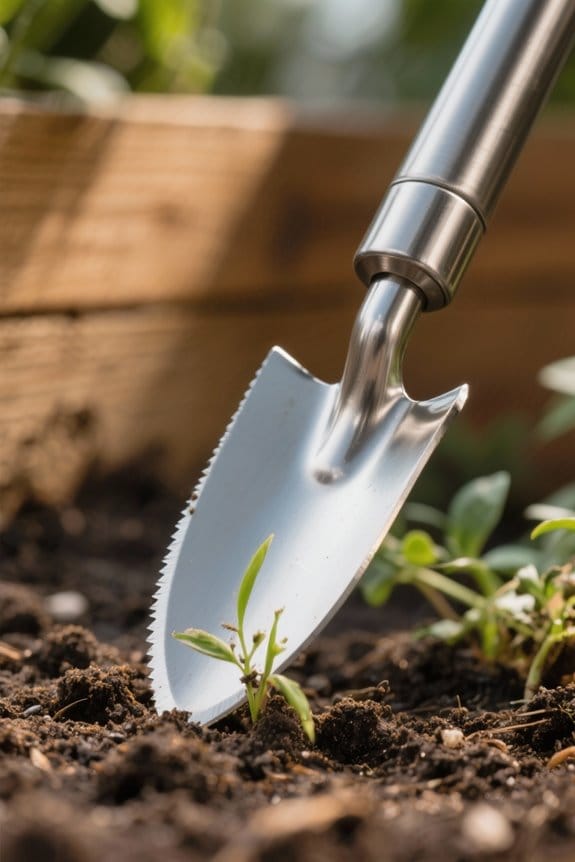
Consider material grade, tine shape, handle design, and length before you buy a weeder. Look for 304 or 420 stainless, two-prong or serrated tines, a one- to 1.25-inch cushioned grip, 12–18 inch hand length, and tested rust-resistant finishes. Prioritize corrosion resistance and leverage that suit your garden tasks.
Stainless Steel Grade
Stainless-steel grade matters when you’re choosing a reliable weeder for wet soil. Pick 316 for salty or damp beds, since it offers higher corrosion resistance than 304, prolonging service life in gardens. Check thickness too, for example 1.5–3 mm blades resist bending during levering. Hardness matters; higher-grade alloys keep edges sharp under repeated strain, measured by Rockwell HRC ratings or tensile strength in MPa. Prefer a polished finish to reduce rust and ease release. Low-carbon stainless construction balances strength with flexibility, so a 300-series weeder bends without fracturing under 100–200 N of lateral force. Higher-grade metal correlates with longer tool life through consistent use. When buying, look for stamped grade markings like 304 or 316, and ask for specs such as thickness, finish type, and hardness.
Tine/Prong Design
Three tine styles often determine how well a weeder extracts deep roots. A V-shaped tine increases leverage and grip around roots, allowing you to securely pry dandelions and taproots, and loosen compacted clods, without harming nearby plants or soil structure or microbiome. Two-pronged forks slice through tough root systems like thistles efficiently. Check tine spacing and thickness; wider tines cover more ground, while narrow 3 to 5 mm prongs let you work precisely between crowded seedlings and borders, and penetrate light compacted soil. Robust stainless steel tines resist bending under 50 to 200 newtons of prying force. Look for hardened or tempered 304 or 420 stainless construction, which prevents wear and maintains a sharp edge for repeated seasons of use, and simplifies sharpening when needed.
Handle Ergonomics
A well-designed handle cuts hand and wrist fatigue for long weeding sessions every season.
Choose soft-grip plastic or oiled wooden handles, which enhance control and prevent slippage when you tackle stubborn taproots and runners in wet soil.
Look for contours and comfort grips tailored to your hand shape, to reduce cramping.
A well-balanced handle distributes weight evenly, letting you apply steady pressure without wrist torque, improving extraction efficiency with less slip and effort overall.
Prefer handles about 10–15 cm in circumference for a secure, comfortable three-finger grip range.
Soft-grip materials and proper balance reduce required grip force, which eases hand strain and helps maintain neutral wrist alignment during prolonged weeding.
Test in hand before buying, and choose models with replaceable grips for long life.
Length and Leverage
One long handle can save your back and knees during weeding sessions. You should choose a handle of at least 45 inches, giving strong leverage and letting you stand while extracting deep roots. Effective leverage also depends on the fork angle and its pulling geometry. Pick a fork angle that converts handle push into an upward pull to remove roots cleanly. Long handles make accessing deep taproots and stubborn weeds much easier. You’ll get better precision when leverage reduces yanking, allowing targeted extraction that protects neighboring seedlings and delicate borders from damage. Consider shaft stiffness and grip placement for maximum control during use. Test tools in person, aiming for balanced length, leverage and maneuverability, so the stainless steel weeder confidently comes to the rescue.
Rust and Corrosion Resistance
When you pick a long-handled weeder, check how well the metal will resist rust. Look for high-hardness polished finishes, often rated by Rockwell hardness around HRC 40–50, that block surface wear and resist corrosion for garden use outdoors. Chromium content creates a passive layer that keeps moisture and oxygen away. This passive layer forms at the molecular level and prevents pitting, a localized form of corrosion common in damp soil and irrigation zones areas. Clean and dry tools after use to prolong the life of the finish. Remove soil and residues within 24 hours, store tools dry, and apply light oil for extra protection in coastal or acidic conditions when needed. Choose 304 or 316 stainless grades for reliable corrosion resistance in most gardens.
Frequently Asked Questions
How Do I Sharpen a Stainless Steel Weeder Blade?
You’ll sharpen a stainless steel weeder blade with a fine file. Clamp the tool in a vise to hold it steady, then file at a 20–30° bevel using even strokes, always keeping the angle consistent. Use a 400–600 grit diamond or ceramic stone for final honing. Move the stone along the edge away from your hand, several light passes, carefully check sharpness on paper, then strop with 0.5–1 micron compound.
Can These Weeders Be Used in Potted Plants?
Like a scalpel for soil, you can use them in pots. Pick a six- to eight-inch blade, with a three to eight millimeter tip, stainless steel, you’ll fit confined root balls. Insert vertically, then twist and lever to lift the entire taproot. Work slowly, brace the pot, and extract weeds two centimeters below the soil to prevent root tearing accidentally. Rinse, sharpen blades after use, store dry to prevent rust.
How Should I Clean and Sanitize After Use?
You should remove soil and loosen debris immediately after use always.
Wash with warm water and mild dish soap, scrub with a brush, then rinse thoroughly to remove residue and grit that can harbor pathogens.
Disinfect using 70% isopropyl alcohol or 1:9 bleach, contact for 60 seconds.
Dry with cloth, oil joints lightly with 1–2 drops of mineral oil to prevent corrosion, you’ll store securely indoors in a dry place.
Are Replacement Parts Available for Damaged Handles or Heads?
Wait — replacement parts might be available, but you’ll need exact measurements and specs. Many makers sell heads with 6 to 8 mm shanks and handles with M6 threads, often in 150 mm lengths. Check part numbers, photos, and warranty before you buy replacements. Measure shank diameter to 0.1 mm, verify thread pitch, keep receipts, and store spares in labeled containers, or order kits from authorized dealers online.
Do These Tools Come With a Warranty or Guarantee?
Yes, most come with a limited warranty covering defects for one year. Coverage usually includes stainless steel heads and welds, but excludes normal wear, blade dulling, accidental damage, and rust from neglect or misuse during storage. Some makers give you a 90-day guarantee or 30-day returns policy. Save receipts and photos, note serial numbers; replacement handles cost $8–$20, and they’ll assist with claims promptly during warranty or service periods often.


