As an Amazon Associate, we earn from qualifying purchases. Some links on this site are affiliate links at no extra cost to you. Our recommendations are based on thorough research and editorial judgment.


3 Best Driveway Weeder Tools to Keep Your Pavers Weed-Free

You’ll want three tools to keep pavers and joints weed‑free. A 48‑inch long‑handle weeder has a stainless blade that resists rust, holds an edge, and works in 0.08‑inch gaps. A compact stainless crevice tool fits tight joints but won’t cut thick roots. Choose the 3‑in‑1 telescoping scraper/brush: adjustable handles at 30.7, 44.5, and 58.6 inches plus a wire brush tackle moss and debris. Pick stainless steel with ergonomic grips, keep tools oiled; more guidance follows.
Key Takeaways
- Choose a stainless-steel crevice weeder for narrow joints; durable, rust-resistant blades cut surface weeds without bending or breaking.
- Use a 3-in-1 long-handle tool (scraper, triangular blade, wire brush) for standing use on patios, pavers, and stubborn moss.
- Prefer adjustable telescoping handles (30–58 inches) to reduce bending and fit different surface heights and user comfort.
- Check minimum gap compatibility (about 0.08 inches); very narrow or deep joints may still need manual or specialized tools.
- Maintain blades by cleaning after use, tightening twist connections, and oiling to prevent rust and preserve sharpness.
Crack Weeder Tool Set with Adjustable Handle for Removing Moss and Weeds in Driveways, Patios, and Pavers

Viscogrip Crack Weeder Tool Set, Manual Stainless Steel Crevice Weeding Tool with Adjustable Handle...
- [Dual-Tool Set for Maximum Efficiency]: The Viscogrip Crack Weeder Tool Set includes a crevice weeder and a moss and weed removal brush, designed to tackle both deep...
- [Durable Stainless Steel Construction]: Both tools are made with high-quality stainless steel components that ensure durability and corrosion resistance, offering...
- [Adjustable Handle for Versatile Use]: Featuring an adjustable handle, these manual tools provide a comfortable grip and can be easily extended to clean cracks and...
You may be interested


Homeowners and renters with paved driveways or narrow garden joints will find this set ideal. The set contains a crevice weeder plus a moss-and-weed brush, both fabricated from high-quality stainless steel, providing corrosion resistance, durability, and reliable outdoor performance in wet, salty, or humid conditions. You adjust the telescoping handle to reach joints up to forty inches. For weeds, insert the L-shaped blade at the base, pull along the joint to extract roots, use the stiff bristle brush angled at 45 degrees to sweep moss and debris. Avoid loosening soil or cutting thick roots; it’s not designed for that.
Best For: Homeowners and renters with paved driveways, patios, pavers, and narrow garden joints who need a durable toolset for removing moss, weeds, and debris.
Pros:
- High-quality stainless steel construction offers corrosion resistance and long-lasting outdoor durability.
- Includes both a crevice L-shaped weeder and a stiff-bristle moss-and-weed brush for comprehensive cleaning.
- Adjustable telescoping handle (extends up to 40 inches) provides comfortable reach for various surfaces.
Cons:
- Not designed for cutting thick roots or loosening soil—ineffective on heavy root systems.
- Intended for hard surfaces (driveways, patios, pavers); not suitable for general gardening or soft soil work.
- Handle extends only to about 40 inches, which may be insufficient for some users or hard-to-reach areas.
Crack Weeder 3-in-1 Long-Handle Adjustable Crevice Cleaning Tool with Stainless Steel Brush and Scrapers
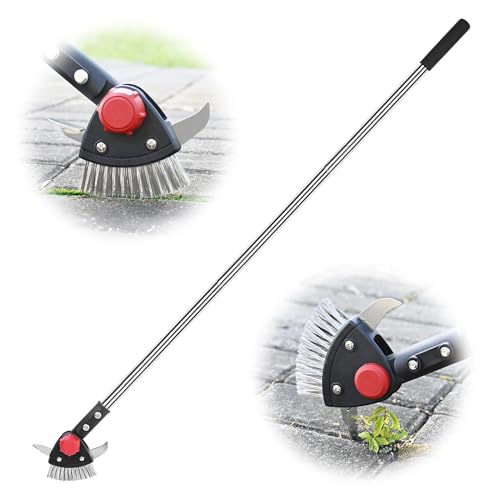
BARAYSTUS Crack Weeder Long Handle 3-in-1 Adjustable Crevice Cleaning Tool with Stainless Steel Weed...
- 3-in-1 Weeding Tool: Give your outdoor space a fresh look with our 3-in-1 manual crevice weeding tool. The curved scraper is perfect for cleaning narrow crevices. The...
- Sturdy and Durable: The cleaning blade is made of 0.08" thick stainless steel, which is sharp and rust-resistant, suitable for cleaning the fine and wide gaps between...
- Adjustable Handle: 3 in 1 Weed crack remover tool features a stainless steel handle that adjusts to three lengths: 30.7 inches, 44.5 inches, and 58.6 inches. Standing up...
You’ll find this 3-in-1 crack weeder ideal for gardeners who need a standing, low‑strain tool. It combines a curved scraper for 0.08‑inch minimum gaps up to 1.5‑inch depth, a triangular scraper for wider joints, and a stainless steel wire brush for moss and lichen. The 0.08‑thick stainless blade resists rust and stays sharp year-round with use. Adjustable stainless steel handle extends to 30.7, 44.5, or 58.6 inches, locks securely with threaded sections, and lets you work standing to reduce back and wrist strain comfortably. It assembles tool‑free by twisting, disassembles for compact storage, suits patios, sidewalks, and narrow gaps.
Best For: gardeners and homeowners who want a standing, low‑strain tool for cleaning weeds, moss, and debris from patios, driveways, and narrow crevices.
Pros:
- Adjustable stainless steel handle (30.7, 44.5, 58.6 in) with ergonomic grip reduces back and wrist strain and allows comfortable standing use.
- 3‑in‑1 head (curved scraper, triangular scraper, stainless steel brush) handles a variety of joints and surface debris.
- Durable 0.08″ stainless steel blade resists rust and stays sharp; tool‑free twist assembly and disassembly for compact storage.
Cons:
- Curved scraper requires a minimum gap of 0.08 in, so it won’t fit extremely narrow cracks.
- Maximum scraping depth of 1.5 in limits use in very deep joints.
- Stainless steel wire brush can be abrasive and may scratch delicate surfaces or finish.
Crack Weeder 48″ Long-Handle Crevice Weeding Tool
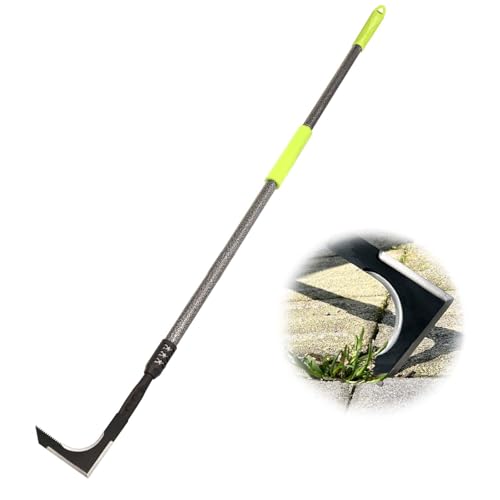
KLDOLLAR Crack Weeder, 48" Long Handle Crevice Weeding Tool with Soft Foam Grip, Stainless Steel...
- Effortlessly Remove Weeds and Moss: crevice weeding tool made of quality stainless steel, designed with an adjustable handle and features an upgraded blade with serrated...
- Sturdy Enough Handle: alloy steel handle is sturdy enough to resist bending or breaking, and rust resistant coating that provides excellent durability for long term use...
- Long-lasting Sharp Even Through Heavy Use: fully hardened L-shaped blade is made of reinforced stainless steel, which is sturdy and anti-rust. Weed tool will long-lasting...
If you deal with weeds in narrow joints and cracks, this tool’s for you. The 48″ Crack Weeder features a fully hardened L-shaped stainless blade with a sharp hook point to penetrate roots, plus a 48-inch alloy handle that’s rust-resistant and reliable for homeowners. You get three adjustable handle lengths and a soft foam non-slip grip overall. A twist-tube mechanism initiates operation effortlessly, the detachable handle allows compact storage, and the stainless construction cleans easily, while occasional oiling of connections prevents corrosion, extending tool lifespan. Use the hook to pry roots from paver joints, then pull upward.
Best For: Homeowners and gardeners who need an easy, ergonomic tool for removing weeds from narrow joints, sidewalks, pavers, and wall gaps.
Pros:
- Durable, fully hardened L-shaped stainless steel blade and rust-resistant alloy handle for long-term use.
- 48″ adjustable handle with soft foam non-slip grip reduces bending and hand fatigue.
- Twist-tube mechanism and detachable handle enable easy operation, compact storage, and simple cleaning/maintenance.
Cons:
- Designed for crevices and narrow gaps—inefficient on large, deep-rooted weeds or wide beds.
- Blade will eventually dull with heavy use and may require sharpening or replacement.
- Twist/tube connections or detachable parts can loosen over time and need occasional tightening/oiling.
Factors to Consider When Choosing a Driveway Weeder Tool
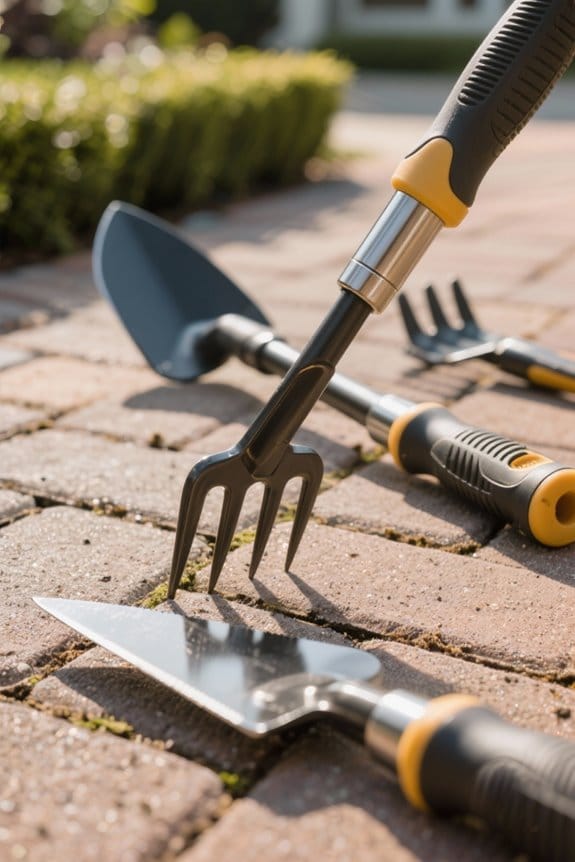
You’ll compare tool type, handle length, blade material, adjustability, and grip. Pick a 36–48 inch handle for standing work or a 12–18 inch hand tool for tight joints, and favor stainless or high-carbon (harder, edge-holding) steel blades for corrosion resistance and longer edge life. Look for telescoping shafts, adjustable blade angles, and cushioned, non-slip grips to reduce strain.
Tool Type
When choosing a driveway weeder, pick a type that matches the job. Crevice weeders, thin tools with 6 to 12 mm blades, let you reach deep cracks and extract stubborn roots down to the root mass, often effectively. Multipurpose models pair a metal scraper and stiff brush head. These handle moss, lichen, and sand buildup on pavers, using 2 to 3 interchangeable attachments, which saves time during a 30 to 45 minute maintenance session. Choose stainless steel components to resist rust and last for years. Look for ergonomic grips, non-slip rubber, and lightweight alloy bodies, which reduce wrist strain during prolonged use and improve control and hand comfort in tight spaces. Prefer blade widths of 6 mm to 25 mm, matching gap size accurately.
Handle Length
Choose a handle length that lets you stand upright while you work. Most handles range from about 30 to 58 inches, adjustable, which helps reduce back strain and fatigue during extended jobs. Adjustable handles let you customize length for comfort and reach. Set the handle so you can maneuver easily between narrow paver joints and cracks, for efficient extraction without excessive bending. Longer handles, 48 to 58 inches, are useful for taller users. Shorter handles near 30 to 36 inches improve control in tight spots, reduce leverage which can hamper precise blade placement. Choose an adjustable model if multiple people will use the tool. Test the length before purchase, stand naturally, lock the adjustment, then confirm you can extract roots while staying upright comfortably.
Blade Material
After you set the handle length, inspect the blade material closely for durability. Choose high-quality stainless steel to resist rust and retain a sharp edge, ensuring longevity under outdoor conditions and scraping. Look for a blade thickness of at least 0.08 inches. That 0.08-inch thickness offers the strength needed to penetrate deep cracks, improving leverage and cutting power when roots resist pull-out. Prefer reinforced blades for heavy use and sustained sharpness maintenance. Fully hardened construction prevents bending or chipping during rigorous scraping, so you won’t replace blades after a few seasons of use. Consider hooked or L-shaped tips for better root gripping performance. Hooks come to the rescue when uprooting fibrous weeds, increasing extraction success without relying on chemicals or excessive force or effort.
Adjustability Options
Although longer handles increase leverage, shorter ones improve control for varied tasks. Choose adjustable handles that range from about 24 inches to 52 inches for comfort and reach, allowing you to stand upright and reduce back strain during long sessions and cleanup. Aim for three discrete length settings to cover both narrow and wide gaps. A twist-tube mechanism can come to the rescue, letting you lock lengths reliably and quickly, even while wearing gloves outdoors and boots. Look for collapsible models that disassemble to under 20 inches for compact storage in sheds. Check weight specifications, keeping total tool weight between 1.5 and 3.5 pounds for balance, endurance, and manoeuvrability during extended use. Confirm materials at connection points to avoid wobble or corrosion over time.
Ergonomics and Grip
When you shop for a weeder, prioritize ergonomics and a secure grip. Look for soft foam grips 10 to 15 mm thick, non-slip texture, and cushioned zones that reduce hand strain during. Choose handles with curved shapes that match your natural wrist angle. Adjustable handle lengths, typically 32 to 48 inches, let you set posture and prevent back pain while working on driveways. A solid grip gives you better leverage for prying deep-rooted weeds. Pick textured rubber or molded finger grooves to improve control when inserting a 6 to 12 mm blade between pavers. Ergonomic curves come to the rescue during tough, repetitive tasks. Test the tool in hand before buying, aim for 300 to 400 grams balance, and guarantee comfortable reach for height.
Durability and Finish
Pick a weeder built from sturdy stainless or alloy steel. Look for a rust-resistant coating such as powder coat or hot-dip galvanisation, which prevents corrosion after repeated outdoor exposure. Reinforced blades with full-tang construction last longer and stay sharp. Aim for blade thicknesses of 2–4 millimetres, balancing rigidity and edge retention for heavy roots and compacted joint work conditions. Choose handles with soft foam grips to reduce vibration and fatigue. An adjustable handle, extending from about 70 to 120 centimetres, lets you set a comfortable posture for standing or crouching. Inspect welds and fasteners for solid bonding before purchase, and test grip. Prefer models with clear finish specifications and replaceable parts, so maintenance is straightforward.
Versatility and Attachments
Versatility matters for driveway weeders you plan to use year-round. Look for multiple attachments, like narrow crevice scrapers and stiff brushes for moss, to handle varied outdoor surfaces and lichen. Choose blade such as L-shaped or triangular scrapers for tight gaps. Adjustable handles, extending from about 30 to 48 inches, let you work comfortably on patios, paths, and steps and walls. Prefer tools with distinct heads for moss, lichen, and dirt removal. Also consider compact folding designs or quick-release shafts, which come to the rescue for transport and tight storage spaces indoors. Portability matters when you service driveways, courtyards, and distant garden beds regularly. Finally, verify attachment compatibility across models, and choose replaceable parts sized to standard 1/2- to 1-inch joint widths for pavers.
Maintenance and Care
Four basic maintenance steps will keep your driveway weeder working well. Clean stainless-steel blades and handles after each use, with a brush and mild soap, then rinse and dry each time. Inspect adjustable joints and detachable parts monthly for looseness or wear. Tighten screws or bolts to manufacturer torque specs, often about 2 to 5 Nm, or follow the manual for safety. Store tools indoors, in dry shed or garage, off the floor. Use light oil or silicone spray on metal after cleaning; this forms a thin protective layer, slowing corrosion and wear. Replace blades when thickness falls under 1.5 to 2.0 millimeters, often. Follow the manual for care details, keep spare parts organized, and perform maintenance after heavy use for reliable long-term operation.
Frequently Asked Questions
Are These Tools Safe to Use Around Pets and Children?
By Jove, yes, you can use them safely with precautions and supervision. Keep pets and kids at least 2 meters away during use, wear 18-gauge gloves, choose a 6-inch hand weeder for accuracy. Don’t spray herbicide when children play nearby, and avoid application within 48 hours. Store tools, glyphosate or acetic acid solutions in a locked cabinet at least 1.5 meters high, label containers clearly, and rinse equipment properly after.
How Should I Store the Tool to Prevent Rust?
Store the tool dry, raised so you won’t get rust. Wipe metal parts with an oily rag, use machine oil, then air briefly 10 minutes indoors before storing. Hang on a pegboard or keep in a sealed bin with desiccant. If the tool has a wooden handle, you’ll treat it monthly with boiled linseed oil to repel moisture and consequently slow cracking. Inspect for rust, sand with 120-grit and oil.
Can These Weeders Be Used on Gravel or Loose Stones?
Yes, you’ll use many weeders on gravel or loose stones safely today.
Choose narrow V-shaped or hooked blades about 8–10 mm thick, penetrating 2–4 inches to completely remove roots without overturning nearby small stones.
Use long 36–48 inch handle while working for leverage and safer posture.
Work slowly, scoop gravel back with a trowel, avoid heavy prying, and use a narrow auger or herbicide at label rates if roots persist.
How Often Should I Treat Driveways to Prevent Regrowth?
You should treat driveways every 4–8 weeks during active growing seasons, especially spring. Apply a pre-emergent at label rates in early spring, use post-emergents for existing weeds, and spot-treat with 1:100 glyphosate dilution as needed. Pull seedlings when they’re small, or use a flame weeder briefly at 300–400°C. Record dates, product names, concentrations like 1:100 ratios, and weather, then adjust timing to minimize reapplications, noting soil moisture and temperature conditions.
Are Replacement Blades or Brushes Available and Easy to Install?
68% of users replace parts; yes, you can buy blades and brushes. Most replacements are steel or nylon, sized 3/8-inch to 1-inch, with threaded posts or click-fit mounts widely available online today. You’ll use a 5 mm Allen key and a small torque wrench. Turn power off, loosen retaining screw, swap blade or brush, torque about 3–5 Nm per manual, verify operation; kits cost $5–$30 and include charts for models.


