As an Amazon Associate, we earn from qualifying purchases. Some links on this site are affiliate links at no extra cost to you. Our recommendations are based on thorough research and editorial judgment.

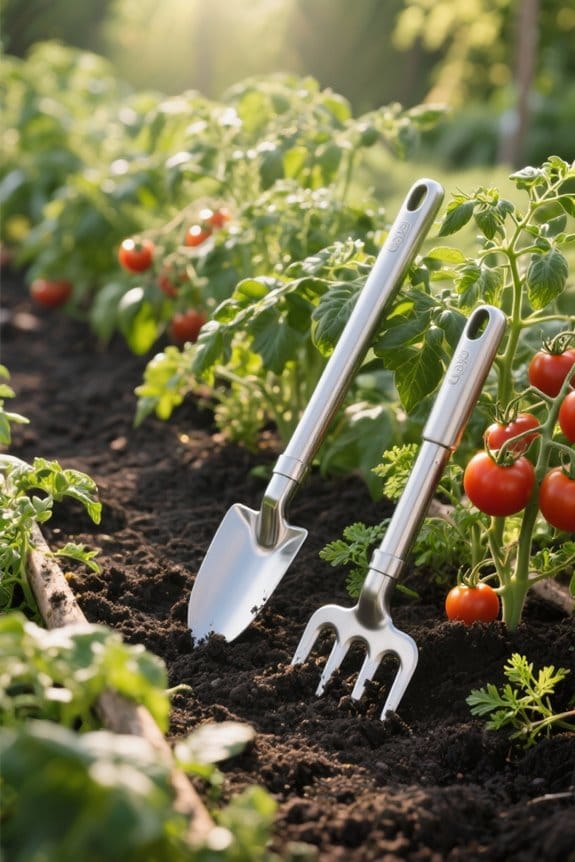
How Often Should You Weed Your Garden Throughout the Season

A gardener should weed regularly to protect plants from competition for water, nutrients, and light. Start weekly in spring, removing seedlings under 1–2 cm and applying 2–3 inches of mulch to suppress germination. In summer check beds once or twice a week, pull weeds under 2 inches and water deeply about 1 inch weekly. In fall remove weeds before seed set and add 2–3 inches of mulch. Winter checks every 2–4 weeks target crowns and early sprouts, and more tips follow.
Key Takeaways
- Start weekly weeding in spring as soil warms to remove seedlings before they set seed.
- Check beds at least once a week in summer, more after heavy rain, removing weeds under 2 inches.
- Spend 10–20 minutes weekly maintaining beds to prevent weed buildup and reduce long-term labor.
- In fall, remove weeds before seed set and extract roots 2–4 inches deep to limit regrowth.
- Use winter months for targeted removal of shallow crowns every 2–4 weeks and refresh 2–3 inches of mulch.
Why Regular Weeding Matters for Plant Health
You may be interested


Because weeds compete directly with desired plants for scarce resources, removing them regularly improves plant health and yield. Regular weeding, at least once weekly during active growth, limits competition for water, nutrients, and sunlight, which supports stronger seedlings. Early removal of young weeds prevents seed set, reducing future populations by as much as 70 percent over a season. Practical weed control includes hand-pulling when soil is moist, hoeing at 1–2 cm depth to sever roots, and mulching with 5–10 cm organic material to suppress emergence. Using stand-up weed puller tools can significantly reduce back and knee strain while enhancing efficiency in weeding tasks. Weed management plans should record dates, methods, and affected areas, to track progress and adjust timing. Consistent intervention lowers plant stress, increases biomass and fruit set, and yields measurable improvements in crop performance.
Seasonal Weeding Schedule: Spring Tasks and Timing

When spring soil warms and daylight lengthens, gardeners should begin a weekly weeding routine to catch seedlings before they become established. Pull young annual weeds by hand or use a hoe, removing roots to prevent regrowth, and work when soil is moist for easier extraction. Apply 2–3 inches (5–8 cm) of organic mulch to block light and suppress weed germination at planting beds. Inspect beds after rain or warm spells, check for 1–2 cm sprouts, and remove weeds promptly to prevent seeds forming. Use a 6–8 inch (15–20 cm) hand trowel for spot removal near desirable plants. Consistent weekly effort in spring will greatly reduce overall weed pressure, and help prevent weeds from seeding later in the season. Consider using ergonomic features in your weeding tools to reduce user strain during prolonged use, enhancing your gardening comfort and efficiency.
Summer Weeding: Frequency and Hot-Weather Tips

Garden beds should be checked at least once a week, sometimes twice after heavy rain, because warm temperatures speed weed growth and competition for water. Inspect beds for young weeds under 2 inches tall and remove them before they flower, this prevents seed set and future infestations. Use hoeing or hand pulling, aiming to disturb soil minimally to avoid exposing new weed seeds. Apply 2–4 inches of organic mulch to retain moisture and suppress weeds, keep mulch 1–2 inches from stems to prevent rot. Water deeply and infrequently, about 1 inch per week, to favor desired plants and control weeds that prefer frequent surface moisture. Additionally, using ergonomic handle designs in your gardening tools can enhance comfort and reduce hand fatigue when weeding in the summer heat.
Recommended Products
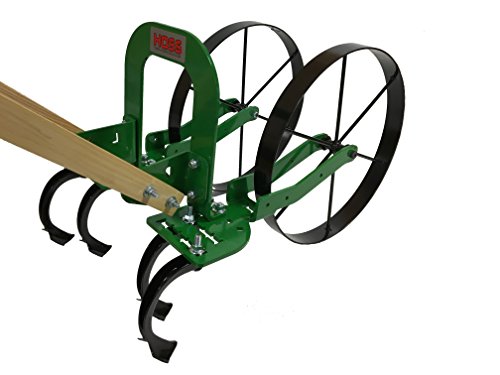
PROVIDES TALLER CLEARANCE FOR STRADDLING LARGE PLANTS - 15" Clearance for Straddling Potatoes, Beans, Corn and Many Others!
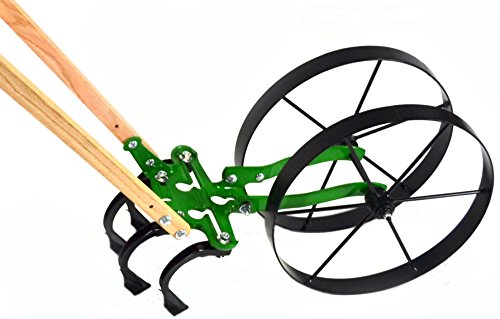
CULTIVATE AND WEED YOUR VEGETABLE GARDEN - Uses shallow cultivation to remove weeds without disturbing soil structure.
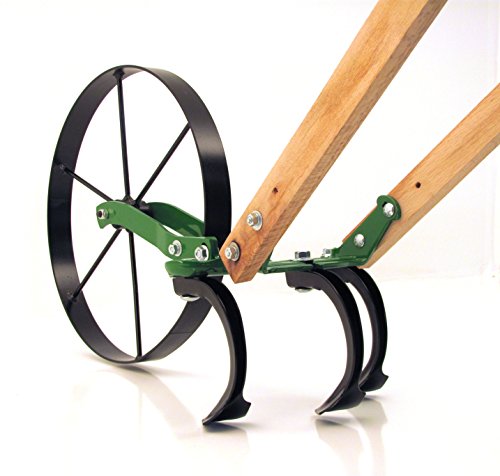
THE ULTIMATE GARDENING TOOL - Keep your garden weed-free with shallow cultivation that doesn't harm soil structure.
Fall Weeding: Preparing Beds for Dormancy

As temperatures cool, gardeners should tackle fall weeding to limit next spring’s workload. Fall weeding focuses on removing weeds before they set seed, cutting perennial tops to disrupt regrowth, and clearing debris that shelters weed seeds over winter. Remove weeds by hand or with a trowel, extracting roots 2–4 inches deep for taprooted species like dandelion. Mow or cut back perennials to 4–6 inches to reduce biomass. Rake debris and bag it to avoid redistributing weed seeds. After cleaning beds, apply mulch 2–3 inches thick, such as straw, shredded bark, or composted leaves, to suppress any remaining weed seeds and protect soil health by reducing erosion and conserving moisture. Using tools with ergonomic features can significantly reduce physical exertion, making the weeding process more efficient and comfortable.
Winter Weeding: When Cold Offers an Advantage

Because cold halts much top growth, winter provides a good window for targeted weeding tasks. Gardeners should use winter months for hand weeding of shallow-rooted perennial weeds, removing crowns with a 2–3 inch (5–8 cm) soil lift to prevent regrowth. Tools should be clean, narrow trowels and a weeder with a 3–4 mm blade gap for precision. High-quality stainless steel tools are preferred for their rust resistance and durability, ensuring that your weeding efforts are both effective and long-lasting. Mulch, applied 2–3 inches (5–8 cm) thick, comes to the rescue by insulating soil and suppressing any emerging seedlings. Inspect beds every 2–4 weeks for early germinating annuals and remove them before they set seed. This approach to weed management reduces spring workload, protects young plants, and promotes healthier beds, setting clear priorities for the upcoming growing season.
Dealing With Annuals vs. Perennials: Different Approaches
When gardeners identify whether a weed is an annual or a perennial, they can choose the right tactics and save time. Annual weeds complete a life cycle in one season, so remove seedlings weekly in spring and summer to stop seed set. Hoeing every 7–10 days, 1–2 cm depth, reduces weed growth effectively. Perennial weeds regrow from roots, and require digging to 5–10 cm depth to excavate crowns and rhizomes. Persistent hand-pulling with a trowel and root inspection improves weed removal success. Use dense plantings, spaced 15–30 cm apart depending on species, to create vegetation competition and suppress both types. Identify species first to avoid unnecessary effort, then match tactics: frequent surface control for annual weeds, deeper root work for perennial weeds. Adding sharp, narrow blades to your toolkit can assist in accessing tight spaces and ensuring invasive weeds are targeted without disturbing surrounding plants or soil.
Quick Weeding Methods for Busy Gardeners
If gardeners are short on time, a few targeted tactics can keep beds tidy with minimal effort. A sharp hoe used at a 30–45° angle cuts annual weeds at the soil surface, removing tops before seed set, ideal for 10–15 minute weekly sessions. Hand weeding remains essential for deep roots; a hori hori knife or 6–8 inch trowel extracts taproots efficiently, reducing regrowth. Mulching with 2–3 inches of organic material suppresses many seedlings and conserves moisture, coming to the rescue between intensive pulls. Keep a 1–2 gallon portable container for collected weeds to avoid walking back to a compost pile, saving time. These quick weeding methods balance speed with effectiveness, making weeding tasks manageable during peak growth. For those dealing with especially stubborn weeds in tight spaces, utilizing specialized crevice weeder tools can enhance precision and efficiency.
Recommended Products
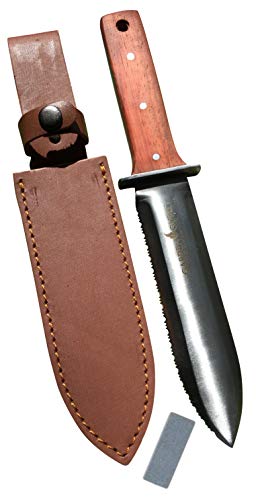
A Japanese gardening hori hori knife is one of the best gardening gifts for gardeners. This weeding knife is also great for cutting, digging, sawing, planting, probing, transplanting and slicing - Not much more can be expected from your garden equipment. Includes sharpening stone and thick leather sheath.

Full Metal Construction: Features full metal design with complete quenching treatment and includes a genuine leather sheath for protection and storage

Ultra-durable Felco pruners with forged aluminum handles and replaceable steel blades for precision gardening.
Preventative Strategies to Reduce Future Weeding
A few well-chosen preventive steps can cut future weeding time dramatically. Mulch 1–2 inches around established plants to block light and reduce weed seed germination, using bark, straw, or composted organic matter. Hand-pull small weeds weekly before they set seed, which prevents new populations from becoming established and lowers labor later. Plant densely or use cover crops like clover to create competition, which suppresses weeds naturally and improves soil nitrogen. Till in late fall to disrupt perennial weed cycles, turning soil 6–8 inches deep so roots are exposed to frost and decay. Consider landscape fabric under paths to limit weeds, while allowing water through. Combine these preventative strategies systematically for a measurable way to reduce weed pressure. For additional garden projects, CARGEN Neon Gaffers Tape can be used for labeling purposes and can be removed without leaving residue, ensuring easy organization and maintenance.
Tools and Techniques That Make Weeding Easier
Although simple tools can transform a tedious chore into a quick task, choosing the right implement matters. A hori hori, patio knife, and long-handled trowel are recommended; a hori hori blade of 6–8 inches cuts roots, while a trowel with a 12–18 inch handle reduces bending. Hoeing comes to the rescue for annual weed control, using a draw hoe 1–2 inches below soil to sever seedlings. Mulch, 2–4 inches of bark chippings or straw, blocks light and limits weed growth, while improving soil. For spot treatment, boiling water or 10–20% vinegar applied carefully kills foliage as contact herbicides. Establish weekly, 10–20 minute sessions for routine removal; consistency reduces labor and keeps beds ready for planting. Consider using ergonomic handles to reduce hand and wrist strain, allowing for longer working sessions.
Recommended Products
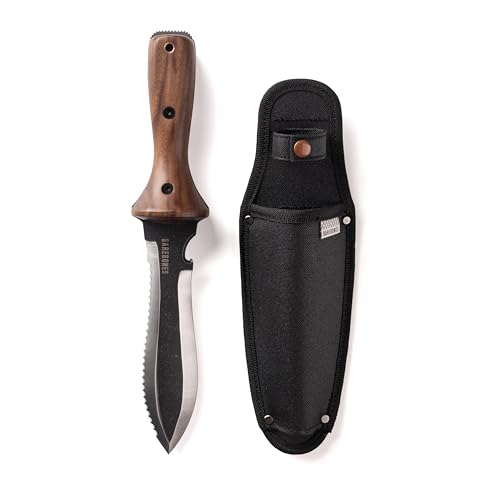
Stainless Steel: Our hori hori garden knife features a durable and heat-treated 4CR13 stainless steel double-edged blade with straight and serrated edges, securely fastened through the tang for use in the backyard, camping, bush-crafting, or anywhere you need it. The through tang design of this garden knife is the most durable manufacturing method, ensuring the blade never becomes loose or separates from the handle

FULL TANG STAINLESS STEEL HORI HORI KNIFE: The K245 ZenBori features full tang construction, meaning one continuous piece of stainless steel runs from blade tip to handle base. This eliminates flex, weak joints, and failure points, delivering the same structural integrity found in professional cutlery and ensuring reliable performance through years of demanding garden work.
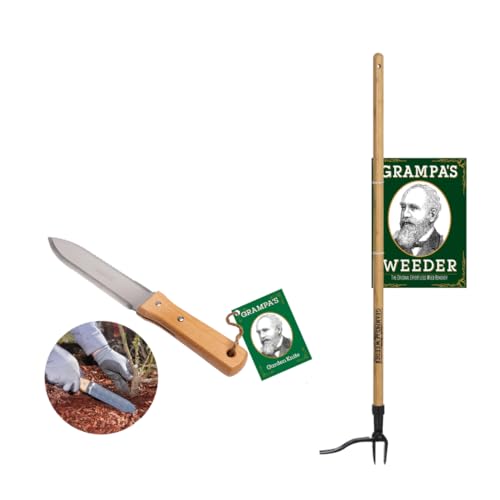
COMPLETE GARDENING SOLUTION: Includes Grampa's Weeder for easy weed removal and a versatile 7" Hori Hori Garden Knife for digging, planting, and more.
Frequently Asked Questions
How Often Should I Weed a Garden?
They should weed weekly, increasing frequency in spring and summer; effective weeding techniques and seasonal weeding form core garden maintenance. Emphasizing weed prevention and organic methods reduces seed spread and eases long‑term upkeep.
What Is the 70/30 Rule in Gardening?
Like a captain charting seas, the 70/30 rule in gardening directs 70% effort to desired plants and 30% to weed management strategies, highlighting ideal weeding time, organic weed control, garden health tips, and seasonal weeding benefits.
Is It Worth Pulling Weeds in the Fall?
Yes. He notes fall gardening tasks like pulling seasonal weeds enhance weed prevention, support soil health, and simplify garden maintenance by removing annuals and weakening perennials, reducing spring pressure and improving overall bed readiness for next season.
Does Pulling Weeds Cause More Weeds?
Yes — evidence shows improper pulling can provoke weed growth by disturbing soil and seed banks, but careful weeding techniques, mulching benefits, organic methods, dense planting and attention to soil health reduce resurgence and long-term infestation.


