As an Amazon Associate, we earn from qualifying purchases. Some links on this site are affiliate links at no extra cost to you. Our recommendations are based on thorough research and editorial judgment.


LED Vs Fluorescent Vs HID Grow Lights: Which Technology Is Best for Your Plants

LEDs suit most growers due to high efficacy, low heat, and long life. They deliver >2.5 µmol·J⁻¹, adjustable spectra, and 50,000-hour lifespans, good for veg and bloom. Fluorescents like T5 work well for seedlings and clones, placed 1–2 inches above plants, but last 10–20k hours and lack deep penetration. HID (HPS/MH) gives 400–1000 µmol·m⁻²·s⁻¹ for dense canopies, but adds heat and ballast needs. More guidance follows for specific crops and setups.
Key Takeaways
- LEDs offer the best energy efficiency and lifespan, yielding long-term cost savings and lower heat than HID or fluorescent lights.
- Fluorescent (T5) lights are inexpensive and ideal for seedlings and propagation but lack intensity for vigorous flowering stages.
- HID (HPS/MH) produces very high PAR and deep canopy penetration, making it ideal for large flowering/fruiting crops despite higher heat.
- Choose spectrum: blue-rich lights for vegetative growth, red-dominant (660 nm) for flowering—LEDs provide easiest spectrum tailoring.
- Match system to scale and budget: fluorescent for small starters, LEDs for energy-conscious growers, HID for maximum flowering yield in large spaces.
How Light Affects Plant Growth: Spectrum, Intensity, and Duration
You may be interested


Although light quality and quantity may seem interchangeable, they play distinct roles in plant development. Blue light favors vegetative growth, promoting compact leaves and strong stems, while red light triggers flowering and fruiting, often used in a 660 nm band for bloom cycles. Intensity matters; HID lights deliver high intensity (up to 1000 µmol·m⁻²·s⁻¹ PAR) suited for large canopies, whereas LED grow lights provide targeted output with efficiencies above 2.5 µmol·J⁻¹ and lower heat. Fluorescent lights like T5 are effective for seedlings, with low heat allowing 2–5 cm proximity. Photoperiod controls stage changes; seedlings need 14–24 hours light, flowering often requires 12 hours dark. Full spectrum fixtures combine blue and red peaks for balanced plant growth. To enhance indoor gardening, grow light timers can automate lighting schedules, ensuring that plants receive the optimal light exposure for their growth stages.
LED Grow Lights: Benefits, Drawbacks, and When to Use Them

LED grow lights are a practical choice for many growers. They offer energy efficiency, using up to 50% less electricity than HID systems, and often last near 50,000 hours. Grow lights with a full spectrum let growers tailor output for the seedling stage, vegetative growth, and flowering plants, improving plant health and yield. Initial cost is higher than fluorescent fixtures, but lower energy use yields operational savings, often paying back the investment in about 18 months. LEDs produce reduced heat output, allowing fixtures to be placed closer to canopy, typically 6–12 inches for small panels, which cuts cooling needs. Drawbacks include upfront price and variable quality; choose reliable drivers, watts-per-square-foot ratings, and manufacturers with clear PAR data. When selecting LED grow lights, consider dimming features that allow for control over light intensity (0-100%) to accommodate different plant growth stages.
Recommended Products

PREMIUM Foldable 1500W- LED lights specialty manufactured by Sinowell with Samsung LM301 diodes for FULL spectrum light, ideal for ALL STAGES of growth. Large 48x48 footprint for the best light spread and prenetration. Silent functions mean that no fans cause noise pollution in your home. 1500w output incentivizes low cost for the home and runs 50% less energy than “blurple” and other leading LEDs. UL, CE, ETL Certificated.

🌞 TRUE SUNLIKE SPECTRUM – The first LED grow light engineered to replicate a real CMH-style sunlight spectrum. Balanced White, Green, Dual Red (640nm + 660nm), Far Red, and optional UV deliver unmatched canopy penetration and plant performance.

Features Samsung LM301H EVO LEDs each rated at 3.14 µmol/J PPE, the highest efficiency of LM301B, LM301H, and Bridgelux 3030 chips.
Fluorescent Grow Lights: Best Uses and Practical Tips

After covering the strengths and limits of LED fixtures, attention shifts to fluorescent options for early-stage growing. Fluorescent grow lights, particularly T5 bulbs, come to the rescue for seedlings and propagation because of low heat output, allowing placement 1–2 inches above plant tops to prevent stretch. They are budget-friendly, and tube types need ballasts or shop-light fixtures while CFLs fit standard sockets for small spaces. Keep light placement close; too high causes light stress and leggy growth. Fluorescents have a 10,000–20,000 hour lifespan, though home use often totals under 1,000 hours. They work poorly for extended vegetative stage and flowering, so transfer plants to stronger systems when canopy density or flowering intensity increases. For those seeking energy-efficient alternatives, LED grow lights can cut electricity costs by 50-70% compared to traditional HID systems.
Recommended Products


Ideal for house plants, seedling starts and flowers
HID Grow Lights (HPS, MH, CMH): Power, Efficiency, and Applications

When growers need intense light for flowering and larger canopies, HID systems come to the rescue because they offer very high light output and deep canopy penetration. HID grow lights deliver 400–1000+ µmol·m⁻²·s⁻¹ at canopy level, useful for flowering and fruiting crops needing strong photosynthetic photon flux. HPS bulbs provide the best efficiency, about 1.6–2.5 µmol·J⁻¹, with strong red–orange output. MH lamps emit more blue light for vegetative growth, roughly 400–1000 W options. CMH (also LEC) gives balanced spectrum and higher longevity, often 315–630 W. These systems require additional equipment, such as ballasts and reflectors, increasing power draw and heat. Applications favor larger rooms and commercial tents, where high light and deep penetration offset maintenance and replacement costs. Unlike HID systems, LED grow lights are more energy-efficient and offer adjustable light settings, making them a popular choice for smaller spaces and energy-conscious growers.
Recommended Products

FDA-CLEARED HAIR RESTORATION SOLUTION: FDA cleared, REVIAN Lyte is an advanced hair restoration device, bringing all the power of Revian’s proven LED technology into a streamlined, accessible package for everyday use at home

【High PAR Value Saltwater Aquarium Light】Scientifically engineered to keep the PAR/Lumen Output and Coverage balanced. Perfect fit for depth 30" tank. Suggest for 72-96inch hard&soft coral SPS LPS tank.

[Key Overview] · 2026 New Upgraded! Higher PAR, Brighter & More Vivid Colors · Ideal for premium home reef tanks with superior light uniformity · Fits 24–96” L, 24” W, 24–32” D tanks,Rimless & Rimmed Compatible · APP Control: professional presets for beginners, full customization for experts · clean modern white finish, rearward sliding mounting arm, tool-free installation
Choosing the Right Light by Plant Type and Growth Stage

How should a grower match light type to plant species and stage of development for the best results? For seedlings use Fluorescent T5 fixtures positioned 2–4 inches above plants, providing gentle PAR without excess heat. LEDs offer full-spectrum options that come to the rescue across stages, with adjustable blue:red ratios for vegetative growth and flowering. HID systems, particularly HPS bulbs, suit large flowering crops needing intense PPFD levels, about 600–1000 μmol·m⁻²·s⁻¹ at canopy. Match plant type: leafy greens favor blue-rich spectra and moderate intensity, while fruiting species require stronger red output during bloom. Consider growth stage: seedlings, vegetative growth, then flowering dictate spectrum and intensity changes. Also weigh energy costs when choosing LEDs, Fluorescent, or HID for long-term setups. One of the benefits of full spectrum lighting is its ability to mimic natural sunlight, which supports all stages of plant growth effectively.
Recommended Products

IP65 Water Resistant Rating: Features IP65 water resistant rating to protect the LED system from moisture and dust in grow environments

【Maximize Yield & Crop Quality】The GP-4800 LED grow lights adopted with upgraded Samsung 281B ProVL & Osram 660nm chips in 6 passive-cooled led bars, professional SMD design offers even and broad canopy coverage, higher light intensity, less light decay. It's easily to achieve Max 2.9g yield per watt with 30% higher average PPFD, and boast the incredible high efficiency 2.9 µmol/J. Total 2016pcs LEDs consume 480W only over 4x4ft planting area, smaller footprint for better crop quality&quantity.
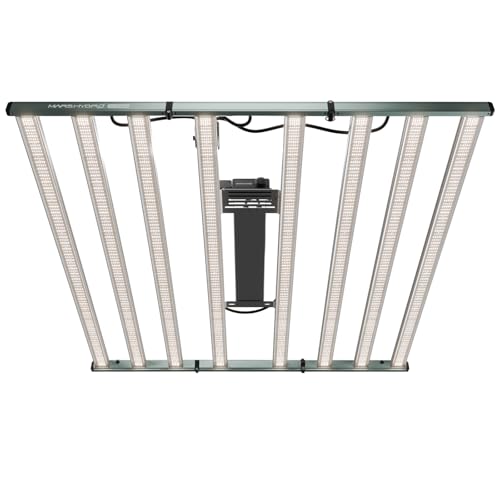
PRO PERFORMANCE & YIELD: Powered by premium Bridgelux 3030 diodes to deliver an impressive 2.9 μmol/J PPE. This high-efficiency 1000W grow light enhances par output, drives bud weight & increases overall crop density for indoor growing.
Energy, Heat Management, and Cost Considerations
Because energy use, heat output, and upfront cost are tightly linked, growers should weigh all three when selecting fixtures. LEDs are 2–3 times more energy-efficient than fluorescent lights and up to 50% more efficient than HID lights, which reduces electricity bills and eases heat management. HID lights consume more energy and emit substantial heat, often requiring fans or air conditioning for larger rooms. Fluorescent lights have a 10,000–20,000 hour lifespan, LEDs up to 50,000 hours, so replacement frequency affects total cost. Initial cost for LEDs is higher, but long-term savings can recoup investment within about 18 months in many setups. Adjustable grow lights with energy-efficient LED chips substantially reduce overall electricity consumption and environmental impact. Choose based on room size, cooling capacity, and desired efficiency versus upfront cost trade-offs.
Setup Recommendations and Maintenance for Indoor Grow Lights
Although proper lamp placement may seem simple, precise heights and routines prevent common lighting problems. Fluorescent bulbs should sit about 1–2 inches above seedlings to provide even, cool light. LEDs require higher placement, often 12–24 inches, depending on wattage and lensing, to avoid hotspots and light stress. HID fixtures need more distance, typically 18–36 inches, because of greater heat and intensity. Routine maintenance includes cleaning lenses and fixtures to preserve bulb brightness, and replacing lamps when output drops. Track LED running hours; their longevity can reach 50,000 hours, which reduces replacements. Use timers to automate light cycles that mimic natural photoperiods for vegetative growth and flowering. Monitor plants for stretch or burn and adjust placement heights accordingly. A full spectrum lighting setup is crucial for balanced plant growth, as it enhances photosynthesis and yield by mimicking natural sunlight.
Recommended Products

Program and monitor using mobile app or onboard touchscreen

An advanced AI grow tent kit with dynamic controls and built-in components; everything you need to achieve the perfect grow—all housed in a state-of-the-art tent.

Kit Included: 60"x60"x80" Grow Tent; Bar LED Grow Light 645W; 8" AeroZesh G8 Fan; GrowHub E42A Controller; 6" AeroWave E6×2; 8" Black Carbon Filter; 8" Prefilter; 8" 25ft Ducting; 8" Clamp×2; 5*5ft Trellis Net; 5Gal Black Grow Bag×10; 8" Vent Cover×2; Pruning Shears; 100m Twist Tie; Sticky Trap×20; Plant Tag×20; Hook & Loop Cable Tie×10; 5 ft Aluminum Ducting Tape; Gardening Gloves; Rope Hanger×2
Frequently Asked Questions
Are LED Grow Lights Better Than HID?
Yes — ironically, LEDs outperform HIDs: superior energy efficiency, lower heat output, customizable color spectrum and spectrum customization, longer lifespan comparison, better cost effectiveness, easier installation ease, comparable light penetration, improved plant yield and reduced environmental impact.
Which Type of Light Is the Most Beneficial for Plant Growth?
LEDs are most beneficial for plant growth due to superior light spectrum control and spectral quality, high energy efficiency, long bulb lifespan, low heat output, easier installation, favorable cost comparison, improved plant photosynthesis, and flexible grow light positioning.
Are LED Grow Lights Better Than Fluorescent Grow Lights?
Yes — 50,000-hour LEDs outperform fluorescents: LED efficiency halves energy consumption, improves plant response via tailored color temperature and light intensity; lifespan comparison, lower heat output, installment ease, fluorescent spectrum limits, and cost analysis favor LEDs.
What Type of Grow Lights Are Best for Indoor Plants?
LEDs are best for indoor plants: they suit low light plants and high light plants, optimize plant growth with adjustable light spectrum and color temperature, offer superior energy efficiency, long bulb lifespan, low heat output, flexible light duration, simple installation process.


