As an Amazon Associate, we earn from qualifying purchases. Some links on this site are affiliate links at no extra cost to you. Our recommendations are based on thorough research and editorial judgment.


Light Color Temperature Explained: Blue Light Vs Red Light for Plants

Blue light (400–500 nm) limits stem stretch and builds strong leaves, important for seedlings at about 200–400 µmol·m⁻²·s⁻¹. Red light (600–700 nm, ~660 nm) boosts photosynthesis and triggers flowering, often used at 30–40% of spectrum during bloom. A balanced full-spectrum LED (400–700 nm) with roughly 15% blue and 30–40% red gives compact vegetative growth and good flower set, adjust PPFD for stage. Continue for detailed setup guidance.
Key Takeaways
- Blue light (400–500 nm) promotes chlorophyll production and compact, sturdy stems by limiting stem elongation.
- Red light (600–700 nm) boosts flowering, fruit set, and photosynthetic efficiency, especially around 660 nm.
- A balanced mix (~30–40% red, ~15% blue) optimizes vegetative growth and reproductive transition.
- Seedlings need moderate PPFD (200–400 µmol·m⁻²·s⁻¹) with 14–16 hours light; adjust intensity by stage.
- Excess red causes stretching; insufficient blue causes leggy growth, so monitor and tweak spectrum or fixture distance.
The Science of Light and Photosynthesis
You may be interested


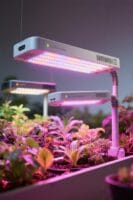
Because light drives photosynthesis, understanding its colors helps growers make better choices. Blue light supports chlorophyll production and sturdy stems, improving leaf development and compact plant growth. Red light enhances flowering and fruit set, often boosting photosynthetic efficiency per photon in the PAR range. Together they form a useful portion of the electromagnetic spectrum used by plants, so full spectrum solutions combine both for balanced outcomes. Light spectrum choices affect plant growth patterns, with roughly 15% blue often recommended to prevent legginess. Light intensity should be measured in µmol·m²·s⁻¹ (PAR) and adjusted by species needs, for example 200–400 µmol·m²·s⁻¹ for many seedlings. Balanced spectra support overall plant health and predictable production cycles. Full-spectrum grow lights support all growth stages of vegetables by mimicking natural sunlight, providing a comprehensive solution for indoor gardening.
What Wavelengths Constitute Blue and Red Light

One clear way to define plant-useful light is by wavelength, measured in nanometers (nm). Blue light occupies roughly 400 to 500 nm, and it supports vegetative growth by promoting sturdy stems and healthy leaves. Red light spans about 600 to 700 nm, and it is highly effective for photosynthesis, driving flowering and fruit production. Chlorophyll absorbs blue light near 430–450 nm and red light near 640–680 nm, which powers energy conversion in leaves. Excessive red light can cause elongated growth, so balancing light spectrum is important for predictable results. Combining blue and red wavelengths optimizes photosynthesis and overall plant health, offering practical control over growth stages and improving yield potential in controlled environments. Additionally, full spectrum coverage is essential for supporting growth across all stages, ensuring plants receive a balanced light environment.
How Blue Light Shapes Plant Morphology

Having reviewed how blue and red wavelengths power photosynthesis, attention turns to how blue light shapes plant form. Blue light, at about 400–500 nm, regulates plant morphology by limiting stem elongation and encouraging compact growth. When blue constitutes under 5% of the light spectrum, plants grow tall and leggy, showing stretch and weak stems. An ideal ratio near 15% promotes short stature without wasting energy; higher percentages give diminishing returns. This spectrum boosts chlorophyll production, improving leaf and stem health for photosynthesis. In flowering plants, blue light often yields denser growth patterns, which can reduce flowering compared with red light-dominated conditions. Growers aiming for stocky seedlings should increase blue proportion to roughly 15%, monitor responses, and adjust light schedules accordingly. Utilizing high-reflectivity materials like Italian VEGA aluminum in grow light hoods ensures efficient light distribution and maximizes the benefits of blue light for plant morphology.
Recommended Products
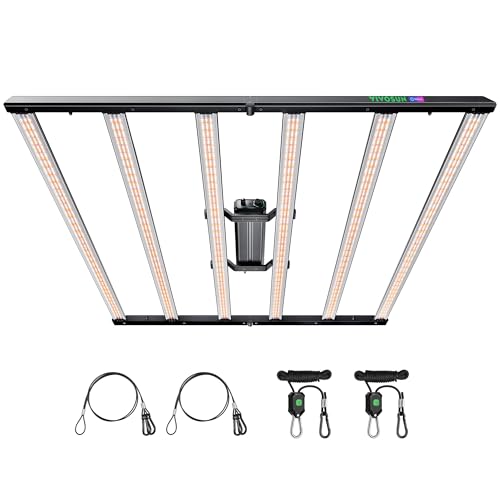
Even, Powerful Light for Full Tent Coverage: The scientifically-arranged light-bar matrix delivers uniform light across the entire canopy; With up to 0.89 uniformity, it reduces hot spots, giving every plant consistent light from edge to edge, ideal for large, high-yield grow setups

Integrated Circulation Fan: The centrally located fan optimizes airflow, reaching areas you might easily overlook; It enhances direct air entry into the canopy, balancing temperature and humidity; To unlock additional features, the fan must be used with the Vivosun Growhub Controller (E42, E42A, or E25), available for separate purchase

[Full Spectrum LED Grow Light] These LM301B Diodes light-spectrum coverage 380nm-780nm, 660nm, 730nm, 3000K, 5000K, offering more power for your blooms and maximum PAR output at various distances. The cool 5000K white light promotes germination rates, the warm white 3000K light peeds up blooming time, and the red 660nm light improves the plant production. The lights can get through the surface of plants and deep into them to increase yields.
Red Light’s Role in Photosynthesis and Flowering
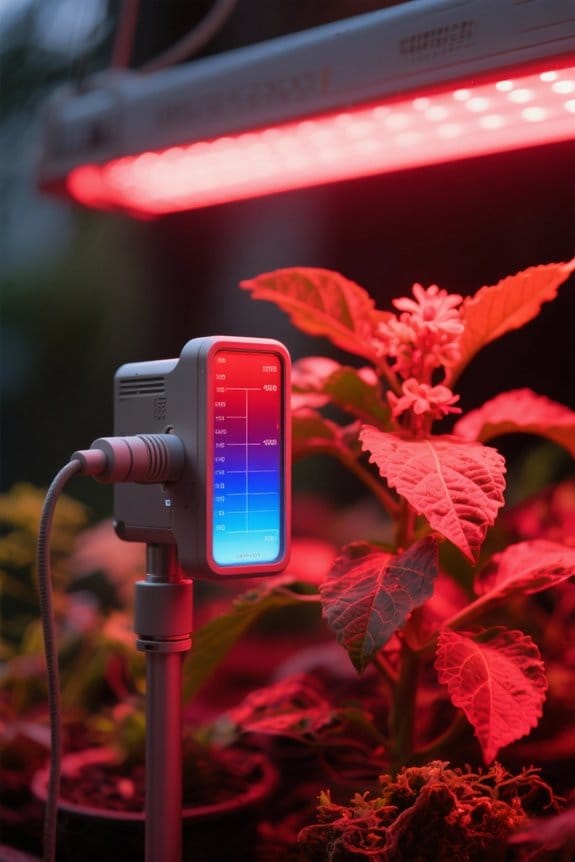
Red light, spanning roughly 600–700 nm, serves as a primary driver of photosynthesis and flowering in many plants. It is highly effective for photosynthesis, with deep red around 660 nm improving photosynthetic effectiveness and electrical efficiency in LEDs. Growers often aim for 30–40% red wavelengths in LED grow lights to optimize plant growth and biomass accumulation. Red light triggers hormonal pathways that induce flowering, useful for both short-day and long-day species. It also aids seed germination and promotes root development, establishing a strong foundation for later stages. Use red-heavy light during vegetative to reproductive shifts, and balance intensity to avoid overly elongated stems. Monitor photoperiod and combine spectral strategies for predictable yields. A critical feature of LED grow lights is their full spectrum lighting, which mimics natural sunlight and is essential for all plant growth stages.
The Importance of Green and Full-Spectrum Light

Green light, the 500–600 nm portion of the spectrum, comes to the rescue for shaded leaves. It penetrates deeper into canopies, reaching lower leaves and improving photosynthetic efficiency where blue light cannot. Full-spectrum light mixes red light, blue light, green light, and far-red to mimic sunlight, promoting balanced growth across stages. Including about 45% green light in a spectrum boosts plant growth to within 5% of red-only results, a practical guideline for indoor setups. Full-spectrum fixtures also enhance chlorophyll accumulation and support strong vegetative development when blue and red peaks are present. By combining wavelengths, growers can regulate morphological responses, reduce uneven growth, and achieve more uniform, productive crops with healthier lower leaves. LED grow lights are an essential tool for indoor gardeners, offering energy-efficient solutions for optimal plant growth by providing full-spectrum illumination.
Effects of Ultraviolet and Far-Red Radiation
Beyond the benefits of green and full-spectrum light, ultraviolet (UV) and far-red wavelengths further refine plant responses in controlled environments. UV is split into UVA (320–400 nm) and UVB (280–320 nm), and small doses toughen tissue, shorten stems, and increase cell wall thickness for resilience. UVB also stimulates secondary metabolites like flavonoids and terpenes, improving harvest quality when dosed carefully, typically minutes to hours per day. Far-red light (700–850 nm) regulates flowering and germination via phytochrome pigments, altering hormonal balance to trigger developmental switches. Together these bands expand the useful spectrum beyond photosynthesis, enhancing plant growth and vigor. Environmental management in indoor gardening must balance intensity and duration of electromagnetic radiation to avoid damage while maximizing yield. For optimal growth, full-spectrum grow lights should cover 380-800 nm to replicate sunlight for all growth stages.
Stage-Specific Light Requirements: Seedlings to Flowering
When plants move from seedlings into larger vegetative containers, adjusting the light spectrum and schedule becomes essential for strong, compact growth. Seedlings require high levels of blue light (400–500 nm) and about 14–16 hours of exposure daily to promote robust stem and leaf development. During vegetative growth, aim for a balanced light spectrum with roughly 15% blue and 30–40% red to enhance photosynthesis while preventing legginess. Evolving to flowering, increase red wavelengths (600–700 nm), which stimulate blooms and fruit set and often boost yields. Adjust color temperature to about 3000K–4000K during flowering for better results. Tailor light requirements stage by stage, monitor plant response, and change intensity and duration as growth demands evolve. For creating straight and uniform borders in garden design, consider using a mix of manual and electric edge cutters to match the specific needs of your landscape.
Recommended Products

Professional 3-Stage Full Spectrum: Sonlipo plant light is designed with 3 types of Sunlike full spectrum to meet the different growth stages of plants, including Seeding, Vegetative, and Flowering & Fruiting stages. This increases plant yield to a maximum of 2.9 g/w. The 3 full spectrum modes are controlled by a panel (VEG, V&B, BLOOM), making it easy to use and adjust.

Next-Level Efficiency & Output: Replace a 1000W HPS with the ION 720W LED system, delivering comparable intensity with up to 40% lower power consumption—cutting both energy and HVAC costs.

High Efficiency and Uniformity: This grow light has a 40% higher PPFD than comparable HID lights and a higher conversion efficiency (2.8μmol/J); Uniform and dense PAR map means deeper light penetration for healthier plants all while consuming only 450W, for max efficiency
Comparing Blue-Heavy, Red-Heavy, and White Light Trials
Although light quality can be adjusted for specific goals, growers often compare blue-heavy, red-heavy, and white light setups to decide what works best for each stage. Blue-heavy trials use 400–500 nm wavelengths, promoting compact stems and leaf development, reducing leggy growth when blue light is about 15% of spectral output. Red-heavy trials emphasize 600–700 nm light, boosting photosynthesis and flower development, maximizing yield and biomass with clear increases in growth rate. White light trials balance blue, green, and red, achieving compact form and yields within about 5% of pure red treatments, often with red at 30–40% for best photosynthetic efficiency. These light trials guide choices, link spectral output to overall plant health, and help optimize plant growth in practice. A variety of mechanical and digital timers can help optimize the timing and duration of light exposure, crucial for different growth stages and enhancing overall plant health.
Recommended Products

PREMIUM Foldable 1500W- LED lights specialty manufactured by Sinowell with Samsung LM301 diodes for FULL spectrum light, ideal for ALL STAGES of growth. Large 48x48 footprint for the best light spread and prenetration. Silent functions mean that no fans cause noise pollution in your home. 1500w output incentivizes low cost for the home and runs 50% less energy than “blurple” and other leading LEDs. UL, CE, ETL Certificated.

🌞 TRUE SUNLIKE SPECTRUM – The first LED grow light engineered to replicate a real CMH-style sunlight spectrum. Balanced White, Green, Dual Red (640nm + 660nm), Far Red, and optional UV deliver unmatched canopy penetration and plant performance.

Features Samsung LM301H EVO LEDs each rated at 3.14 µmol/J PPE, the highest efficiency of LM301B, LM301H, and Bridgelux 3030 chips.
Practical Guidelines for Choosing LED Grow Spectrums
A practical selection starts with a balanced spectral mix that targets common plant needs. Choose spectrum LEDs that provide about 30-40% red light, 600-700 nm, to boost photosynthesis and flower production. Include roughly 15% blue light, 400-500 nm, to limit stretch and promote compact leaves. Consider full spectrum LED grow lights that span 400–700 nm, adding UV and IR for thorough health benefits. Check PPFD ratings; aim for 200–600 µmol·m⁻²·s⁻¹ depending on crop and stage. Match light for your plants to growth phase, seedlings usually need higher photoperiods and moderate PPFD. Use programmable controls to adjust durations precisely. This methodical approach helps guarantee efficient LED selection and consistent, healthy growth outcomes. For further accuracy in gardening, considering ergonomic adjustments can enhance comfort and minimize fatigue, similar to selecting proper lawn edger handle lengths.
Timing, Intensity, and Photoperiod Best Practices
Having chosen the right spectrum mix, attention must shift to timing and intensity to get predictable results. Seedlings usually need 14-16 hours light per day, which supports ideal growth and leaf development. Short-day plants require under 12 hours, while long-day types thrive at 12+ hours, so set photoperiods accordingly. A balanced intensity with blue light (400–500 nm) and red light (600–700 nm) promotes compact growth and efficient photosynthesis. Measure light as PPFD; aim 100–300 µmol·m⁻²·s⁻¹ for seedlings, 400–800 for mature vegetative growth. Use programmable timers to maintain consistent light cycles, they come to the rescue for repeatability. Adjustable settings in many professional grow lights cater to varying plant needs throughout growth stages, enhancing their development. Adjust intensity for plant growth needs gradually, avoiding excess which can stress or waste energy.
Troubleshooting Light-Related Plant Issues
When plants stretch tall with sparse leaves, the lighting is often the culprit. Increase blue light to about 15% of the light spectrum to promote compact stems and leaf development. Reduce stretch by moving fixtures closer, maintaining 300–500 μmol·m⁻²·s⁻¹ at canopy level for seedlings, but avoid heat stress. During flowering, guarantee 30–40% red light to trigger blooms and fruit set, since red light supports flowering processes. Overexposure to blue light can compact plants and reduce yield, so balance spectra accordingly. Monitor plant responses daily and adjust light exposure and photoperiods, 12–16 hours for vegetative stages, 10–12 for flowering. Watch for nutrient deficiencies that mimic light problems, and log growth conditions to reach ideal growth.
Recommended Products

Kit Included: 60"x60"x80" Grow Tent; Bar LED Grow Light 645W; 8" AeroZesh G8 Fan; GrowHub E42A Controller; 6" AeroWave E6×2; 8" Black Carbon Filter; 8" Prefilter; 8" 25ft Ducting; 8" Clamp×2; 5*5ft Trellis Net; 5Gal Black Grow Bag×10; 8" Vent Cover×2; Pruning Shears; 100m Twist Tie; Sticky Trap×20; Plant Tag×20; Hook & Loop Cable Tie×10; 5 ft Aluminum Ducting Tape; Gardening Gloves; Rope Hanger×2
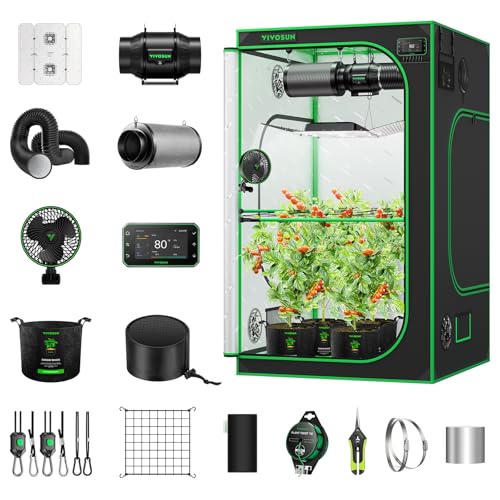
Plus Grow Tent Kit: A professional choice that simplifies indoor gardening and maximizes growth potential; Includes a premium grow tent, tunable spectrum grow light, ventilation & circulation system, smart GrowHub, and essential accessories—all in one to support healthy growth and higher yields

【High PAR Value Saltwater Aquarium Light】Scientifically engineered to keep the PAR/Lumen Output and Coverage balanced. Perfect fit for depth 30" tank. Suggest for 72-96inch hard&soft coral SPS LPS tank.
Frequently Asked Questions
Is Red Light or Blue Light Better for Plants?
Red and blue together; neither alone suffices. A sunrise of red fuels photosynthesis efficiency and flowering stage impact, while a twilight of blue shapes chlorophyll production, leaf pigmentation changes, growth rate comparison, plant health indicators, nutrient absorption and wavelength preferences.
What Is the Best Color Light for Growing Plants?
A balanced spectrum is best for growing plants. It supports plant photosynthesis, growth light needs, and spectrum importance across plant growth stages. LED technology benefits indoor gardening and hydroponic systems by controlling light intensity, light duration, and nutrient absorption.
Which Has a Higher Temperature, Blue Light or Red Light?
Like a smartphone in a Victorian parlor, blue light has a higher temperature than red light. It cites Light temperature comparison, Blue light advantages, Red light spectrum, Light color wavelengths, Plant growth factors, Photosynthesis efficiency, Growth stage influence, ideal light exposure, Plant response variability, Light intensity effects.
Do Plants Absorb Blue or Red Light Better?
Red light is absorbed slightly better for photosynthesis overall. It notes plant growth benefits across the light spectrum, referencing chlorophyll absorption, light wavelengths, light intensity, photosynthesis efficiency, indoor gardening, specific plant needs, growth stages, color temperature.


