As an Amazon Associate, we earn from qualifying purchases. Some links on this site are affiliate links at no extra cost to you. Our recommendations are based on thorough research and editorial judgment.


Understanding Weed Root Systems: Taproot Vs Fibrous Roots

Weed root systems fall into two main types: taproots and fibrous roots. Taproots form a single thick main root, 5–20 mm wide and 30–150 cm deep, storing carbohydrates for regrowth and reaching deep moisture, as seen in carrots and dandelions. Fibrous roots create dense mats of fine roots, 0.1–2 mm wide in the top 10–30 cm, stabilizing soil but relying on surface water, common in grasses and corn. Learn how control methods differ next.
Key Takeaways
- Taproots form a single thick main root reaching 30–150 cm, storing carbohydrates and enabling deep water and nutrient access.
- Fibrous roots create a dense shallow mat in the top 10–30 cm, stabilizing soil but relying on surface moisture and nutrients.
- Taproot weeds regrow if any root remains, so complete removal or targeted systemic herbicides before flowering is essential.
- Fibrous-rooted weeds respond well to regular mowing, mulch, pre-emergent herbicides, and cultural controls to reduce surface resources.
- Soil texture and compaction determine root depth: loose sandy loam favors deeper taproots, compacted or clay soils force lateral fibrous spread.
What Are Taproots and How Do They Form
You may be interested


When a seed begins to germinate, the radicle emerges and becomes the primary taproot, growing downward to anchor the plant firmly in the soil. The taproot typically extends several centimeters to over a meter, depending on species, and it forms before secondary roots branch outward. It stores carbohydrates, useful during dormancy or stress, aiding plant growth and re-sprouting after damage. In dicots like carrots or beets, the main root thickens, creating a pyramidal structure with lateral roots for nutrient uptake. This deep-reaching root accesses water from lower soil horizons, improving drought resistance. For weed control, removing the entire taproot is essential, because regrowth often occurs if fragments remain. Compare this to a fibrous root system for management choices. Using durable materials and construction for gardening tools can aid in effectively removing taproots and preventing regrowth.
Characteristics of Fibrous Root Systems

A dense mat of fine roots defines a fibrous root system, spreading widely near the soil surface to capture water and nutrients. Fibrous roots form many thin, branching units about 0.5–3 mm across, often concentrated in the top 10–30 cm of soil, providing a broad area for a plant to absorb water quickly after rain. They lack a single dominant root; instead similar-length roots stabilize soil and help prevent erosion. These systems are common in grasses, corn, and bamboo, where the network increases soil aeration and structure. The shallow placement aids moisture uptake but can face drought stress when the surface dries. For weed control, surface cultivation and mulches come to the rescue by disrupting shallow root networks. Ergonomic handle designs in gardening tools enhance comfort and reduce hand fatigue, making weed removal more efficient.
Structural Differences Between Taproots and Fibrous Roots
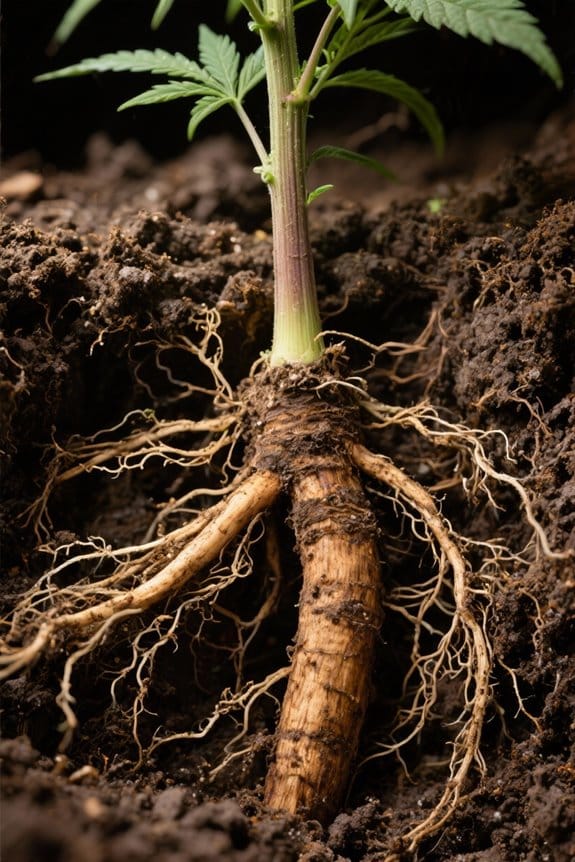
Several clear differences separate taproots from fibrous roots in form and function. Tap root systems arise from the seed radicle and produce a single thick main root. This main root can reach depths of 30–150 cm in favorable soils, with secondary roots branching laterally. Fibrous roots form a dense network of similar-diameter roots near the surface. They typically occupy the top 5–30 cm of soil and originate from stem tissue. Morphologically, taproots are thicker (5–20 mm diameter) and more robust, while fibrous roots are hair-like (0.1–2 mm). Tap roots explore deep moisture and nutrients, whereas fibrous systems exploit surface resources quickly. Practical identification relies on depth, root diameter, and branching pattern to inform management choices. Just like curtain fairy lights, fibrous roots create a dense, interconnected network, effectively utilizing surface resources efficiently.
How Root Type Affects Weed Stability and Anchorage

Most weed species show one of two root strategies, each affecting how well a plant anchors in soil. Taproot system plants send a single main root down, often 30–60 cm deep, giving strong vertical hold and resistance to uprooting in winds. This deep root also stores carbohydrates for regrowth. Fibrous roots create a dense mat within the top 10–20 cm of soil, improving lateral stability in loose or sandy substrates, and helping prevent surface erosion. However, fibrous roots have limited drought resilience because they cannot reach deep moisture. For practical control, uprooting a taprooted weed requires 25–30 cm deep digging to remove the main root. Surface cultivation or mulching comes to the rescue for fibrous-rooted species, disrupting the shallow network. Tools like the Stirrup Hoe offer versatility across garden tasks and are effective for managing weeds with different root systems.
Recommended Products

Stand-Up Weed Puller with Foot Pedal – This 102cm (39.9") long handle weed remover lets you stay upright while the heavy-duty foot pedal drives stainless steel claws deep—eliminating bending or kneeling. Ideal knee-saver for seniors and back pain sufferers.

Longer handle provides better reach (42")

Electric Weed Puller Tool for Easy Yard Cleanup – This 21V electric weed puller combines the power of an electric weed removal tool with the convenience of a cordless weed remover, helping you remove common weeds faster than traditional hand tools. A practical battery powered weeder for lawn, garden and yard weeding tasks.
Water and Nutrient Uptake: Deep vs. Shallow Strategies

Compare how deep and shallow roots collect water and nutrients to guide control and management decisions. Taproot systems reach 30–60 cm or more, accessing deep water and mineral layers, which supports plants during dry spells. Fibrous roots occupy the top 5–20 cm, exploiting rain and surface fertilizers quickly, but they lack deep reserves. Taproot plants take up scarce ions like calcium and potassium from subsoil, enhancing long-term vigor, so removal requires extraction below 30 cm. Fibrous-rooted weeds absorb dissolved nutrients rapidly after light rainfall, so surface-applied herbicides and timed irrigation can come to the rescue. Manage soil moisture to favor desired species, apply nutrients at root depth, and use mechanical or chemical methods targeted to the specific root architecture for effective control. When managing indoor gardens, it’s important to consider the heat emission from grow lights, as excessive heat can affect root health and overall plant growth.
Root Adaptations for Drought Resistance
After considering how root depth affects water and nutrient uptake, attention turns to how roots adapt when water is scarce. Taproot systems dig deep, often reaching 1–3 meters in some weeds, to tap groundwater reserves unavailable to shallow roots. This provides drought resistance, because moisture at 50–200 cm remains accessible during dry months. Fibrous roots, by contrast, occupy the top 5–30 cm of soil and rely on recent rainfall or irrigation, so they require more frequent water. Plants with strong taproots show slower wilting and sustained growth under prolonged dryness. In practice, prioritize deep watering to support taproot development, apply 5–10 cm of mulch to reduce evaporation, and recognize that fibrous-rooted weeds come to the rescue quickly after light watering. For optimal plant care, consider using adjustable grow lights which are energy-efficient and support various plant stages through customizable settings.
How Root Type Influences Weed Spread and Persistence
Root architecture drives how weeds spread and persist in different settings. Taproot plants penetrate deep, often 30–60 cm or more, accessing moisture and nutrients unavailable to shallow-rooted competitors, aiding survival in drought. Fibrous roots form dense mats in the top 5–15 cm, covering large surface area and absorbing rain quickly, which promotes rapid spread after disturbance. Taproot species can regrow from fragments, so physical removal must reach roots below 20–30 cm to be effective. Fibrous-rooted weeds establish from small pieces and seed, so timely surface disturbance control and mulch layers of 5–10 cm can come to the rescue. Understanding these differences informs weed management, guiding targeted herbicide placement, depth of cultivation, and ongoing monitoring. When tackling weeds in narrow spaces, ergonomic tools specifically designed for precision can significantly reduce user fatigue while effectively reaching deep-rooted systems.
Recommended Products

Powerful Electric Lawn Mowers - Experience the freedom of cordless mowing with this 60V battery powered lawn mower, delivering up to 40 minutes of runtime on a fully charged 4.0Ah battery. Recharge quickly with a full charge time of just 90 minutes.

Version Notice: This item may ship in 1 of 2 color styles: all-black accessories and logo, or green accessories with a black logo. Both versions are identical in performance and functionality. Color style is selected at random and cannot be guaranteed

Durable rake made of galvanized steel
Identifying Common Weeds by Their Root Systems
How can gardeners quickly tell which common weeds hide different root types? Look at growth habit first. Dandelions show a single thick taproot up to 30 cm long, reaching deep water and nutrients. Chickweed also has a primary taproot, though shorter, often 10–20 cm, anchoring perennial crowns. By contrast, crabgrass displays fibrous roots; expect a shallow mat in the top 5–10 cm of soil, rapidly absorbing surface moisture. Bindweed sends wiry fibrous roots with many lateral branches, often spreading horizontally beyond 30 cm. Annuals like purslane come to the rescue with dense fibrous roots that establish quickly within weeks. Using high-density polyethylene (HDPE) materials in garden construction can enhance durability, similar to their use in shade sails. Identifying taproot versus fibrous roots guides practical decisions about digging depth, tool choice, and frequency of monitoring for common weeds.
Targeted Control Methods for Taproot Weeds
Identifying whether a weed has a single deep taproot or a shallow fibrous system informs how to control it. Taproot weeds need root-focused control methods. Manual removal works, but the entire taproot, often 15–60 cm deep, must be extracted to prevent regrowth. Specialized herbicides can target translocated roots; follow label rates, typically grams per litre or percent active ingredient, and apply before flowering. Preventative measures reduce future infestations. Apply 5–10 cm mulch and maintain dense turf or cover crops to outcompete seedlings. Monitor soil moisture; drier, compacted topsoil can limit taproot establishment, while well-aerated, moist soil may favor it. Regular mowing or cutting before seed set suppresses energy storage and reduces spread. Choosing materials with high-density polyethylene can enhance durability and UV protection for garden structures, aiding in the prevention of weed growth by creating a more controlled environment.
Management Strategies for Fibrous-Rooted Weeds
When shallow, fibrous-rooted weeds form dense mats, proactive management prevents them from outcompeting desired plants. Mow regularly, at 2.5–3 inches (6–8 cm), to reduce seed set and weaken surface stands. Apply pre-emergent herbicides in early spring, following label rates, typically 0.5–1.5 lb active ingredient per acre, to block germination. Use mulch layers of 2–4 inches (5–10 cm) to limit light and conserve moisture, which also reduces surface nutrient availability. Improve plant vigor by optimizing water and nutrients, irrigating 1 inch (25 mm) weekly during dry periods and supplying balanced N-P-K at recommended rates for the crop. Combine cultural controls, timed chemical use, and mechanical removal to gradually suppress fibrous roots, preventing rapid spread and restoring desired vegetation. Using ergonomic design tools for removing weeds can also reduce user fatigue and improve precision during landscaping tasks.
Recommended Products

YEAR-ROUND BRUSH CONTROL: This brush control herbicide offers extended control of tough brush, woody plants, and weeds for up to one year, reducing repeat treatments and keeping rangelands, pastures, and wildlife clearings free from unwanted vegetation

Season-long control of every key turf-damaging white grub species

Post Emergent herbicide concentrate is for industrial, turf, ornamental, forestry, roadside, utility rights-of-way, railroad management and other listed terrestrial weed control
Impacts of Soil Type and Compaction on Root Development
Mowing, mulching, and targeted herbicide use help suppress surface-rooted weeds, but soil characteristics ultimately shape how roots develop beneath the surface. Compacted soil limits pore space, reducing oxygen and water movement, which restricts taproot penetration to depths beyond 20–30 cm in many loams. Fibrous roots adapt by spreading laterally in the top 5–15 cm, exploiting finer particles and nutrients. Granulometry matters; sandy loam permits 40–60% porosity and deeper taproot growth, while silty clay with <30% porosity forces shallow rooting. Compressed substrates also reduce root hair formation, lowering nutrient uptake by 20–40%. Preventing compaction through aeration, organic matter addition at 2–5% by weight, and reduced traffic can restore root space and improve plant resilience.
When to Use Mechanical, Chemical, or Biological Control Based on Root Type
Because root architecture determines how weeds take up water and nutrients, control tactics must match that structure for best results. Taproot weeds penetrate 30–100+ cm deep and respond to mechanical controls like tilling or deep plowing, which sever roots and reduce regrowth. Fibrous roots occupy the top 5–20 cm of soil and often need surface-level strategies. Chemical control methods work well on fibrous systems, applied as foliar sprays or soil-active herbicides at label rates, usually 1–2 L/ha or ppm per instructions, timed in early growth. Biological control options, such as nematodes or root-targeting fungi, can complement physical or chemical tactics; certain strains attack taproots and come to the rescue during establishment. Match life cycle and timing for best results.
Frequently Asked Questions
What Is the Difference Between a Taproot and a Fibrous Root System?
A taproot is a single dominant root; a fibrous system has many similar roots. Taproots aid deep nutrient uptake and soil stability; fibrous roots enhance surface nutrient uptake and root adaptations for erosion control and rapid resource absorption.
How to Identify a Taproot?
Like a lone anchor in stormy soil, a taproot is identified by taproot characteristics: one dominant, thick primary root tapering downward; identifying plant types (often dicots) and noting root system adaptations like deep water access and nutrient storage.
Which Is Deeper, a Taproot or a Fibrous Root System?
A taproot is deeper than a fibrous root system. The taproot’s deep root advantages include accessing low soil moisture retention zones and enhancing plant stability factors, whereas fibrous roots remain shallower, favoring surface water uptake and anchorage.
What Are the Four Types of Roots in Plants?
Beware, ye knights: the four root types are taproots, fibrous roots, adventitious roots, and rhizomes. This root types overview explains root structure significance and plant adaptation strategies for stability, nutrient uptake, propagation, and colonization.


