As an Amazon Associate, we earn from qualifying purchases. Some links on this site are affiliate links at no extra cost to you. Our recommendations are based on thorough research and editorial judgment.

Best Herbs to Grow Under Artificial Lighting Indoors

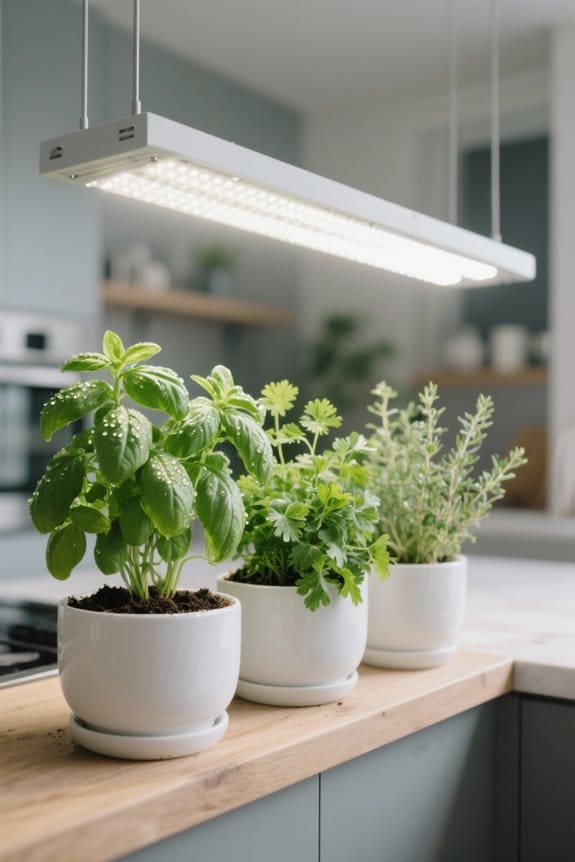
Indoor herbs that do well under artificial lighting include basil, chives, parsley, cilantro, mint, thyme, and rosemary. Use full-spectrum LED or T5 fluorescent fixtures, placed 6–12 inches above foliage, providing 12–16 hours daily for most herbs and 14–16 hours for rosemary. Maintain root-zone temperatures near 68–75°F, water to keep soil moist but not waterlogged, and prune regularly to prevent legginess. LEDs save energy and run cool, come to the rescue for small spaces, and more specifics follow.
Key Takeaways
- Basil, thyme, and parsley thrive under 12–16 hours of bright artificial light, producing compact, flavorful growth.
- Chives and mint are low-maintenance under 10–12 hours of moderate light, with mint kept separate to avoid shading.
- Rosemary prefers 14–16 hours of strong light and drier soil, benefiting from higher intensity LEDs.
- LED grow lights are energy-efficient, emit low heat, and provide adjustable spectra ideal for most indoor herbs.
- Keep lights within 12 inches of foliage, run 12–16 hours daily, rotate plants weekly, and monitor moisture to prevent legginess.
Why Artificial Lighting Works for Indoor Herbs
You may be interested


Because indoor windows often do not supply enough consistent light, artificial lighting comes to the rescue for most kitchen and apartment herb gardens. Artificial lighting supplies the intensity herbs need. Most herbs require 12–16 hours daily to mimic sunlight, matching their light requirements for photosynthesis and compact growth. LED grow lights are recommended for efficiency, low heat, and selectable spectrums tailored to basil and parsley. Fluorescent T5 fixtures are another option, bright and cost-effective for seedlings and leafy herbs. Position a grow light system about 12 inches or closer to prevent legginess and encourage bushy stems. Timers help automate light cycles, set for 12–16 hours, ensuring consistent exposure. Regularly monitor plant response and adjust height and spectrum as needed.
Top Herb Varieties for Grow Lights
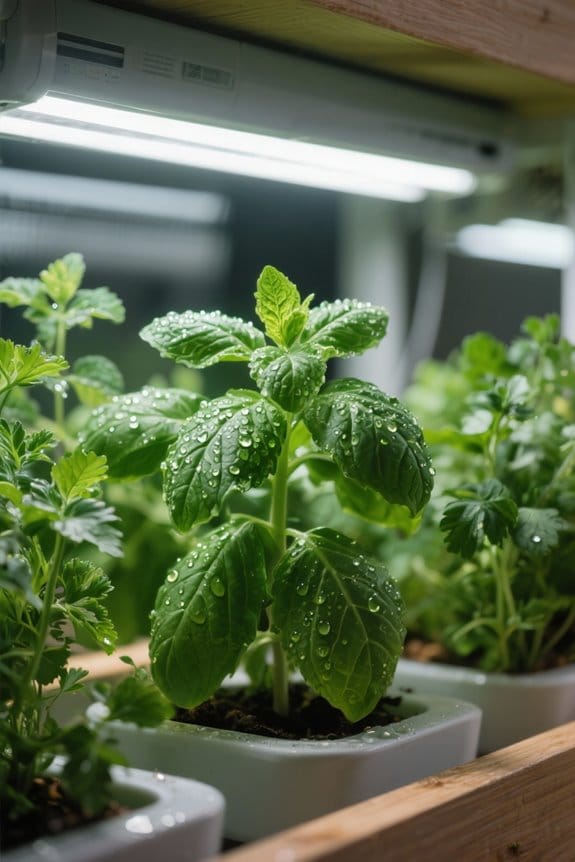
Artificial lighting comes to the rescue when natural light is insufficient, and choosing the right herbs for grow lights makes indoor gardening more predictable. Basil, thyme, and oregano adapt well to grow lights; they are reliable choices, herbs require at least 12-16 hours of bright light daily for peak growth. Cilantro and parsley are suitable for an indoor garden, needing 12-14 hours and cooler temperatures, cilantro prefers 50-70°F while parsley likes 60-70°F. Chives are low-maintenance and need about 12 hours of moderate light. Mint flourishes with 10-12 hours and consistently moist, not soggy, soil. Position plants no more than 12 inches from light sources to guarantee intensity. For optimal energy efficiency, consider LED grow lights that cut electricity costs by 50-70% compared to traditional lighting systems. These practical selections simplify growing indoors for steady harvests.
Light Requirements by Herb
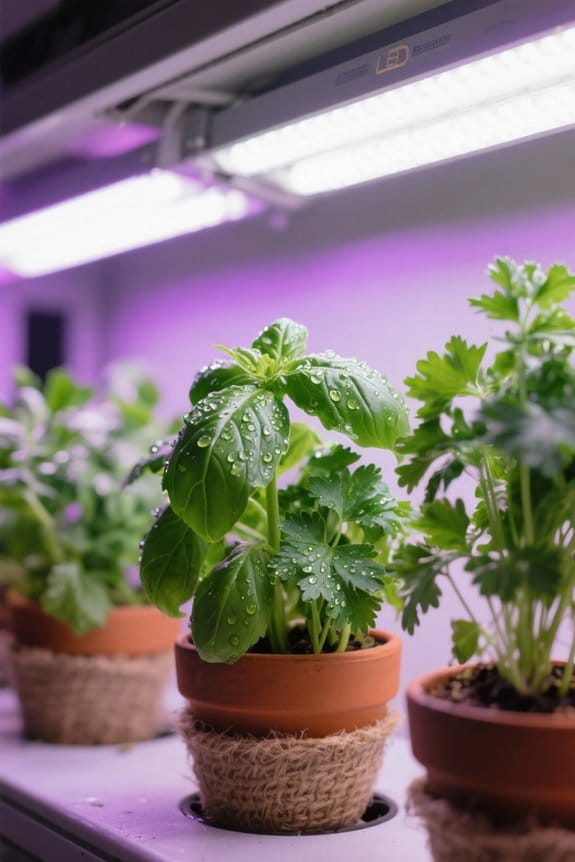
How much light each herb needs depends on its growth habit and leaf thickness. Basil and thyme require 12–16 hours of bright light daily, ideal for indoor growing under consistent artificial light. Parsley and cilantro prefer 12–14 hours, benefiting from steady exposure to support slower growth rates and fuller leaves. Chives need about 12 hours of moderate light and are resilient across varied indoor setups. Mint does well with 10–12 hours, though it thrives when given brighter light in its own container to avoid shading others. Oregano needs 12–14 hours, while rosemary requires 14–16 hours and drier soil conditions, making precise light scheduling and drainage essential to successful indoor herbs cultivation. For energy-efficient LED grow lights, they offer substantial savings on electricity costs while delivering the necessary lighting conditions for healthy herb growth.
Choosing Between LED and Fluorescent Grow Lights
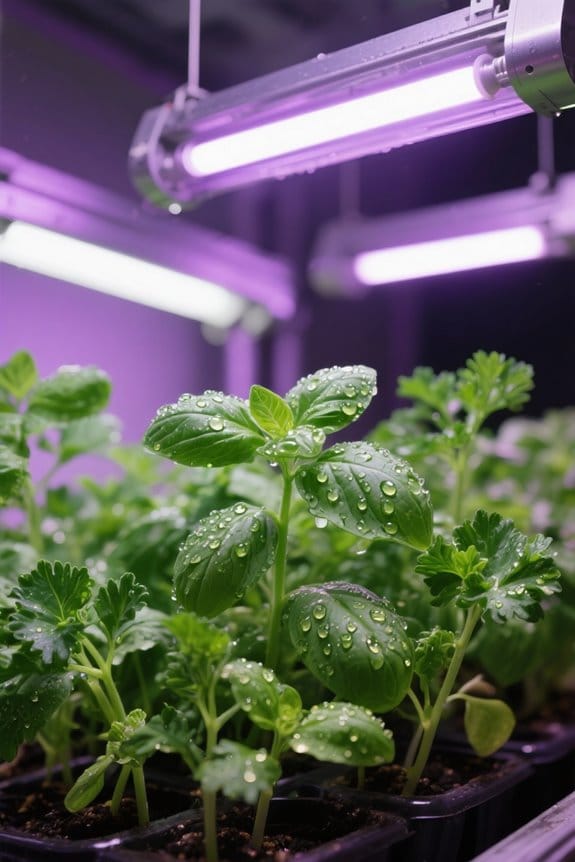
When selecting grow lights for indoor herbs, gardeners should weigh energy use, spectrum control, and heat output. LED lights are energy-efficient, long-lasting, and produce less heat, which suits tight indoor conditions and reduces ventilation needs. Fluorescent lights, such as T5 tubes, deliver strong broad-spectrum illumination and often work well within 12 inches of foliage for best results. LEDs can be built to emit specific wavelengths that promote leafy growth or flowering, and their higher initial cost is balanced by longer lifespan and lower electric draw. Fluorescents require about 12–16 hours of light exposure daily to support herbs. Choose based on space, budget, cooling capacity, and whether precise spectrum tailoring is desired for particular herb varieties. Many LED grow lights offer customizable light settings with dimmable features, allowing tailored exposure that enhances plant growth stages efficiently.
Ideal Light Schedules and Placement
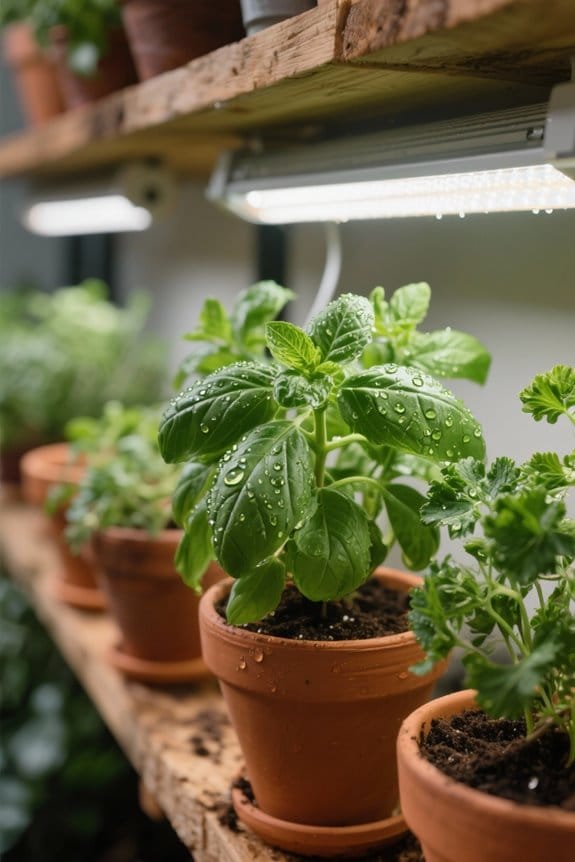
Frequently, indoor herbs need consistent daily light to stay compact and productive. Most varieties require 12–16 hours of light each day, a schedule that mimics long daylight. Place the Grow Indoors light no more than 12 inches above the foliage for adequate intensity. LED fixtures are ideal, emitting low heat for longer schedules, while T5 fluorescents come to the rescue in smaller setups. Rotate each herb weekly to avoid uneven growth and leggy stems caused by one-sided light. Use a timer to maintain strict cycles, and adjust height as seedlings grow to keep the same intensity. Check soil moisture daily, since longer light periods can increase evaporation, and alter duration if plants show stress. For optimal results, consider using full spectrum LED lights that support all plant growth stages, enhancing photosynthesis efficiency and plant health.
Recommended Products

PREMIUM Foldable 1500W- LED lights specialty manufactured by Sinowell with Samsung LM301 diodes for FULL spectrum light, ideal for ALL STAGES of growth. Large 48x48 footprint for the best light spread and prenetration. Silent functions mean that no fans cause noise pollution in your home. 1500w output incentivizes low cost for the home and runs 50% less energy than “blurple” and other leading LEDs. UL, CE, ETL Certificated.

🌞 TRUE SUNLIKE SPECTRUM – The first LED grow light engineered to replicate a real CMH-style sunlight spectrum. Balanced White, Green, Dual Red (640nm + 660nm), Far Red, and optional UV deliver unmatched canopy penetration and plant performance.

Features Samsung LM301H EVO LEDs each rated at 3.14 µmol/J PPE, the highest efficiency of LM301B, LM301H, and Bridgelux 3030 chips.
Best Containers and Soil for Indoor Herb Growth
After setting lights and timers, the next consideration is containers and soil for indoor herbs. Choose containers with drainage holes to prevent waterlogging and root rot in basil, thyme, and similar herbs. Use pots 6 to 12 inches in diameter to allow root expansion and stable moisture levels. Prefer terracotta or other breathable materials, which come to the rescue by letting excess moisture evaporate. Select high-quality potting soil blended with perlite or peat for good drainage, meaning water moves through without pooling. Match pot depth to root habits; shallow pots suit parsley and chives. Aim for an adequate moisture balance, defined as evenly moist but not soggy, monitored by fingertip testing or a moisture meter. Replace soil annually to refresh nutrients. Consider using anvil pruning shears for maintaining and trimming your indoor herb garden, as they are ideal for cutting dry stems and small branches efficiently.
Recommended Products

FEEDS UP TO 6 MONTHS: Miracle-Gro Potting Mix is a gardening soil for outdoor containers that feeds all types of potted plants, including flowers, vegetables, shrubs, annuals, and perennials for up to 6 months

Ready-to-Use for All Planting Needs: This general-purpose potting mix is ready to use out of the bag, making it perfect for both indoor and outdoor planting without any additional preparation

100% Organic and Peat-Free: Our potting mix is 100% organic and peat-free—made from upcycled plant matter and wood fines from across the
Watering, Temperature, and Humidity Guidelines
To keep indoor herbs healthy, manage water, temperature, and humidity with consistent, measurable routines. Watering should occur when the top inch of soil feels dry, keeping a slightly moist soil level but avoiding waterlogged conditions that cause root rot in oregano and rosemary. Use pots with drainage and check weight to judge moisture. Temperature targets vary by species; set basil at 70–80°F, and cilantro or parsley at 50–70°F, using a thermostat or room thermometer. Maintain humidity around 40–60% with a hygrometer to prevent wilting, and deploy a humidifier or pebble tray when air is too dry. Monitor plants for stress from fluctuations, and adjust irrigation, heating, or ventilation promptly to replicate natural conditions. Consider using battery-operated fairy lights to provide additional warmth and ambiance, especially in spaces without direct sunlight.
Pruning, Harvesting, and Encouraging Bushy Growth
Prune regularly to keep indoor herbs compact and productive. Trim about one-third of plant height when harvesting, which prevents legginess and maintains an even canopy for artificial light. Focus cuts just above a leaf node, the point that will come to the rescue by producing two new branches. Frequent pruning and harvesting of basil or mint increases leaf count and maximizes light absorption, improving yield. Allow adequate air circulation in the indoor space by spacing pots 4–6 inches apart, reducing crowding and moisture pockets. Check growth weekly, and balance nutrients with a 10-10-10 or diluted liquid feed every 2–4 weeks to support bushy growth. Use clean, sharp shears and remove flowers to favor foliage production. Consider using energy-efficient LED options that generate less heat, reducing cooling needs while providing essential light for herb growth.
Pest and Disease Management Under Grow Lights
Keeping plants compact through regular pruning helps make pest and disease problems easier to spot and manage. Inspect leaves and stems weekly; regularly inspect for aphids, spider mites, and whiteflies, which are tiny but visible with a 10x loupe. Maintain consistent watering, avoid overwatering, and use a moisture meter reading 20–40% volumetric water content for many herbs. Good air circulation reduces humidity; position a small clip fan at low speed, providing 0.2–0.5 m/s airflow across the canopy. Use neem oil or insecticidal soap as a targeted treatment, applying at label rates, every 7–14 days until pests drop. Practice cleaning and sterilizing: wash pots, trays, and scissors with 70% isopropyl or a 10% bleach solution. Record interventions and outcomes for effective pest management. Using brushless motors in your battery-powered gardening tools can enhance efficiency and extend the lifespan of your equipment.
Propagation Methods for Indoor Herbs
Start with a clear plan for which herbs to propagate and why. Choose mint for cuttings or divisions to preserve traits, and cilantro for seed saving when pods dry. Propagation methods include cuttings, divisions, and seeds; cuttings root in water in 7–14 days, then move to sterile potting mix. Divisions come to the rescue when uniform offspring are needed, split crowns in spring. Sow cilantro seeds 1⁄4 inch deep, keep moist. Provide consistent light and about 12–16 hours light per day from LEDs, avoiding sudden changes. Maintain warm 68–75°F rooting temps and steady moisture, not waterlogged. Check roots gently every week. Label trays with dates and source plant, transplant when roots fill a 3–4 inch pot. For optimal growth, ensure your grow lights provide a full-spectrum light which supports all stages of plant development.
Frequently Asked Questions
Which Plants Can Survive in Artificial Light?
Many common herbs and houseplants can survive in artificial light. Observers note artificial light supports indoor gardening, promoting plant growth when appropriate light duration is provided; examples include basil, thyme, parsley, chives, cilantro, mint, and pothos.
Can I Grow Herbs Under Grow Lights?
Yes — many herb types thrive under grow lights. The detached observer notes grow light requirements (12–16 hours, close positioning), monitors growth nutrients, and applies indoor gardening tips like proper watering, ventilation, and periodic light intensity adjustment.
Can Plants Grow Indoors With Artificial Light?
Yes—plants can thrive indoors under artificial light. Simile sparks clarity: like sunlight reproduced, proper light spectrum effects, light duration impact, indoor gardening tips and monitoring plant health indicators guarantee vigorous growth, avoiding legginess and nutrient stress.
What Edible Plants Can Grow With Artificial Light?
Many edible plants can grow with artificial light: basil, cilantro, chives, parsley, mint, oregano, rosemary, sage. The detached summary notes herb growth tips, indoor gardening essentials, light spectrum importance, and hydroponic herb systems for success.


