As an Amazon Associate, we earn from qualifying purchases. Some links on this site are affiliate links at no extra cost to you. Our recommendations are based on thorough research and editorial judgment.


Full Spectrum Grow Lights Explained: What Your Plants Really Need

Full‑spectrum grow lights supply a balanced 400–700 nm photon mix that mimics sunlight, supporting all plant stages. They combine blue (450–490 nm) for compact vegetative growth and stomatal control, and red (620–750 nm) for flowering and fruit set, with optional UV for protective compounds and IR for temperature signaling. Target PPFD: 100–300 μmol·m−2·s−1 for seedlings, 300–600 for veg, 600–900 for flowering. Choose LEDs with 3000–6500K CCT and adjustable spectrum to match stages, then continue for more practical setup guidance.
Key Takeaways
- Full-spectrum LEDs mimic sunlight by emitting balanced blue (400–490 nm) and red (620–750 nm) light for all growth stages.
- Seedlings need cooler 5000–6500K spectra with 100–200 µmol·m−2·s−1 and 16–18 hours daily.
- Vegetative growth benefits from higher blue light and 200–400 µmol·m−2·s−1 for compact, vigorous foliage.
- Flowering requires increased red light (3000–4000K), higher intensity (600–900 µmol·m−2·s−1 for many crops), and 12–16 hour photoperiods.
- Measure PPFD, adjust spectrum/intensity by stage, and use timers for consistent, optimized plant development.
What “Full Spectrum” Means for Indoor Plants
You may be interested


Although natural sunlight is ideal, full-spectrum grow lights come to the rescue for indoor plants. They supply a balanced light spectrum that mimics sunlight, supporting plant growth across stages. Full-spectrum grow lights emit blue and red wavelengths, blue (400–490 nm) for vegetative growth and red (620–750 nm) for flowering and fruiting, and include green and IR for penetration. Photosynthetically active radiation (PAR) quantifies usable light; measure it as Photosynthetic Photon Flux (PPF) in μmol/s for fixture output and PPFD in μmol·m−2·s−1 at canopy level. Aim for PPFD targets: 100–300 for seedlings, 300–600 for vegetative growth, 600–900 for flowering. Consider energy efficiency; avoid excess green/yellow output that wastes watts and lowers peak light delivery per joule. Many LED grow lights are designed with energy-efficient features that help reduce electricity costs and enhance light absorption, making them a sustainable choice for indoor gardening.
Why Wavelengths Matter: The Science of Light and Photosynthesis
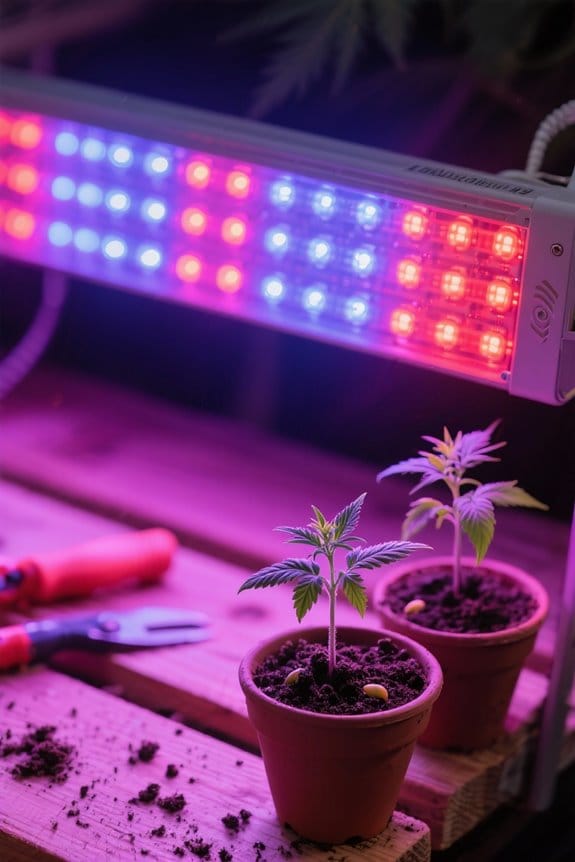
Full-spectrum grow lights supply the range of wavelengths plants need, but not all colors have the same effects. Wavelengths are measured in nanometers, and the photosynthetically active range runs roughly 400–700 nm, the core of the electromagnetic spectrum for plants. Blue light (450–490 nm) supports chlorophyll production and compact leaf growth, essential for vegetative stages. Red light (620–750 nm) drives flowering and fruiting processes, via phytochrome-mediated hormone responses, though detailed benefits follow later. UV light, outside visible range, prompts protective compounds, improving resilience under stress. Infrared light affects temperature sensing and stem elongation, interacting with hormonal signals to influence plant growth patterns. Practical setups combine these bands to match stage-specific spectral needs for indoor cultivation. Adjustable indoor grow lights allow for customization of height and brightness, ensuring that plants receive the optimal light spectrum for their specific growth stage.
Red Light Benefits: Flowering, Fruit Set, and Hormone Signaling
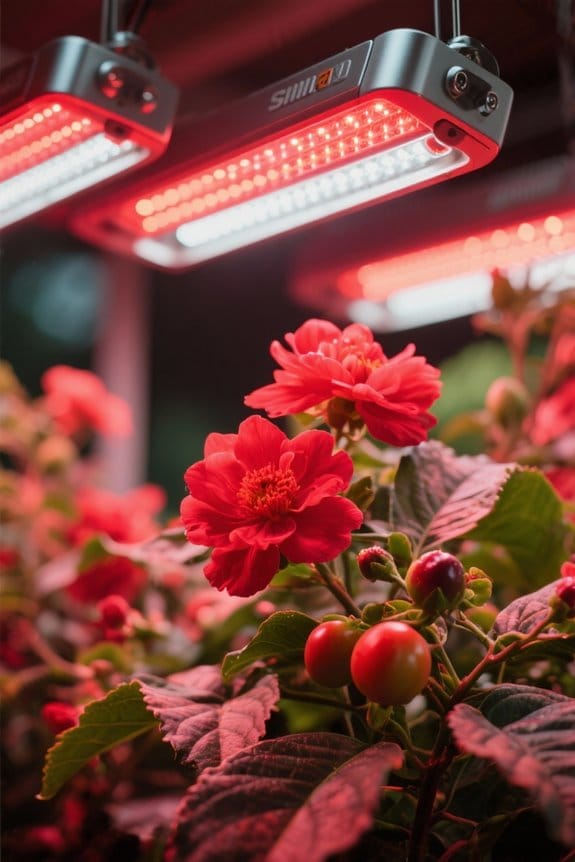
Several practical growers rely on red light to trigger flowering and improve fruit set. Red light, at 620–750 nm, drives photosynthesis efficiently in chlorophyll and phytochrome systems, which control flowering timing in long-day and short-day species. Adequate red photon flux densities, for example 100–300 µmol·m−2·s−1 during reproductive stages, support metabolic activity and fruit set. The spectrum also regulates hormone signaling, promoting synthesis of gibberellins and auxins that aid stem elongation and reproductive development. In controlled indoor gardening, adding red-dominant diodes for 10–14 days before bloom can hasten flowering and increase crop yields. Monitor PAR, maintain 12–16 hour cycles as appropriate, and combine with full-spectrum light to balance vegetative needs while optimizing reproductive outcomes. Many modern LED grow lights offer full-spectrum and red light options, enhancing efficiency and cost-effectiveness for growers seeking to optimize plant growth.
Recommended Products

Unmatched Hair Growth Technology: The iRESTORE Elite Laser Hair Growth Device offers advanced home treatment with 500 lasers and LEDs (2500 mW total power). Triple wavelength technology (625/655/680nm) ensures deeper follicle stimulation to help address alopecia, receding hairline, pattern baldness, and thinning hair. Designed for men and women seeking a natural, non-invasive alternative to drugs or surgery, and can be used alone or paired with minoxidil, supplements, and specialized shampoos for enhanced results

🌞 TRUE SUNLIKE SPECTRUM – The first LED grow light engineered to replicate a real CMH-style sunlight spectrum. Balanced White, Green, Dual Red (640nm + 660nm), Far Red, and optional UV deliver unmatched canopy penetration and plant performance.

Kit Included: 60"x60"x80" Grow Tent; Bar LED Grow Light 645W; 8" AeroZesh G8 Fan; GrowHub E42A Controller; 6" AeroWave E6×2; 8" Black Carbon Filter; 8" Prefilter; 8" 25ft Ducting; 8" Clamp×2; 5*5ft Trellis Net; 5Gal Black Grow Bag×10; 8" Vent Cover×2; Pruning Shears; 100m Twist Tie; Sticky Trap×20; Plant Tag×20; Hook & Loop Cable Tie×10; 5 ft Aluminum Ducting Tape; Gardening Gloves; Rope Hanger×2
Blue Light Benefits: Vegetative Growth, Stomatal Control, and Morphology
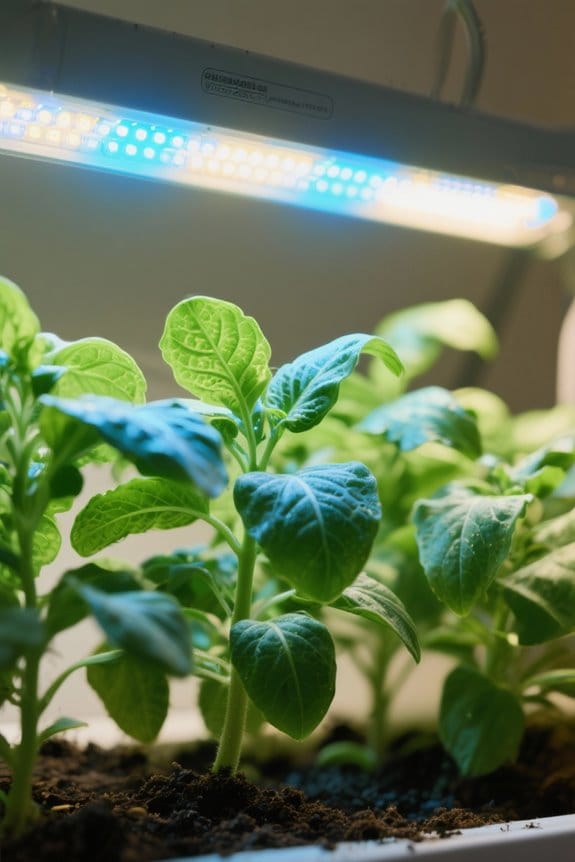
When balanced into a lighting plan, blue light at 450–490 nm drives compact, healthy vegetative growth in many plant species. Blue light increases chlorophyll production, strengthening leaves and stems, which supports efficient photosynthesis for energy conversion. It also governs stomatal control by triggering stomata opening, improving CO2 uptake and transpiration rates during light exposure. Plants show phototropism toward blue wavelengths, which helps regulate plant morphology and produce balanced canopies. Blue wavelengths influence auxin distribution and limit excessive cell elongation, controlling plant stature for stocky growth, often targeted at 10–30% of total PAR in mixed spectra. Practical results include higher biomass and improved nutrient content in leaves, measured as greater dry weight and increased nitrogen and mineral levels, helping growers optimize vegetative stage outcomes. Many meteor shower lights, like the IP65 waterproof rating models, are designed to withstand outdoor elements, ensuring longevity for various lighting needs.
Recommended Products

✔【FULL SPECTRUM GROW LIGHT】- AGLEX 600W LED grow light full spectrum consists of 3000K warm light, 5000K white light, 460nm blue light, 660nm red light, 730nm IR light, and 405nm UV light, similar to natural sunlight. It's an excellent full-spectrum grow light for indoor plants, vegetative and flowering stages, 5x5ft growing area

【High Efficiency and Low Energy Consumption】- SZHLUX LED Grow Light utilize the latest in high yielding LEDs technology diodes, high Energy Efficiency with 2.9 Umol/J, delivers powerful light output and uniform canopy penetration to resulting maximum higher yields. Actual power is 800W with 2304 LEDS, effective footprint is 7 x 7 ft.
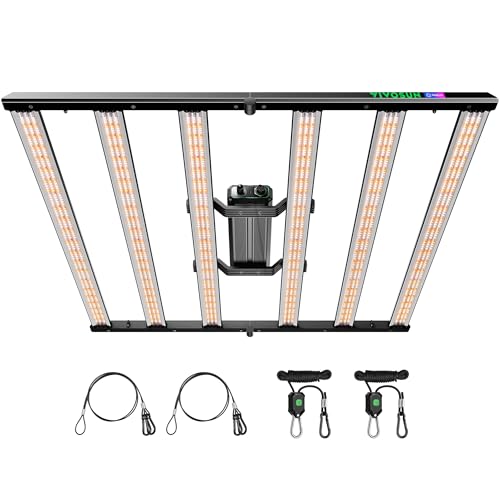
Even, Powerful Light for Full Tent Coverage: The scientifically-arranged light-bar matrix delivers uniform light across the entire canopy; With up to 0.89 uniformity, it reduces hot spots, giving every plant consistent light from edge to edge, ideal for large, high-yield grow setups
Roles of Green, Yellow, and Orange Light in Canopy Penetration
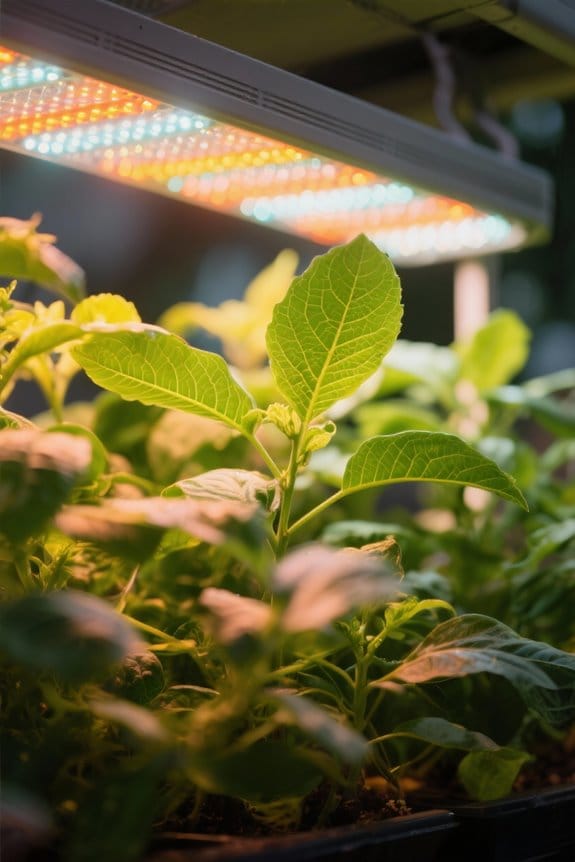
A deliberate mix of green, yellow, and orange wavelengths helps light reach shaded leaves and supports even canopy development. Green light (520–550 nm) penetrates deeper into leaf layers, aiding photosynthesis in lower canopy leaves, about 20% utilization by plants. Yellow light (570–590 nm) contributes minimally to direct photosynthesis, but in combination with blue and red it can boost growth rates and overall plant health. Orange light (590–620 nm) also penetrates tissue and complements red light during flowering phases. In full spectrum setups a balanced light source includes measurable portions of these wavelengths, for example 10–20% green, 5–10% yellow, 10–15% orange, to increase canopy penetration and improve uniform light availability. Incorporating digital timers into your indoor gardening setup can maximize the efficiency of full spectrum grow lights by allowing precise control over lighting schedules.
Recommended Products

Program and monitor using mobile app or onboard touchscreen

PREMIUM Foldable 1500W- LED lights specialty manufactured by Sinowell with Samsung LM301 diodes for FULL spectrum light, ideal for ALL STAGES of growth. Large 48x48 footprint for the best light spread and prenetration. Silent functions mean that no fans cause noise pollution in your home. 1500w output incentivizes low cost for the home and runs 50% less energy than “blurple” and other leading LEDs. UL, CE, ETL Certificated.

An advanced AI grow tent kit with dynamic controls and built-in components; everything you need to achieve the perfect grow—all housed in a state-of-the-art tent.
UV and IR: Non‑Visible Light Effects on Plant Quality and Development
Although often unseen by the eye, ultraviolet (UV) and infrared (IR) wavelengths play distinct, practical roles in indoor plant quality and development. UV light, 10–400 nm, triggers mild stress responses that increase protective compounds such as flavonoids, improving flavor, color, and disease resistance. IR light, 700 nm to 1 mm, affects temperature and morphology, promoting stem elongation and leaf expansion when applied in measured amounts. Together these light wavelengths can be combined in a targeted spectrum to optimize plant growth and plant quality. In indoor gardening, small doses of UVA (315–400 nm) are common, while supplemental IR is used for microclimate warming to boost photosynthesis indirectly. Practical setups balance intensity, duration, and placement to avoid overstress while improving yield. Many LED grow lights offer energy-efficient solutions, providing significant savings and supporting sustainable gardening practices.
How to Read a Grow Light Spectrum Chart and Choose the Right CCT
How should a grower interpret a spectrum chart to pick the right light for each growth stage? A grow light spectrum chart plots light intensity across wavelengths in nanometers, showing peaks useful for photosynthesis within the PAR range of 400–700 nm. Read the chart to find specific wavelengths and their relative intensity. Blue and red light peaks, typically 450–490 nm and 620–750 nm, guide decisions. Check numerical light intensity values and PAR output, measured as μmol·m⁻²·s⁻¹, to guarantee adequate energy. Color temperature gives appearance: 5000–6500K looks cool for veg, 2700–3500K appears warm for flower. Full-spectrum LED grow lights combine these bands for ideal growth. Use charts to compare specific wavelengths and intensities, then select fixtures matching crop needs. For optimal seedling health, consistent light schedules support healthier plant development by ensuring seedlings receive the right amount of illumination each day.
Recommended Products
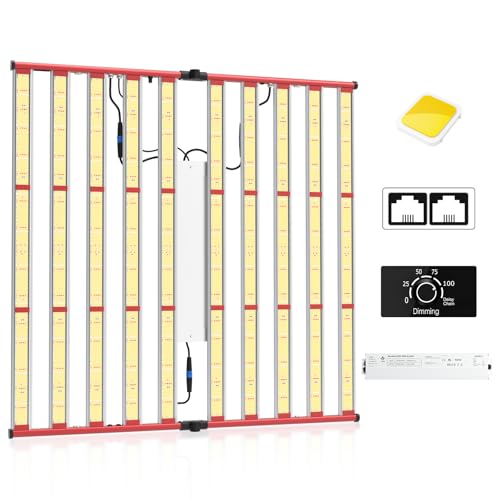
✔【FULL SPECTRUM GROW LIGHT】- AGLEX 1000W LED grow light full spectrum consists of 3000K warm light, 5000K white light, 460nm blue light, 660nm red light, 730nm IR light, and 405nm UV light, similar to natural sunlight. It's an excellent full-spectrum grow light for indoor plants, vegetative and flowering stages, 6x6ft growing area

High Efficiency and Uniformity: This grow light has a 40% higher PPFD than comparable HID lights and a higher conversion efficiency (2.8μmol/J); Uniform and dense PAR map means deeper light penetration for healthier plants all while consuming only 650W, for max efficiency

【High-Efficiency & Energy-Saving Technology】The BESTVA BP LED light utilizes advanced LED technology to deliver powerful illumination and uniform light distribution, supporting the healthy growth of your indoor potted plants. Compared to traditional HPS lights, it saves up to 50% on energy, making it the perfect energy-efficient choice for home gardening, balconies, and small greenhouses.
Matching Spectrum to Growth Stage: Seedlings, Veg, and Flowering
When preparing lights for each stage, match spectrum and intensity to plant needs for predictable results. Seedlings prefer 5000K–6500K, which supplies ample blue light to support germination and compact growth. Use moderate light intensity, around 100–200 µmol·m−2·s−1, and run 16–18 hours daily for healthy growth. In the vegetative stage, emphasize blue light (450–490 nm) to encourage leaf and stem development, increasing intensity to 200–400 µmol·m−2·s−1 for robust photosynthesis. Shift to flowering by altering spectrum toward red light (620–750 nm) and 3000K–4000K balance, which comes to the rescue for bud and fruit formation. During flowering, provide 12–16 hours light, higher intensity as crops mature, and target ideal yields with stage-appropriate matching spectrum. Consider using full-spectrum LEDs that cover 400 nm to 700 nm to closely mimic natural sunlight, enhancing photosynthesis during all growth phases.
Recommended Products

Features Samsung LM301H EVO LEDs each rated at 3.14 µmol/J PPE, the highest efficiency of LM301B, LM301H, and Bridgelux 3030 chips.

IP65 Water Resistant Rating: Features IP65 water resistant rating to protect the LED system from moisture and dust in grow environments

【Maximize Yield & Crop Quality】The GP-4800 LED grow lights adopted with upgraded Samsung 281B ProVL & Osram 660nm chips in 6 passive-cooled led bars, professional SMD design offers even and broad canopy coverage, higher light intensity, less light decay. It's easily to achieve Max 2.9g yield per watt with 30% higher average PPFD, and boast the incredible high efficiency 2.9 µmol/J. Total 2016pcs LEDs consume 480W only over 4x4ft planting area, smaller footprint for better crop quality&quantity.
Frequently Asked Questions
What Does a Full Spectrum Grow Light Do?
Like sunlight distilled, it bathes plants in balanced wavelengths: full spectrum benefits include a tailored light spectrum that boosts photosynthesis and plant growth. It enables spectrum adjustment, color temperature control, efficient equipment choice, light duration management, and efficiency comparison.
How to Use Full Spectrum Grow Lights?
Position full spectrum lights 10–24 inches above plants, choose suitable fixture options and light types, schedule 12–16 hours for plant growth, adjust light spectrum by stage, optimize energy efficiency, and follow usage tips to maintain plant health in indoor gardening.
How Far Should Full Spectrum Grow Lights Be From Plants?
Like a gentle sunrise, LEDs sit 6–24 inches above plants; fluorescents about 12 inches; incandescents 24+ inches. Consider light intensity, distance measurements, growth stages, light types, temperature control, installation tips, light spectrum, plant health, light duration, garden setup.
Do Plants Like Full Spectrum Light?
Yes; plants generally prefer full spectrum light because balanced light spectrum enhances plant growth, optimizes light absorption and photosynthesis process. Light intensity, color temperature, light duration, energy efficiency and seasonal variations affect indoor gardening outcomes.


