As an Amazon Associate, we earn from qualifying purchases. Some links on this site are affiliate links at no extra cost to you. Our recommendations are based on thorough research and editorial judgment.


How to Make Clean Cuts: Pruning Techniques for Plant Health

Clean, precise pruning cuts preserve plant vigor and limit disease. Use sharp bypass pruners for stems up to 3/4 inch, loppers for 1–2 inch branches, and saws for larger limbs, all sterilized with alcohol between plants to prevent pathogen spread. Cut just outside the branch collar at a 45-degree angle, avoid leaving stubs, and use the three-cut method for big limbs to prevent bark tear. Follow these steps for healthier growth, and more technique specifics await.
Key Takeaways
- Use sharp bypass pruners or loppers to make clean, precise cuts that minimize tissue crushing.
- Cut just outside the branch collar at about a 45° angle to promote quick healing and water runoff.
- Employ the three-cut method for large limbs to prevent bark tearing and ensure a neat final cut.
- Remove dead, diseased, or damaged wood promptly, cutting back to healthy, sound tissue.
- Clean and sanitize tools between plants, and sharpen blades regularly to reduce disease spread.
Why Proper Pruning Matters for Plant Health
You may be interested


Begin by evaluating the plant’s structure and decay before making any cuts. Proper pruning redirects energy toward new shoots and maintains plant health. Clean cuts, made with sharp bypass pruners, reduce exposed tissue to promote wounds that heal within weeks, not months. Thinning by removing entire branches improves air circulation and light, lowering fungal disease risk by up to 50% in crowded canopies. Avoid pruning mistakes like leaving 1–3 cm stubs or cutting flush against buds, which invite decay. Tools and techniques matter: sterilize blades with 70% isopropyl alcohol, use 2–5 cm clearances for branch collars, and cut at a 45° angle when appropriate. Respect natural growth patterns, prune conservatively, and prioritize structure over aesthetics. Consider using ergonomic tools designed to reduce user strain during prolonged use, thus enhancing the efficiency and comfort of your pruning tasks.
When to Prune: Timing and Seasonal Considerations

After evaluating structure and removing diseased wood, timing for pruning becomes the next practical consideration. Dormant season pruning, typically December to February, reduces stress on deciduous trees and allows major structural changes while energy resides in roots. Late winter to early spring is ideal for most cuts, enabling rapid recovery before leaf-out and avoiding damage to developing buds. Spring-flowering plants require pruning immediately after bloom to protect next year’s flower buds, usually within two weeks of petal drop. Summer-flowering species can be pruned in late winter or just before new growth begins, about 1–2 inches above a healthy bud. Fall pruning is generally discouraged because it promotes tender growth vulnerable to frost, harming long-term plant health. Choosing the right pruning shears with ergonomic designs can further enhance precision and comfort during the pruning process. Accurate timing for various species preserves flowering and liveliness.
Essential Pruning Tools and Tool Care

A few well-chosen tools make pruning safer and more effective. Bypass pruners, a type of pruning shears, are recommended for cuts up to ¾ inch in diameter because they produce cleaner cuts that minimize plant tissue damage. Loppers handle branches to about 2 inches thick, offering extra reach and leverage for larger limbs. Select tool size to match the task; oversized instruments can crush smaller stems and tire the user. For proper care, regularly sharpen blades and clean surfaces to reduce disease risk and improve performance. Oil cutting edges lightly to prevent rust, and maintain wooden handles with linseed oil to prolong usability. Regular maintenance and correct tool choice keep pruning efficient, precise, and less damaging to plants. Additionally, consider ergonomic handle designs in pruning tools to minimize hand fatigue and enhance comfort during extended use.
Recommended Products

Box of 10, Light weight multi-purpose shears

6 ft. Pruner with a 3/4" cutting capacity

8-inch floral bunch cutter and horticulture pruner
Preparing and Sterilizing Tools for Safe Cuts

Sanitize pruning tools before use to prevent spreading pests and diseases. Clean with a 10% bleach solution or isopropyl alcohol to remove visible sap, soil, and pathogens that travel on blades and handles. After cleaning, disinfect and sterilize between cuts when working on diseased plants to avoid cross-contamination, using wipes or immersion for thirty seconds. Keep cutting edges sharp with an oil stone or sharpening tool; sharp blades make clean cuts and preserve cutting performance. Allow tools to dry fully to prevent rust and maintain function. Inspect for nicks or bent parts; remove burrs, file, or replace damaged components to protect plant tissue. Regular maintenance is crucial for Japanese pruning shears, which are known for their precision and durability. Repeat cleaning routines regularly, and store tools dry and protected to come to the rescue when pruning is needed.
Recommended Products

Item Package Dimension: 9.0599999907588L x 8.3099999915238W x 5.5899999942982H inches

Bleach-Alcohol free

Hospital Grade Disinfectant: ForPro TOTAL-CIDE is a powerful, hospital grade, EPA registered, broad-spectrum disinfectant, sanitizer, deodorizer and all-purpose cleaner that provides comprehensive protection against a broad range of harmful pathogens.
How to Make Clean Cuts: Techniques and Angles

Properly cleaned and sharpened tools make precise cuts and help plants heal faster. Use sharp tools to slice clean cuts that minimize tissue crushing, this helps reduce the risk of infection and speeds recovery. Make pruning techniques decisions based on branch size and position, locate the branch collar and cut just outside it to minimize wound size and preserve growth tissue. Angle cuts at about a 45-degree angle so water runs off, this reduces moisture accumulation that can invite rot. For shortening a limb, pick a lateral branch about one-third the diameter, cut just beyond it to respect natural growth patterns and limit shock. Remember the three-cut technique comes to the rescue for large branches, preventing bark tearing. It is essential to disinfect shears between plants to prevent the spread of disease and maintain optimal plant health.
Recommended Products

FELCO 2 Hand Pruner – The world-famous Swiss-made bypass pruner built for precision and durability, featuring forged aluminum handles and replaceable hardened steel blades.

Product 1: The Felco 7 Orcharding and Garden secateurs is best used for cutting tasks in your garden. It is best suited for twigs and plants with a diameter not larger than 2.5 cm.

The Three-Cut Method for Large Branches
The three-cut method is a systematic way to remove large branches without tearing bark or damaging the trunk. First, an undercut is made about 6–12 inches from the branch collar, cutting one-third through the branch to prevent tearing when it falls. Next, a top cut is placed roughly 3 inches farther out, cut straight down until the limb breaks free. Finally, the last cut is made at the branch collar, just outside the bark ridge, to promote proper healing and minimize infection. This pruning technique reduces wound size, accelerates closure of the cut site, and helps preserve tree health. When cutting back in the crown, follow these measurements and keep tools sharp for clean, precise cuts. Regular maintenance of pruning tools, such as sharpening tools with whetstones, ensures optimal performance and contributes to healthy pruning practices.
Training Young Trees and Structural Pruning
When establishing a young tree, begin by removing broken, crossed, or pest‑infested branches to direct growth and prevent future problems. Clean cuts are essential; use sharp tools and prune 1/4 to 1/2 inch outside the branch collar. Structural pruning means selectively removing competing leaders and tight crotches to establish a single central leader for a strong structure. Training young trees requires gradual limb removal, no more than 25% leaf area in one season, to preserve photosynthesis and root establishment. Remove lower limbs as the trunk reaches 6–8 feet, spacing scaffold branches 18–24 inches vertically. Professional arborists recommend formative pruning during the first 3–5 years, using measured cuts and braces when necessary, which helps produce resilient, storm‑resistant trees. Consider ergonomic features when selecting pruning tools to reduce physical strain and enhance precision during these tasks.
Recommended Products

【2-in-1 Versatility】From ground-level pruning to tall tree trimming, Prunarbo’s battery pruning shears with pole does it all. Attach the extendable pole (4.4–8.2 ft) to reach high branches without climbing or straining, and enjoy cleaner, faster cuts with total control.This long reach tree pruner makes heavy-duty gardening safer, easier, and twice as efficient — ideal for anyone who wants pro results with zero hassle

2-in-1 Versatile Design: This electric pole pruner features a dual-function design, working as a standalone electric pruning shear or attached to an extendable pole for high branch trimming. Ideal for backyard trees, tall hedges, and orchard maintenance, it covers both low and high pruning tasks, offering convenience, efficiency, and precise cuts in one tool
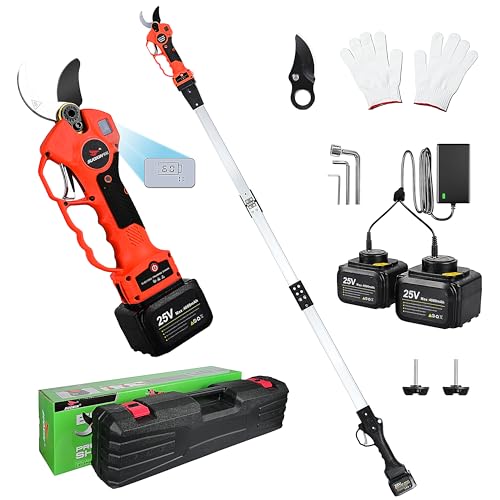
🔪 [SK5 Steel Blade – Sharp, Durable & Rust-Resistant] Crafted with premium SK5 steel, the blade resists rust and sap buildup. It delivers clean, smooth cuts through hardwood branches up to 1.6 inches (4cm), while remaining razor-sharp for delicate trimming tasks.
Pruning Shrubs, Hedges, and Flowering Plants
Although timing and technique vary by species, proper pruning of shrubs, hedges, and flowering plants begins with clean, sharp tools to make smooth cuts that heal quickly. Use hand pruners for stems under ½ inch, loppers for ½–1½ inches, and saws for larger branches. Make thinning cuts to a healthy lateral branch, about ¼ inch above a bud, to encourage air circulation and light penetration. Remove branches in a one-third rotation of oldest stems annually to promote rejuvenation and new growth. For hedges, taper the top wider than the base to let lower leaves receive sunlight and maintain density. Prune spring-flowering shrubs immediately after bloom to avoid removing next season’s buds. Choose high-carbon steel blades for durability and ease of sharpening, which helps maintain tool longevity. Clean tools between plants to protect overall plant health.
Recommended Products

At full capacity, this battery will last a full 12 hours and will complete more than 15, 000 cuts on 1. 5-inch/35mm branches. This pruner is super light weighing in at 1. 9-pounds/0. 9kg

Plus Grow Tent Kit: A professional choice that simplifies indoor gardening and maximizes growth potential; Includes a premium grow tent, tunable spectrum grow light, ventilation & circulation system, smart GrowHub, and essential accessories—all in one to support healthy growth and higher yields

Superb Balance: Unlike competing models where the pruning unit attaches to the top of the pole, the SC3116 features a bottom-mounted design which gives the tool a nice balance and prevents top-heaviness.
Repairing Wounds and Managing Decay
After pruning back overgrown limbs, attention turns to repairing wounds and managing decay to protect long-term tree health. Make clean cuts just outside the branch collar, keeping the wound as small as possible to aid compartmentalization and reduce decay spread. Use sharp clean tools, such as bypass pruners or a pruning saw with 3–6 teeth per inch, to limit tissue damage and lower infection risks. Remove dead or damaged wood promptly, cutting to sound wood and avoiding flush cuts that impede natural healing. Apply wound dressing sparingly only to large wounds when recommended, since many dressings can trap moisture. Implement decay management by monitoring for signs like fungal fruiting bodies or discoloration every 3–6 months, and document changes to guide further action. For tougher materials and dry growth, consider using anvil pruning shears designed to handle these tasks efficiently.
Frequently Asked Questions
What Are the 3 C’s of Pruning?
The 3 C’s of pruning are Clean cuts, Correct techniques, and Care of tools. They guide pruning tools use, pruning timing, pruning methods, pruning safety, shaping plants, seasonal pruning, plant growth, tree health, pruning techniques, and garden aesthetics.
What Are the 5 D’s of Pruning?
They are Dead, Diseased, Damaged, Deranged, and Duplicate branches. Imagined like sculpting winter silhouettes, pruning removes dead wood, diseased branches, damaged limbs to restore directional growth, open dense canopies, aid dormancy period, dynamic pruning for deciduous trees and decorative shrubs.
What Is the 1 2 3 Rule of Pruning?
The 1-2-3 rule of pruning is a three-cut technique: an undercut, a top relief cut, then the final branch collar cut. It considers pruning timing, tool selection, cutting techniques, plant type, growth stages, seasonal considerations, safety precautions.
How to Make a Proper Pruning Cut?
Make a proper pruning cut by selecting appropriate branch selection and cut size, using proper tools and correct cutting angles; consider types of pruning, best season, pruning frequency, pruning techniques, wound care and support plant recovery.


