As an Amazon Associate, we earn from qualifying purchases. Some links on this site are affiliate links at no extra cost to you. Our recommendations are based on thorough research and editorial judgment.


Understanding Different Types of DIY Tapes: Masking, Painter’s, Duct, and More

DIY tape choice affects results and surface safety. Masking tape is low-tack for paper and trim, removable for 1–14 days. Painter’s tape resists paint bleed, ideal for fresh drywall and sharp lines. Duct tape offers heavy-duty adhesion, 10–30+ lb shear strength, good for metal and outdoor repairs. Electrical tape insulates to 600V, PTFE thread seal tape creates watertight pipe joints, filament tape adds tensile strength; continue for step-by-step selection guidance.
Key Takeaways
- Match tape type to surface and task—painter’s for clean paint lines, masking for light paper, duct for heavy repairs.
- Choose adhesive strength based on duration and surface: low-tack for delicate, high-tack for rough or outdoor use.
- Use specialty tapes when required: electrical for insulation, Teflon for pipe threads, filament for high-tensile bundling.
- Check environmental resistance—UV-, moisture-, and temperature-resistant tapes are needed for outdoor or long-term applications.
- Read packaging for recommended surfaces, clean-removal claims, and maximum recommended application time.
Things to Consider When Buying Tape
You may be interested


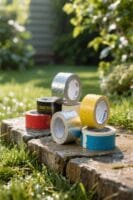
When choosing tape, buyers should first match the tape to the surface to avoid damage or poor adhesion. Assess surface type: painted drywall, glass, or wood require different tack levels, and masking tape often provides residue-free removal for paint jobs. Check the adhesive strength in ounces or grams per inch when available; light tack for delicate surfaces, heavy duty for rough or outdoor use. Consider tape application duration: temporary protection for 1–14 days, or permanent bonds beyond 30 days. Evaluate environmental specs like temperature range and water resistance for outdoor or humid areas. For plumbing or electrical tasks, choose specialized tapes that meet industry standards. Inspect packaging for instructions about clean removal and recommended surfaces without guessing. It is important to choose UV-resistant and moisture-proof options to enhance durability, especially for outdoor projects.
Common Tape Types and Their Uses

Although each tape type serves a distinct purpose, a basic understanding of their strengths helps make the right choice quickly. Masking tape is used for painting projects to create clean lines and can be removed without damage, ideal for temporary applications. Painter’s tape is a refined masking tape, resisting paint bleed on delicate surfaces and ensuring clean edges during trim work. Duct tape offers a strong adhesive and broad utility, useful for quick repairs, straps, and weatherproofing, with widths commonly 1.88 in (48 mm). Adhesive tape varieties include double-sided options for mounting lightweight objects, offering invisible bonds but limited load capacity. Packing tape is essential for sealing boxes securely for shipping, typically 2 in (48 mm) wide with pressure-sensitive glue. These choices aid many DIY projects. In 2026, residue-free options are available in duct tapes, protecting surfaces during removal and enhancing their versatility for various applications.
Specialty Tapes for Specific Tasks

After covering common tape types and their general uses, a group of specialty tapes handles specific technical tasks around the home and workshop. Electrical tape, a stretchy vinyl tape, insulates wires and resists moisture, abrasion, and UV, typically 0.13–0.18 mm thick for safe repairs. Teflon tape, or plumber’s tape, wraps pipe threads to form a watertight seal, usually 12 mm wide and 0.075 mm thick, resisting heat and chemicals. Filament tape contains fiberglass strands for very high tensile strength, often 48–72 mm wide, ideal for bundling heavy items and reinforcing boxes. Drywall tape, in paper or mesh, joins panels and prevents cracks when used with joint compound. Anti-slip tape adds traction to stairs and ramps. For best results, start with clean surfaces and proper overlap. Additionally, self-fusing silicone tape is ideal for waterproof and durable pipe repairs, offering a significant temperature resistance range for various applications.
Recommended Products

OTC's 10,000 pound capacity load leveler is designed to be used in conjunction with a crane or hoist to lift engines, transmissions, or other heavy components

The OTC 1735B handles a wide variety of engines, transmissions, torque converters, and rear axles from trucks, tractors, and construction machinery

FORGET PAINT: No need to shut down, mask, paint, and wait for it to cure. Instead of wasting hours on costly downtime, quickly lay down lines of tape and quickly reopen vital areas for production
How to Choose the Right Tape for Your Project

Why pick one tape over another for a job around the house? Assess surfaces first; painter’s tape removes cleanly from drywall and wood, masking tape works for light paper tasks, while duct tape bonds to metal, plastic, and fabric. Identify required adhesive strength; double-sided tape holds 1–5 lb for photos, duct tape provides 10–30+ lb shear strength for heavy repairs. Consider duration; masking tape suits temporary projects and clean paint lines, contractor-grade duct tape is long-term. Account for environment; outdoor use needs UV- and moisture-resistant formulations, some duct and specialty outdoor tapes last months in sun. For outdoor repairs, you might consider using heavy-duty duct tape, which offers strong, weather-resistant adhesion suitable for various surfaces. Match function: electrical tape insulates wires, use rated PVC for 600V. Choose tape that fits surface, load, duration, and environment for best results.
Frequently Asked Questions
What Are the Different Types of Tape for Taping?
Common types include crafting tape, waterproof tape, electrical tape, double sided tape, medical tape, washi tape, heat resistant tape, gaffer tape, foil tape, transparent tape, plus masking, painter’s, and duct tape for painting, repairs, and specialized uses.
What Is the Difference Between Duct Tape and Masking Tape?
Like night and day, the answer is clear: duct tape is strong, durable and versatile for duct tape applications, repair and harsh conditions, with varied colors and materials, but may leave duct tape residue; masking tape removes cleanly and is temporary.
What Is the Difference Between Masking Tape and Painters Tape?
Masking tape uses prioritize general-purpose, temporary tape applications and color coding tape; painter’s tape adhesion is lower for clean painter’s tape finish, improving tape removability and tape surface compatibility. Masking tape brands, tape width comparison, long term tape solutions differ.
Are There Different Types of Masking Tape?
Yes: it enumerates varieties like painter’s, drafting, and specialty tapes. They differ in masking tape uses, masking tape brands, masking tape colors, masking tape application, masking tape strength, masking tape removal, masking tape thickness, masking tape texture, masking tape longevity, masking tape adhesives.


