As an Amazon Associate, we earn from qualifying purchases. Some links on this site are affiliate links at no extra cost to you. Our recommendations are based on thorough research and editorial judgment.


Using Tape for Precise Painting Lines and Patterns

Painters tape guarantees crisp edges by sealing paint lines and preventing bleed-through. Use blue low-tack tape for delicate surfaces and green or heavy-duty tape for rougher areas, widths from 1/4″ to 2″ for fine to broad control. Clean, dry, 60–80°F surfaces and burnish tape firmly with 3–5 pounds pressure to seal. Apply base coat 1/8–1/4″ past edge, remove tape at a low angle while slightly tacky, score if needed, and follow for more techniques.
Key Takeaways
- Choose the right tape: blue for delicate surfaces, green or heavy-duty for rougher or exterior surfaces.
- Clean and dry surfaces, lightly sand glossy areas, then firmly burnish tape edges to prevent paint bleed.
- Apply a base coat that extends 1/8–1/4″ past the tape line before topcoats for smoother edges.
- Remove tape while topcoat is slightly tacky, pulling slowly at a low angle (near 90°) for crisp lines.
- For curves and organic shapes, use short overlapping tape pieces or flexible curve tape and dab thin paint layers.
Why Painters Tape Matters for Crisp Edges
You may be interested


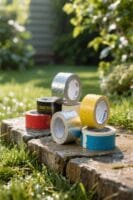
Precision matters in painting projects. Painters tape comes to the rescue for masking, ensuring clean edges and crisp lines without skill-intensive brush control. It adheres to drywall, wood, and trim, holding against paint bleed when pressed firmly, about 3–5 pounds of fingertip pressure along seams. Use tape widths from 1/4 inch for fine stripes to 2 inches for larger borders, matching pattern scale. Press down edges completely, creating a tight seal to prevent seepage of water-based or oil-based paints with typical viscosity 40–90 KU. Remove tape at a 90-degree angle while paint is slightly wet, pulling slowly to avoid lifting. Different tape colors indicate adhesion levels, but application technique remains the key to professional-quality results. Using eco-friendly options in packing tapes can contribute to sustainability while retaining effective sealing properties.
Choosing the Right Tape for Your Surface

After securing crisp edges with proper taping technique, choosing the right tape depends on surface type and paint chemistry. Painters tape is ideal for most interior walls; it adheres well and removes cleanly, preventing residue that would blur paint lines. Blue painters tape is formulated for delicate surfaces, offering low-tack removal for freshly painted walls and wallpaper without tearing. Green painters tape has higher adhesive strength, recommended for rough wood or concrete where bond must resist paint bleed. Masking tape for curves conforms to rounded profiles, enabling smooth lines around windows and doors when creating patterns. Select tape by matching adhesive strength to surface texture and by testing a 2-inch strip for 24 hours, confirming clean removal and no finish damage. For shipping and packaging, Scotch Heavy Duty Shipping Packing Tape is known for its strong industrial-strength adhesive and versatility on various box types, ensuring packages are securely sealed.
Preparing Surfaces for Tape Application

When preparing a surface for tape application, start by making sure it is clean, dry, and free from dust or debris to promote strong adhesion. Surfaces should be at room temperature, between 60–80°F (15–27°C), for ideal tape performance. Lightly sand glossy finishes with 220–320 grit to improve tape grip and prevent bleed. Wipe with a damp microfiber cloth to remove sanding residue, then allow 30–60 minutes drying. Inspect for dents, cracks, or peeling paint and patch with spackle or primer, following manufacturer cure times. Allow at least 24 hours for previous paint layers to dry to avoid lifting. Press tape firmly along edges, using a plastic putty knife to burnish for a clean seal. Evaluating adhesive strength and residue management is crucial for ensuring the tape adheres well and can be removed cleanly without damaging surfaces.
How to Paint the First Color Like a Pro

Begin by painting a solid base coat that extends at least 1/8–1/4 inch (3–6 mm) past the intended edge to seal the tape and block bleed. Apply the paint evenly with a consistent brush stroke. Two thin layers produce a smoother finish, letting each layer dry fully before continuing. Use a steady, controlled brush technique to avoid ridges and laps. Extending coverage beyond the desired edge minimizes seepage beneath the tape during later steps. Allow full drying time, following manufacturer’s recoat interval, to prevent smudging when tape is applied. This approach creates a sealed border that helps produce crisp lines when the next color goes on. Small test panels come to the rescue for timing and technique adjustments. To ensure weather resistance, consider using paint and tools rated for outdoor use to withstand varying conditions.
Proper Tape Placement and Sealing Techniques

Although care is taken during masking, proper tape placement is essential for crisp lines and minimal bleed. The painter should apply the tape with a steady hand, aligning the bottom edge where the next color will meet, typically within 1–2 mm accuracy to guarantee straight borders. Surfaces must be clean and dry before applying tape, free from dust and oils to prevent paint from seeping under. Press down firmly along edges using a burnishing tool or a credit card, moving at a 45° angle to create a tight seal. For multiple strips, overlap by 1–2 mm to avoid gaps. After first color dries, re-tape precisely, burnish again, and check adhesion visually, so seal integrity comes to the rescue. Choosing the right tape is crucial for achieving optimal adhesion and clean paint lines, ensuring that the tape adheres well and prevents lifting or curling during use.
Recommended Products

➤ 2 INCH WIDE MASKING TAPE : Stadea Series Super A, 2 Inch wide, 55 Yard long masking tape made of strong crepe paper, and glue with excellent adhesion on multiple surface - Pack of 2400

EASY TEAR – Serrated edges and perforation allow for fast, clean tearing by hand, eliminating the need for knives or dispensers.

✔ HIGH TACK DOUBLE SIDED MOUNTING TAPE – Industrial-grade adhesive with high initial tack for instant bonding. Ideal for signage, nameplates, POS displays, panel fixing, and applications requiring strong, permanent adhesion.
The Bleed-Line Method for Perfect Borders
After sealing and burnishing tape edges, the painter can use the bleed-line method to guarantee cleaner borders. Seal the tape edge by applying a thin bead of the first color, about 1–2 mm thick, let it dry fully. This fills gaps and prevents seepage under the tape. Next, apply the second color up to the tape edge, using a 2–3 inch brush or a 4–6 inch foam roller for even coverage. Expect a slight bleed under the tape, which can sharpen the visual divide when removed properly. For best results, remove the tape at a 90-degree angle while the topcoat is still wet, pulling slowly to avoid lifting paint. Careful timing and steady hands come to the rescue.
Applying the Second Color Without Mistakes
One careful step keeps the second coat clean and crisp. Apply the second color only after the bleed-under layer is fully dry, typically 2–4 hours for latex at 70°F, humidity dependent. Press down firmly along the tape edge, using a fingernail or a putty knife as a straight edge to seal any gaps before painting. Overlap the tape slightly with the new color by 1–2 mm to avoid visible gaps when viewed at arm’s length. Choose a complementary hue to enhance contrast, for example navy after pale gray. Allow 4–6 hours drying before handling for most acrylics, longer in cold conditions. Remove tape at a 90-degree angle while paint is still tacky to preserve the sharp line. Using patterned duct tapes can add aesthetic appeal and enhance the visual charm of your painting project, as they provide a stylish way to complement existing decor.
Removing Tape for the Sharpest Possible Line
When ready to remove the tape, the painter should work while the topcoat is still slightly tacky to get the sharpest edge. Remove tape slowly, at a low angle near 90 degrees, to avoid lifting paint. If bleeding occurred, use a craft knife to score along the edge before lifting, cutting only through the topcoat. Check edges as tape comes off, pausing to touch up any tiny spots with a 1/8-inch brush. Follow the paint maker’s dry-time guidance for full curing, though initial removal works best when slightly wet. For long runs, pull a few inches at a time, keeping tension even, which minimizes tearing. Inspect the line for bleed and correct immediately for a crisp, professional finish. For those considering using adhesive Velcro strips for their projects, it is important to assess surface compatibility to ensure effective adhesion and minimize damage during removal.
Creating Geometric Patterns With Tape
How should a painter approach creating crisp geometric patterns with tape on a wall or furniture surface? Begin by cleaning the surface thoroughly, using mild detergent and a lint-free cloth to guarantee better adhesion. Plan designs on paper, sketching shapes and noting measurements such as 2–6 inch (5–15 cm) band widths and 30–60 degree angles. Use painter’s tape to create straight edges, pressing tape down firmly with a plastic card to seal edges. Paint within taped areas for clear shapes, applying one or two thin coats with a 3/8-inch nap roller for smooth coverage. Remove tape while paint is still wet, pulling at a 45-degree angle. Double-sided heavy-duty tapes can also be utilized for temporary displays or installations, ensuring a strong adhesive bond on smooth surfaces. Experiment with varying widths and angles to create clean, modern geometric patterns.
Stenciling and Custom Designs Using Tape
After laying down straight-edged bands and geometric shapes with painter’s tape, creating custom stencils offers more intricate designs and repeatable motifs. Tape and wax paper produce a durable stencil; sketch the motif on wax paper, overlap 1/8–1/4 inch tape strips, then cut with a hobby knife for details under 1/4 inch. Secure edges: Use firm pressure along the perimeter to prevent bleed through. Apply paint with a stiff brush using a dabbing motion, keeping layers thin, about 0.5–1 mm per pass, for crisp results. Remove the stencil while paint is slightly wet to preserve sharp lines. Clean the stencil with warm water and mild soap for reuse. Repeat placements may be registered using 1/2 inch alignment tabs. For outdoor projects, consider using waterproof options to ensure durability and maintain the design’s integrity against various weather conditions.
Techniques for Curves, Circles, and Organic Shapes
Several simple tools can come to the rescue for cutting clean curves and circles with tape. Short strips of tape applied along a sketched curve give control, about 1–2 inch (25–50 mm) pieces for small arcs. For larger radii, a compass or round object (plates, lids) creates accurate arcs up to 24 inches (600 mm). Use flexible tape designed for curves to prevent bubbles and misalignment. Smooth each piece firmly, pressing from center outward to avoid wrinkles. For organic shapes, lightly sketch the design then apply mosaic-style tape pieces, overlapping edges by 1–2 mm for continuity. On delicate surfaces, use low-tack tape and test a scrap first, removing slowly at a 45° angle when painting is dry. Consider using aluminum foil tape for its strong adhesion and temperature resistance capabilities, especially in demanding environments.
Troubleshooting Common Tape and Paint Problems
Troubleshooting begins with inspection and simple fixes that come to the rescue when tape and paint don’t cooperate. Check adhesion first. Use a burnishing tool or the flat of a fingernail to press tape edges firmly, preventing paint bleed by creating a tight seal. Clean the surface with a mild detergent and dry it; oil or dust will reduce tack and cause tape to lift. Match tape type to surface: 3/4-inch blue painter’s tape for delicate trim, 1-2 inch green tape for rough wood or concrete. If edges tear on removal, wait 24 hours for paint to cure, or score gently with a 0.5 mm craft knife before pulling tape back at 45 degrees. Inspect for seepage and touch up small flaws.
Recommended Products

Industrial Blue Electrical Tape: Certified by UL and CSA, this tape adheres to top industry standards, making it ideal for contractors, professional, and industrial applications, as well as home DIY projects.

Painters Tape: Blue masking tape is ideal for professional and DIY painters who want sharp paint lines without smudging. This painter’s tape ensures there is no damage caused to the surrounding surfaces. It ensures more precision in painting jobs.

DIMENSIONS: This bulk pack of blue painter's tape comes with 24 rolls. Each roll measures 2 inches width by 60 yards length (total of 1,440 yards of tape).
Frequently Asked Questions
How to Get Perfect Paint Lines With Tape?
Begin by sealing the edge: press paint tape firmly, align straight, and apply the base color slightly past the line. Use paint tape techniques, seal with the base hue, and remove at 90 degrees for achieving crisp edges.
How Do Painters Get Such Straight Lines?
By sealing edges tightly, by painting a thin bleed line, by choosing proper tape and prepping surfaces, painters achieve straight lines; these painter techniques and masking methods guarantee adhesion, prevent bleed, and preserve crisp, professional paint shifts.
What Is the Best Tape for Painting Straight Lines?
Blue painter’s tape is generally best for painting straight lines; masking tape suits rough or curved areas. The detached observer notes painter’s tape prevents bleed, peels cleanly, while masking tape offers stronger adhesion where needed.
How to Paint Precise Lines?
A homeowner painted a crisp stripe by sealing edges and overlapping colors; one must use tape techniques, press and seal tape edges, paint the base beyond the line, overlap with the second color, and remove tape for precise line control.


