As an Amazon Associate, we earn from qualifying purchases. Some links on this site are affiliate links at no extra cost to you. Our recommendations are based on thorough research and editorial judgment.


Weather Resistance Ratings: Understanding IP Ratings for Outdoor Lights

An IP code shows how well an outdoor light resists dust and water. The first digit (0–6) rates solids, with 6 meaning dust-tight. The second digit (0–9K) rates liquids, for example IP65 resists low-pressure water jets, IP67 allows temporary immersion to 1 m for 30 minutes, and IP68 accepts continuous immersion per manufacturer specs. Choose IP65 or higher for exposed fixtures, inspect gaskets quarterly, and follow torque and installation guidance to preserve seals; more practical tips follow.
Key Takeaways
- IP codes have two digits: the first (0–6) for solids/dust, the second (0–9K) for water protection.
- For general outdoor exposure, choose at least IP65 to ensure dust-tightness and resistance to rain and low-pressure jets.
- Use IP67 where short-term immersion (up to 1 m) is possible, and IP68/69K for continuous immersion or high-pressure wash-down.
- Match IP level to site risks (sprinklers, runoff, salt spray, drainage) and choose higher ratings for harsher climates.
- Maintain seals, gasket compression, and correct fasteners; inspect quarterly and after storms to preserve IP performance.
What an IP Rating Means for Outdoor Lighting
You may be interested
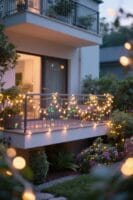


Often, practical decisions come down to a simple code. IP ratings for outdoor lighting indicate protection levels against dust ingress and water. An IP64 rating means complete dust protection, and resistance to water splashes, suitable for covered patios or entryways. An IP65 rating also blocks dust, and withstands low-pressure water jets, appropriate for streetlights and exposed fixtures. An IP67 rating is dust-tight, and tolerates temporary immersion up to 1 meter for 30 minutes, useful near pools or flood-prone areas. Choosing lamps with energy-efficient LED chips not only ensures optimal lighting but also reduces electricity consumption and environmental impact. Choose ratings based on expected exposure and installation height, consider splash zones and jet cleaning procedures, and match fixtures to local weather patterns. Correct selection preserves functionality, reduces maintenance, and prevents premature failure.
How the Two Digits of an IP Code Work

After choosing an appropriate overall IP level for a location, the two digits of an IP code explain exactly what protection is provided. The first digit ranges 0–6 and shows protection against solid objects, from no protection to complete dust tightness, where 6 means no ingress of dust. The second digit indicates liquid protection, ranging 0–9K, and covers simple splashes to high-pressure, high-temperature water jets. IP65, for example, is dust-tight and resists low-pressure water jets from any direction. IP67 is dust-tight and permits immersion up to 1 meter for about 30 minutes. IP ratings for outdoor use**** ensure that fixtures are matched to specific environmental conditions, guiding selection for exposed mounting, wash-down areas, or temporary immersion risks.
Common IP Ratings and Their Practical Differences

Because outdoor lighting must match the conditions where it will be used, choosing the right IP rating comes down to measuring exposure to dust and water. IP rating numbers show two protections, solids then liquids. IP54 offers limited dust protection and splash resistance, suited to sheltered porches or covered walkways. IP65 is fully dust-tight, resists low-pressure water jets, and fits exposed fixtures subject to rain. IP67 is fully dust-tight and tolerates immersion to 1 meter for 30 minutes, useful near pools or docks where temporary submersion can occur. IP68 denotes protection for continuous immersion, required for severe outdoor or submerged applications. Seek products with IP44/IP65 ratings for moisture protection when selecting firefly-style strands for both indoor and outdoor use during creative displays. Match these specifications to actual site conditions, consider measurement limits, and plan installation accordingly for reliable water protection.
Recommended Products
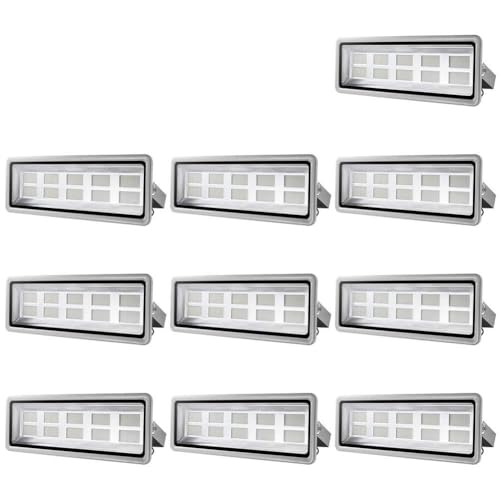
【Super Bright】: High quality outdoor security work lights,110V,1000W 800000 lumens output,120°wide beam angle.Comparing with traditional lights,the LED flood lights energy saving up to 70%,save your money and replacement time!

Super Long Service Time: With an astonishing life rating between 30,000 to 50,000 hours, no maintenance required - just install it and enjoy bright, consistent light for many years.

✅[ 400W Commercial Grade LED Flood Light ] - This is a 400W LED LED shoebox parking lot Light with an input voltage of 277-480V. It's 400W, super bright 5000K daylight, Equivalent 1500W, 60000 lumens, CRI > 85, TYPEⅢ beam angle. IP65 rated waterproof, suitable for outdoor using during rain, sandstorm, snowstorm, harsh weather conditions.
Choosing the Right IP Rating for Different Outdoor Locations

When selecting outdoor fixtures, assess the site’s exposure to dust, rain, and standing water before choosing an IP rating. For fully exposed locations, specify IP65 or higher to resist heavy rain and solids, offering protection against dust and jets of water. For covered patios and warehouses, select IP54 or IP64 to guard against light splashes and particulates, suitable for intermittent moisture. For docks and poolside use, choose IP67 to withstand temporary immersion to 1 meter depth for 30 minutes. For industrial hose-down zones, consider IP68 for continuous immersion, with depth and duration defined by manufacturer data. Choosing the right IP rating improves durability, reduces maintenance, and aligns fixture selection with site conditions, measured exposure, and expected service life. For outdoor areas like patios or backyards, waterproof shade sails can provide additional protection against sun exposure and light precipitation, complementing the IP rating of your lighting fixtures.
Recommended Products

OUTDOOR TV DESIGNED FOR PATIOS & COVERED SPACES: This outdoor TV is built for outside use on patios, decks, and covered porches. Unlike indoor TVs, this outdoor television is weather-resistant and outdoor-rated, perfect as a patio TV.

➤【Mesmerizing 3D Infinity Effect】: Transform any space with our 3D LED floor tiles, featuring a captivating infinity effect that creates a futuristic and immersive atmosphere, perfect for events, performances, and decorative lighting.

【Powerful and Save Space】: 450W monocrystalline solar panel somes with UL61730 can produce up to 2250Wh of electricity per day with smaller space compared to 4pcs 100W or 2pcs 200W solar panels
Comparing IP54, IP65, and IP67 for Weather Resistance

For outdoor lighting decisions that balance dust protection and water resistance, three common IP ratings come to the rescue. An IP54 rating gives limited dust protection and is splash‑proof. It suits covered patios and awnings, but it is not for full exposure to wind‑driven rain. An IP65 rating is dust‑tight and resists low‑pressure water jets, measured at 12.5 mm nozzle, useful for streetlights and exposed floodlights. An IP67 rating is fully dust‑proof and withstands immersion up to 1 meter for 30 minutes, ideal for docks and temporary flooding. Selecting at least IP65 is recommended for reliable all‑weather outdoor performance, while IP67 adds insurance against submersion. Solar fairy lights often have an IP65 rating, ensuring durability in various weather conditions including rain and snow. Match the rating to expected exposure, site drainage, and maintenance access.
Recommended Products

【Efficiency & Brightness】The parking lot light efficiency is up to 140lm/w which means 320W can output 48,000Lm,greater area coverage for outdoor area lighting needs. 5000K color temperature of lighting is a nice choice for street light illumination. LED area light CRI is over 80

Commercial Grade & Built to Last 💡 Upgrade high energy-efficent LED driver, 277-480V, more stable and no flicker. These parking lot lighting fixtures ensure high performance for more than 50,000-hour of continuous use or 20-years when on every day for 8-hours/day. Wide application: parking lot, yard, street, playground, school, road, pathway, walkway or any outdoor commercial and industrial area

5-Year Replacement: The safety and quality of our AC 277-480V LED parking lot lights are proudly ETL certified and come with a 5-year service. Professional technical support is always available for you
Special Ratings: IP68 and IP69K Explained
A practical step up from common outdoor ratings is the IP68 and IP69K class, offering higher water and washdown protection. IP68 means completely dust-tight and continuous immersion beyond 1 meter, often specified to 3 meters or more for defined durations, making it a true waterproof rating for pools and fountains. IP69K covers protection from high-pressure, high-temperature water jets, typically 80–100 bar at 80°C, used in food processing and heavy washdown zones. Both require robust seals, corrosion-resistant materials, and tested enclosures to maintain integrity under pressure. For those considering propagation lights, it’s important to ensure proper heat dissipation to prevent damage in environments where IP68 or IP69K protection is necessary. Choose IP68 for submerged use. Choose IP69K when steam cleaning or intense sprays occur. Each rating reduces maintenance and improves longevity in harsh outdoor settings, coming to the rescue when standard ratings fall short.
Recommended Products

Sewer Camera with 512hz Sonde and Distance Counter: The Anysun sewer camera features a probe emitting a 512Hz signal, allowing 512hz Locator (Not Included) to pinpoint its location. The sewer camera with distance counter displays how far the camera probe moves on the screen, quickly locate problem areas, saving time and effort. Perfect for professionals seeking a faster and more efficient way to inspect.

[ULTRA-BRIGHT AREA ILLUMINATION] Upgrade your outdoor spaces with 92 high-power 5054 LED beads featuring advanced convex lenses. Delivering crisp 6500K daylight, this commercial solar street light projects uniform, long-distance illumination spanning up to 4,500 sq.ft to maximize property visibility.

【Say goodbye to darkness and high electricity bills】Tired of dark driveways or expensive electric bills? This solar street light provides a powerful 25000W equivalent brightness using 0 electricity. Simply mount it outdoors, and it charges automatically during the day. You get a reliably lit property at night without increasing your monthly expenses or needing complex wiring, giving you peace of mind and instant savings.
Installation Considerations to Maintain IP Performance
Although careful mounting may seem routine, it directly preserves an outdoor light’s IP performance. Installers should follow installation techniques from the manufacturer, using specified torque values, clearances, and drainage paths to maintain the declared IP rating. Use compatible stainless or coated fasteners, size M6 or M8, to avoid corrosion that degrades seals over years. Position fixtures to shed water, avoiding low spots and horizontal ledges where pooling can occur. Secure mounting prevents vibration and movement, which can loosen gaskets and reduce moisture resistance. Apply correct gasket types and compression, noting recommended compression ranges (20–30% seating). Allow airflow per instructions to prevent condensation, and route cables through IP-rated glands. Document installation parameters for future inspections and warranty compliance. Consider durable materials like high-density polyethylene (HDPE) used in shade sails, which enhance product longevity and resistance to environmental elements.
How to Inspect and Maintain Seals and Gaskets
Diligence pays off when inspecting seals and gaskets on outdoor lights. Inspect seals quarterly, and after storms or temperature swings, using a flashlight to spot cracks as small as 0.5 mm. Clean gently with a soft cloth and isopropyl wipe, removing dirt that accelerates wear and invites moisture ingress. Check rubber gaskets for hardness, measure compression gap under fasteners at 1–3 mm, and tighten screws to recommended torque, typically 0.5–1.5 Nm, to maintain seal compression. Replace any gasket showing brittleness, tears, or permanent deformation with equivalent material, such as EPDM or silicone of 60–70 Shore A hardness. Document seal maintenance, noting part numbers and dates, to guarantee the fixture retains its stated IP rating and long-term performance. For efficient weed removal in gardens, stainless steel blades are recommended for their rust-resistant properties and durability in various weather conditions.
Avoiding Common Mistakes When Specifying Outdoor Fixtures
When specifying outdoor fixtures, planners should prioritize the correct IP rating to prevent premature failure from water or dust. Choose IP65 or higher for areas with heavy rain or water splashes, since IP65 blocks jets and dust ingress to a defined degree. Do not assume “waterproof” equals submersion readiness. IP67 permits short-term submersion to 1 meter, IP68 allows longer or deeper immersion, check manufacturer test depth. Beware of common IP54 usage, it gives limited dust protection and moderate splash resistance, unsuitable for harsher sites. Match protection level to local water sources like sprinklers, runoff, or tidal splash. Secure locking designs prevent equipment movement and ensure stability throughout usage. Read the stamped IP code and specification sheet. When in doubt, select the higher IP rating to avoid premature replacement.
When Higher IK Impact Ratings Matter for Exterior Lights
Consider specifying IK-rated fixtures early in the design phase to reduce repair calls later. IK ratings measure impact resistance of enclosures, they complement IP ratings for outdoor protection. Use higher IK ratings like IK07 to IK10 where vandalism or debris are likely. IK08 or above is recommended for commercial and public spaces, it resists forces similar to sports balls or 5–7 joule impacts. In high-traffic or severe weather locations, elevated IK helps prevent cracked lenses and water ingress after impact. Select fixtures that list both IP ratings for outdoor use and specific IK values. For example, choose IP65/IK10 for coastal promenades, or IP66/IK08 for schoolyards, to reduce maintenance costs and keep lights functioning safely over time. Energy-efficient designs in fairy lights also contribute to sustainability and cost savings, making them an excellent choice for both durability and environmental considerations.
Matching IP Ratings to Local Climate and Use Cases
Because local climate dictates exposure risks, matching an IP rating to site conditions is a practical first step. Select IP ratings for outdoor use based on measured risks like annual rainfall, humidity percentages, and likelihood of splash or immersion. For moderate moisture, choose IP65; it is dust-tight and withstands low-pressure water jets at 3–10 liters/min from 2.5–3 meters. In heavy rain or possible short immersion, the waterproof IP67 comes to the rescue, rated for submersion to 1 meter for 30 minutes. Cold, snow, or salt spray may require IP68 or higher, specified by manufacturer depth and duration limits. Always verify enclosure seals, cable glands, and installation height, to ascertain the right IP rating prevents premature failure and maintains safety and performance.
Recommended Products

Light Up Larger Area: AC 277-480V, Up to 150lm/watt, the 480V 320W LED parking lot lights bring 48000LM with SMD3030 chips at 5000K daylight white. Anti-shock, anti-moisture, no glare, no strobe light, no ghosting, protecting your eyes

Excellent Lighting & 5 Years Service - BBESTLED parking lot light efficiency is up to 140lm/w which means 320W can output 48,000Lm, 5000K daylight white, TYPEⅢ beam angle, Anti-shock, anti-moisture, no glare, no strobe light, no ghosting. While protecting your eyes, it also greater area coverage for outdoor area lighting needs. BBESTLED offer a 5-year service FREE replacement that covers any quality or defect issues
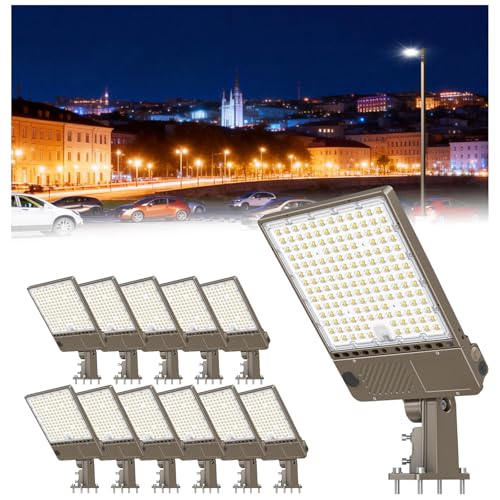
3 Wattage Selectable & 3 Color Adjustable: ORRGENA LED Parking Lot Lights are available in 3 wattages, 360W (54000LM), 288W (43200LM) and 216W (32400LM). Just slide the switch to choose your appropriate wattage before installation. The color temperature of each LED industrial light is adjustable: 3000K neutral white, 4000K daylight, 5000K cool white to meet your different needs in parking lot, street, stadium, tennis court and other industrial and commercial places.
Frequently Asked Questions
What Is a Good IP Rating for Outdoor Lights?
A good IP rating for outdoor lights is typically IP65 or higher. The narrator notes IP rating significance for various outdoor lighting types, advising rating comparison factors like exposure level, immersion risk, and fixture placement determine the choice.
Is IP65 or IP44 Better?
75% of outdoor failures stem from moisture — IP65 is better. An IP rating comparison shows IP65’s superiority for Outdoor lighting options; Waterproof fixtures with IP65 provide dust-tight, water-jet protection versus IP44’s limited splash resistance.
What IP Rating Is Considered Weatherproof?
An IP65 rating is considered weatherproof. The response highlights IP rating benefits for Outdoor light durability; choosing IP ratings around IP65–IP67 balances dust protection and water resistance, while higher IP68 suits continuous immersion needs.
Can IP65 Withstand Heavy Rain?
Like an umbrella that stops drizzle but not a flood, IP65 can withstand heavy rain splashes for outdoor lighting but isn’t for immersion; users should compare waterproof standards and consider IP67 for prolonged standing water or severe storms.


