As an Amazon Associate, we earn from qualifying purchases. Some links on this site are affiliate links at no extra cost to you. Our recommendations are based on thorough research and editorial judgment.


Creating a Four-Season Garden: Planning for Year-Round Interest

A four‑season garden starts with a clear plan and reliable structure. Use evergreens like boxwood and conifers for year‑round form, spacing shrubs 3–12 feet apart by mature width, which provides winter backbone. Layer plant heights: 4–6 foot shrubs back, 2–3 foot perennials middle, 6–12 inch groundcovers front, and add small trees or obelisks for vertical focus. Plant spring bulbs 6–8 inches deep, include berrying shrubs and hellebore for late‑winter interest, and hardscape paths 3–5 feet wide with stone or compacted crushed stone to anchor sightlines; continue for detailed seasonal schedules and plant lists.
Key Takeaways
- Establish a framework of evergreens and structural shrubs to provide winter shape and year-round backbone.
- Layer plant heights (tall shrubs/trees, mid perennials, low groundcovers) for depth and continuous visual interest.
- Sequence plantings by bloom time—spring bulbs, summer perennials, and autumn shrubs—for continuous color progression.
- Include berry-producing shrubs, late-season perennials, and seedheads to support wildlife and winter appeal.
- Design paths, vertical elements, and focal hardscapes to maintain sightlines and interest during off-peak months.
Why Year-Round Interest Matters in Garden Design
You may be interested
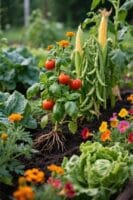

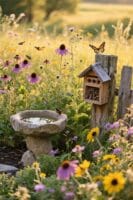
Because a garden is most useful when it provides interest across all months, designers plan for year-round appeal from the start. Year-round interest prevents monotony and sustains visual interest, achieved by mixing plant types and timing. Use evergreen plants for structure; e.g., boxwood hedges 30–60 cm tall as backbone, conifers spaced 1–2 m apart for windbreaks. Stage seasonal changes by planting bulbs (tulips, crocus) at 10–15 cm depth for spring, and asters or sedum flowering August–October. Include berry-producing plants such as holly or winterberry, spaced 1–3 m, to feed birds in winter. Aim for at least four species per season, varied heights 15 cm–3 m, and staggered bloom times to enhance biodiversity and ecological resilience. Selecting the right anvil pruning shears involves considering blade materials, cutting capacities, ergonomic designs, and safety features, which can significantly enhance the gardening experience.
Assessing Your Garden’s Seasonal Strengths and Gaps

A simple inventory is the first step when examining seasonal strengths and gaps in a garden. Count plants and note monthly attention using a gardening calendar, marking months with minimal interest for targeted additions. Measure heights and spreads in feet or meters, recording dominant layers such as groundcover, mid-border, and canopy, to find voids needing planting. Tabulate evergreen contributions separately, evaluating winter interest from structure and foliage color and texture, which come to the rescue when flowers fade. List blooming times for perennials, annuals, and shrubs to map seasonal shifts, aiming for overlapping displays every 4–6 weeks. Review hardscaping—paths, walls, arbors—for visual support in off-peak months, then prioritize gaps for replanting or rearrangement with specific species choices. Consider integrating ergonomic gardening tools like those with soft-grip handles to reduce hand fatigue during extensive gardening tasks.
Designing a Structural Framework With Evergreens

With seasonal gaps identified, the next step is to build a backbone of evergreens that holds the garden through winter and low-interest months. Place evergreen shrubs as anchors, spacing them 3–6 feet apart for small varieties and 6–12 feet for larger specimens, to form a reliable structural framework. Use a mix of shapes, such as vertical ‘Sky Pencil’ holly and soft ‘Hudsonia’ balsam fir, to introduce textures and colors that contrast coarse and fine foliage. Position taller evergreens at the rear, 4–8 feet from borders, so they act as backdrops for seasonal plantings. Combine conifers and broadleaf evergreens to maintain year-round color, enhance visual interest, and preserve garden scale when deciduous plants are dormant. Consider using durable materials like high-density polyethylene for outdoor furnishings to ensure longevity and withstand various weather conditions.
Choosing Multi-Season “Hardworking” Plants
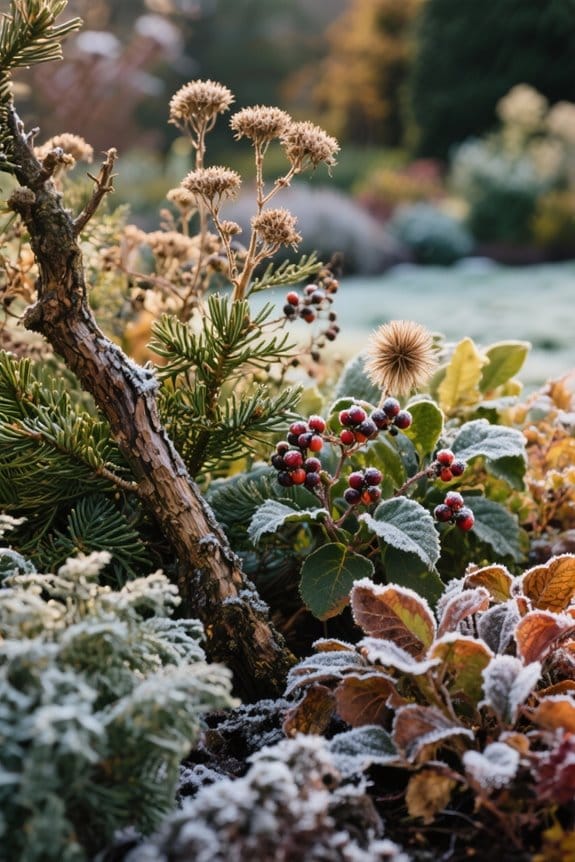
When planners select multi-season “hardworking” plants, they aim for reliable interest from late winter through fall. Choose plants that grow with predictable form, such as oakleaf hydrangea, which offers striking fall color and stem texture in the winter landscape. Include hardy perennials like coneflower and sedum; they bloom in late summer, hold 2–4 ft structure, and keep seed heads for wildlife. Add berry-producing shrubs, for example cranberrybush viburnum and crabapple, to supply food and visual anchors for 3–6 months of interest. Select flowering trees such as redbud and serviceberry; they provide spring blooms, summer foliage, and decorative fruits in autumn. Consider hellebore to come to the rescue with late-winter blooms when few options exist. Safety standards and specifications are crucial when using grow lights and extension cords to ensure the electrical safety of your indoor garden.
Planning Spring Color: Bulbs, Early Perennials, and Shrubs

Building on choices for year-round structure, spring brings the first bold shows of color that set the season’s tone. Plant bulbs such as snowdrops, Narcissus, and Crocus in groups of 10–30 bulbs, 2–6 inches deep, to guarantee a strong colorful display early spring. Include perennials like primroses, pansies, and bleeding heart, spaced 12–18 inches apart, which bloom before many plants fully awaken and come to the rescue for gaps. Adding full-spectrum LED grow lights can help African violets thrive indoors by providing the necessary light spectrum for healthy growth and blooming. Add flowering shrubs such as redbuds and quince, sited 8–15 feet apart depending on mature spread, to provide layered spring interest. Combine drifts of bulbs, clusters of early perennials, and shrub islands for continuous color shifts, improving pollinator access and visual impact while simplifying maintenance.
Recommended Products

Native Perennial Wildflower Mix: Grow a curated blend of North American native wildflowers that provide vibrant, season-long blooms year after year.

Tailored for the West: Designed specifically for elevations below 7,000 feet in regions like Colorado, Utah, and Montana, this mix thrives in diverse western climates.

100% Pure, Non-GMO Seeds - No fillers, favorites only! Includes 24 easy-to-grow species: Cornflower Dwarf Blue, Birds Eyes, Clarkia, African Daisy, Arroyo Lupine, Chinese Houses, Cornflower Tall Blue, Lance Leaf Coreopsis, Wild Cosmos, Blanket Flower, Black Eyed Susan, Wild Perennial Lupine, Purple Coneflower, Russell Lupine, Plains Coreopsis, Siberian Wallflower, Blue Flax, Scarlet Flax, Annual Red Phlox, Bright Lights Cosmos, Gloriosa Daisy
Building a Vibrant Summer Garden With Long-Bloomers
A successful summer border starts with reliable long-blooming perennials chosen for season-long performance. Plant coneflower, phlox, black-eyed Susan, and zinnia in groups of 3–7 to create continuous blooms and vibrant color that lasts from June to September. Layer plants by height: tall 4–6 ft spires at the back, 2–3 ft mid-level perennials, and 6–18 in low edge plants for structure. Add flowering shrubs such as hydrangeas and re-blooming spireas at 3–6 ft to provide focal points and lush foliage between flushes. Incorporate ornamental grasses like switchgrass in 2–4 ft clumps for movement and seed head texture. Choose sun-loving, drought-tolerant cultivars, amend soil with 2–3 in compost, and mulch 2 in to retain moisture and garden interest. For effortless garden maintenance, consider using Cape Cod weeders with ergonomic handles that minimize hand fatigue, ensuring your garden remains pristine with less effort.
Selecting Fall-Showing Plants for Late-Season Drama
As summer bloomers finish their run, gardeners should plan for plants that carry color and structure into autumn. Include asters, goldenrod, and boltonia, spaced 18–36 inches apart, to extend fall color and provide late nectar. Add shrubs like ninebark or viburnum for layered height, planted 4–8 feet from borders to allow growth. Choose native trees such as Japanese maple alternatives or oak species for reliable orange and red foliage, sited with 10–20 feet mature spacing. Use ornamental grasses, for example switchgrass at 3–4 feet tall, to introduce texture and movement. Select species with lasting fruit, like crabapple and cranberrybush viburnum, that bear winter berries for wildlife. Include sedum for seedheads to maintain visual interest through the season. For precise trimming and shaping of these plants, consider investing in high-quality pruning shears with sharp, durable blades and ergonomic handles to ensure efficient and comfortable gardening.
Recommended Products
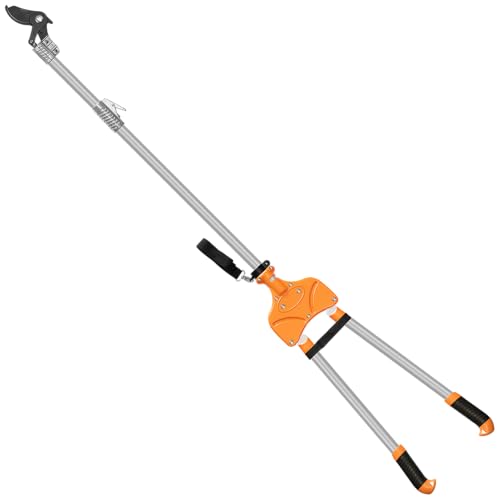
96-INCH TELESCOPIC REACH: Trim branches, suckers, and new growth on tall trees, hedges, and overgrown shrubs, all without a ladder.

At full capacity, this battery will last a full 12 hours and will complete more than 15, 000 cuts on 1. 5-inch/35mm branches. This pruner is super light weighing in at 1. 9-pounds/0. 9kg

Brand name: Zenport
Creating Winter Interest With Bark, Berries, and Seedheads
Stems of red-barked dogwood come to the rescue when snow dulls other colors. Use specimens with 1–3-inch diameter stems for visible impact at 6–10 feet tall, spaced 4–6 feet apart for a screen. Include paperbark maple or cork oak for textured bark, planting at least two sizes for layered contrast. Retain seed heads from coneflowers and Sedum Autumn Joy; leave stems 2–4 feet tall to provide vertical structure and winter texture. Add berry-producing shrubs like crabapple and cranberrybush viburnum, placed within 30–50 feet of cover for attracting local wildlife that feed on fruit. Design diversity by combining bark, berries, and seed heads, ensuring a balanced winter garden with food sources and visual interest through dormancy. Consider incorporating ergonomic designs in your garden tools, like those found in flower bed edgers, to ease the gardening process and reduce physical strain.
Recommended Products


ALERT: We do NOT ship live plants to CA or AZ. These states have strict agricultural restrictions.

Hardscaping and Nonliving Elements That Anchor the Seasons
When bark, berries, and seed heads carry the winter scene, hardscaping provides the bones that hold it together. Paths, walls, and arbors define circulation and sightlines. Use 3–4 ft wide paths for single walkers, 5–6 ft for two abreast, and 4–6 in. compacted crushed stone for stable surfacing. Mix stone, wood, and concrete to increase visual interest and complement planting textures. Benches, pergolas, and water features are non-living elements that add tactile and auditory layers. Place features every 30–50 ft to create rest points and frame seasonal changes. Proper grading, 4–6% slope, and compacted base layers reduce erosion and provide stable foundations for beds. Hardscaping comes to the rescue, organizing maintenance, improving longevity, and guiding visitor experience. For a professional-looking lawn, consider using durable step edgers with adjustable handle lengths and robust blades to create precise borders and defined edges.
Color Sequencing: Coordinating Hues Through the Year
Although color sequencing can seem complex, it is best treated as a sequence of deliberate choices that map bloom times, foliage, and form. Plan planting groups by bloom window. Spring bulbs like snowdrops and crocuses bloom in March–April, covering 4–6 weeks of soft blues and purples. Follow with summer perennials, such as coneflowers and zinnias, which provide bold oranges and yellows for 8–10 weeks beginning in June. Add asters and goldenrod in September–November to introduce deep reds and golds before frost. Consider berry and leaf color too, selecting shrubs with 1–3-inch berries or foliage that changes color. Use plants with striking silhouettes, such as structural grasses, to hold scenes in winter. Incorporating full-spectrum grow lights can support plant health and enhance color vibrancy throughout the year. Coordinate hues for smooth seasonal shifts and true year-round interest.
Practical Garden Layouts: Edges, Layers, and Vertical Focus
Balance is essential in garden layout. Define edges with stone or brick, 6–8 inch high borders for tidy separation and visual interest. Use layers to build depth, placing 4–6 foot shrubs at the back, 2–3 foot perennials mid-row, and 6–12 inch groundcovers up front. Vertical elements come to the rescue; include small trees (10–15 feet) or obelisks for climbers to create focal height. Arrange fragrant plants along paths and patios, 2–3 feet from walkways, to enhance sensory experience. Vary textures—broad leaves, fine foliage, rigid stems—to maintain seasonal contrast and structural clarity. Plan sightlines with staggered plant spacing, 18–36 inches apart depending on mature spread, for balanced growth and continuous visual interest.
Maintenance Calendar: Seasonal Tasks to Keep Interest Continuous
How should a gardener pace seasonal tasks to keep beds attractive year-round? A maintenance calendar outlines tasks by month, with deadheading perennials in late spring and pruning summer-blooming shrubs in early spring. Mulch 2–3 inches in spring to retain soil moisture and suppress weeds, and clean up debris in autumn to reduce winter pests. Monitor soil moisture with a probe or meter weekly, adjust watering, and guarantee new plants receive 1–2 inches of water per week in summer. In autumn, conduct soil tests and add 10–20 lb of balanced 10-10-10 fertilizer per 100 sq ft if needed. Create a pest and disease monitoring checklist, inspect foliage biweekly, remove affected leaves, and apply organic treatments when thresholds are met.
Frequently Asked Questions
What Is the 70 30 Rule in Gardening?
A guiding compass: the 70-30 rule means 70% structural plants (trees, shrubs) and 30% perennials/annuals. It informs garden design, seasonal planting, plant selection, color coordination and texture variety for balanced, year-round interest.
How to Create an All Year Round Garden?
Designs prioritize seasonal blooms and evergreen plants; arrange garden layouts balancing spring bulbs, summer perennials, autumn asters and berry shrubs for winter interest. Coordinate color palettes, structural evergreens, paths and water features to guarantee continuous appeal.
What Is the Rule of 3 in Landscaping?
The rule of 3 in landscaping groups plants or design elements into threes to enhance balance and focal interest. It guides landscape design, plant selection, seasonal colors, garden textures and informs maintenance strategies for cohesion.
What Is the 3-Hour Gardening Rule?
The 3-hour gardening rule mandates giant bursts of heroic productivity: gardeners limit work to three-hour sessions, applying garden maintenance tips, seasonal planting strategies, soil health practices, pest management techniques, and sustainable gardening methods to avoid burnout.


