As an Amazon Associate, we earn from qualifying purchases. Some links on this site are affiliate links at no extra cost to you. Our recommendations are based on thorough research and editorial judgment.


Creating Wildlife-Friendly Garden Spaces

A wildlife-friendly garden starts with a site map in 1‑m (3‑ft) grid squares. Assess sun: full sun 6+ hours, partial 3–6 hours, shade under 3 hours, and test soil texture with a ribbon test to classify sand, silt, or clay. Use 70% native plants, group in clusters of 5–10, and stagger bloom times for continuous nectar. Add a 30‑cm shallow water source, log piles, and nesting boxes 2–4 m high. Follow simple maintenance and learn practical layout tips next.
Key Takeaways
- Map sunlight and soil in a grid to place native plants where they thrive.
- Use at least 70% native species and cluster plants in groups of 5–10 for pollinator efficiency.
- Provide continuous bloom with early–mid–late-season flowers and include seed- and fruit-producing plants.
- Create layered shelter: evergreens, dense shrubs, brush/log piles, and leave safe dead wood for nesting.
- Conserve water with mulch and drip irrigation, tolerate seasonal dieback, and mow once yearly after seed set.
Planning Your Wildlife-Friendly Garden
You may be interested
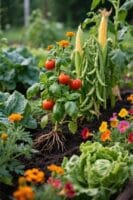


When beginning to plan a wildlife-friendly garden, start by mapping sun and soil conditions across the site. Use a simple grid, 1-meter squares or 3-foot squares, to record full sun, partial shade, and soil texture. Select native plants suited to each square, matching drought-tolerant species to sandy, well-drained areas and moisture-loving species to clay or loamy patches. Plan continuous bloom by choosing early-, mid-, and late-season perennials, such as native salvia, aster, and goldenrod, to supply nectar from spring through fall. Incorporate small structural elements, like a 30–60 cm log pile, to create shelter for insects and small vertebrates and extend wildlife habitat connectivity. Use mulch and drip irrigation to conserve water and suppress invasive species. Consider integrating solar fairy lights to provide eco-friendly illumination in your garden, enhancing its beauty while minimizing carbon footprint.
Choosing the Right Location and Assessing Site Conditions

Having mapped sun, soil, and planting grids, the next step is to choose the precise spot for wildlife features. Assess sunlight by observing full sun (6+ hours), partial sun (3–6 hours), and shade (under 3 hours), since pollinators need warm basking sites. Test soil texture with a ribbon test; sandy, well-drained soils drain in minutes, clay holds moisture for hours. Check wind exposure; place features behind a hedge or fence if gusts exceed 15–20 km/h, as strong winds disturb small insects. Note proximity to existing habitats, aiming for corridors within 50–100 meters to boost connectivity. Plan varied heights—groundcover, 30–90 cm shrubs, and 2–4 m trees—and mixed densities to provide shelter, nesting, and feeding niches. It’s important to ensure safety standards when incorporating electrical features like grow lights or pumps to protect wildlife and garden visitors.
Selecting Native Plants and Suggested Species

Because native plants are adapted to local soil and climate, they come to the rescue for low‑maintenance, wildlife‑supporting gardens. Select a mix of perennials and shrubs. Use at least 70% native plants to double wildlife presence compared to turf. Plant in groups of five to ten for visibility and pollinator efficiency. Include flowering plants with staggered bloom times; aim for continuous blooms from early spring to late fall, approximately 6–8 months. Examples: milkweed (Asclepias) for caterpillar hosts, coneflower (Echinacea) for long blooms, black‑eyed Susan (Rudbeckia) for nectar and pollen. Add trees like silver birch and shrubs such as guelder rose for shelter and berries. Space plants to mature sizes, follow local species lists, and avoid non‑natives. For indoor gardening enthusiasts, consider using full spectrum LED grow lights to simulate natural light conditions and support plant growth throughout the year.
Designing Food Sources for Diverse Wildlife

After selecting native perennials and shrubs, the focus shifts to building reliable food sources for a wide range of wildlife. Plant a sequence of native to your area flowering plants that bloom from early spring to late fall, spacing groups in clusters of 3–5 plants, 12–24 inches apart for pollinator access. Add fruiting shrubs and small trees, such as elderberry or serviceberry, placed 6–12 feet apart to feed birds and small mammals. Include seed-producing perennials like coneflowers and black-eyed Susans, leaving seedheads through winter, roughly 2–4 feet tall. Mix annuals to fill seasonal gaps, sowing 1–2 packets per 10 square feet. Choose species adapted to local soil and moisture, which come to the rescue for ecosystem resilience. Using eco-friendly weeding tools can help maintain your garden without harming the environment.
Adding Water Features and Maintaining Them

Water is a magnet for wildlife and a practical element in any garden plan. Small ponds, even 0.5–1 m across and 30–60 cm deep, attract frogs, birds, and beneficial insects, increasing biodiversity. Install water features with varied edges and textured surfaces, such as birdbaths or fountains, so birds can perch without slipping. Maintain cleanliness by changing or filtering water weekly to prevent algae and mosquito larvae, and use a solar pump (100–300 L/h) to keep water moving. Plant water lilies, cattails, or native marginal species for cover and microhabitats. Consider a rain garden sized at 10–20% of a roof runoff area to manage stormwater. Consult local wildlife federation guidelines for species-safe chemicals, placement, and seasonal maintenance schedules. Incorporating heavy-duty HDPE fabric in shade sails above water features can provide beneficial shading while maintaining airflow and reducing heat.
Creating Shelter, Cover, and Nesting Sites
When garden space is arranged to include layers of shelter, wildlife finds safe places to feed, rest, and nest. Dense patches of native shrubs and meadow strips, 2–5 m wide, form primary cover for birds and small mammals. Evergreens and bramble thickets provide year-round shelter, with shrubs spaced 1–2 m apart to create thickets. Leave dead trees and stumps standing when safe, ideally 0.5–2 m tall, as nesting sites for insects and cavity-nesting birds. Install birdhouses mounted 2–4 m above ground, with entrance holes 25–35 mm for small songbirds, and insect hotels with 3–10 cm diameter tubes. Create brush piles about 1–1.5 m high in a sheltered corner. Plant fruiting shrubs and caterpillar host plants to supply food and courtship habitat near nesting sites. For an indoor garden, consider using grow lights with energy-efficient designs that consume significantly less power while providing the necessary light spectrum for plant growth.
Sustainable Maintenance and Pest Management
Begin with a plan that balances soil and water conservation alongside targeted pest control. Use rain gardens and 200–500 L rainwater barrels to reduce mains use, and mulch 5–10 cm deep to retain moisture and suppress weeds. Employ sustainable maintenance routines, inspecting plants weekly for damage and noting pest thresholds before action. Use organic pest management techniques, such as hand-picking, sticky traps, and releasing 50–200 ladybugs per 10 m² to reduce aphids. Remove invasive exotics promptly, replacing them with native shrubs spaced 1–2 m apart to lower maintenance needs. Apply integrated pest management steps: monitor, identify, set thresholds, act, and evaluate. Diversify plant species to attract predatory insects and parasitoids, which come to the rescue for ongoing biological control. Consider using energy-efficient designs in lighting for indoor plants to reduce electricity costs, supporting sustainable garden maintenance practices.
Converting Lawn to Wild Patches and Mini Meadows
After establishing sustainable maintenance routines and targeted pest control, attention can shift to replacing turf with wild patches and mini meadows that support more wildlife. Converting lawns doubles biodiversity compared with turf, and provides food and shelter. Begin by reserving areas of 5–20 square meters for trial plots. Scatter native plants seed mixes in late fall or early spring, aiming for at least 70% native plants to meet habitat needs. Use a seed density of 10–20 g/m² for wildflower mixes, lightly rake and press seeds for soil contact. Mini meadows retain moisture and reduce watering, because native species are adapted locally. Allow seasonal dieback, mow once annually after seed set at 10–15 cm, and tolerate some bare patches for ground-nesting insects. A wide footplate and step-pad on manual edgers can provide easier cutting leverage when initially preparing the soil for planting.
Certifying and Engaging Your Community
Although certification programs can seem complex, they come to the rescue by providing clear standards and measurable steps. The National Wildlife Federation certifies spaces as Certified Wildlife habitats, from small backyards to corporate campuses, using criteria like food, water, cover, and places to raise young. A quick quiz and checklist PDF assess readiness in under 15 minutes, and list target metrics such as 70% native plant cover. Small spaces can qualify by choosing native plants, adding a 30 cm shallow water source, and providing nesting sites. Larger sites follow ecological landscaping principles, including 10–30 m native buffer strips. The Garden for Wildlife program encourages neighborhood collaboration, community mapping, shared plant swaps, and public signage to showcase collective stewardship. Incorporating features like adjustable brightness levels in your garden lighting setup can further enhance the growth and health of native plants by preventing light stress.
Frequently Asked Questions
Can I Attract Nocturnal Wildlife Without Increasing Predation on Songbirds?
Yes; one can. He designs nocturnal habitats with layered planting, sheltered cover, and dedicated feeding stations; incorporates protective features like dense shrubs, nesting boxes, and timing of lights to minimize predator success and safeguard songbirds at night.
How Do I Balance Wildlife-Friendly Planting With Wildfire Risk?
They advise balancing wildlife-friendly planting with wildfire risk by placing fire resistant plants near structures, maintaining safety zones, pruning dead material, using gravel breaks, and grouping native habitat pockets away from homes, ensuring both biodiversity and defensible space.
Will My Garden Attract Problematic Invasive Wildlife Species?
Yes; a garden can attract invasive species if it includes nonnative plants or provides food and shelter they exploit. One should prioritize native plants, monitor newcomers, and remove invasives promptly to reduce ecological risk.
Can Rooftop Gardens Effectively Support Pollinators and Birds?
Yes. Studies show rooftop gardens can increase urban biodiversity by up to 20%. The observer notes that beneficial plants combined with varied rooftop structures attract pollinators and birds, enhancing habitat connectivity and seasonal foraging opportunities.
How Do I Prevent Disease Transmission at Communal Water Features?
Use regular water purification, routine cleaning, and controlled stocking to reduce contagion; staff monitor health, isolate sick wildlife, rotate water sources, and implement disease management protocols while educating visitors and limiting overcrowding at communal water features.


