As an Amazon Associate, we earn from qualifying purchases. Some links on this site are affiliate links at no extra cost to you. Our recommendations are based on thorough research and editorial judgment.


Different Shade Sail Shapes: Triangle, Square, and Rectangle Configurations

Shade sails are tensioned fabric membranes for outdoor shade. Triangle sails suit small or irregular areas, typically 3–6 m per side, and can combine with rectangles to cover larger zones. Square sails work well over tables, usually 2×2 m to 5×5 m, requiring four anchor points and stainless-steel fittings. Rectangular sails span decks, often 3–10 m or more, needing careful anchor spacing and a 30° minimum incline for drainage. More configuration guidance follows.
Key Takeaways
- Triangle sails fit small or irregular areas and pair well with rectangles for expanded coverage.
- Square sails (2×2 to 5×5 m) need four anchor points and suit dining or seating zones.
- Rectangular sails cover larger decks (10–30 ft) and allow layered or modular layouts.
- Overlapping or mixed-shape designs boost shade by 30–50% and add visual interest.
- Maintain a minimum 30° incline for drainage and inspect hardware monthly for longevity.
What Are Shade Sails and How They Work
You may be interested


Although simple in concept, a shade sail is a tensioned fabric membrane used to create shaded outdoor areas. They are fabric covers stretched between fixed anchor points, providing shade and UV protection. Options available include triangle, square, and rectangle shapes, each offering different coverage and mounting patterns. Sails block up to 98% of harmful UV rays, measured by fabric rating standards, creating safer outdoor zones. Installation requires a minimum 30-degree incline, to facilitate water runoff and prevent sagging. Anchors must withstand expected loads, typically rated in kilonewtons (kN), and use turnbuckles for tensioning. Regular inspections of fabric, seams, and mounts extend service life. Maintenance includes cleaning, retensioning, and replacing hardware as needed. Many shade sails made from high-density polyethylene (HDPE) materials are known for their durability and resistance to tearing.
Benefits of Triangle Shade Sails

A triangle shade sail is a three-cornered fabric panel that fits tight into small or irregular outdoor spaces. It offers versatile coverage for cozy nooks, often measuring 3–6 meters per side for common residential use, and can block up to 98% of UV radiation. Installations allow varying heights and angles to optimize sun coverage, which improves comfort and airflow while preventing pooling. Triangle sails adapt around trees, walls, or pergolas, come to the rescue when rectangular panels cannot. They combine well with rectangular sails to create overlapping, functional arrays for larger patios. For creating clean, outdoor spaces use corrosion-resistant stainless steel fittings, 10–12 mm turnbuckles, and tension of 150–300 N to maintain flat, safe surfaces. Triangle shade sails provide effective UV protection by blocking up to 95% of harmful rays, which is essential for ensuring a comfortable outdoor experience.
Recommended Products

Important Note: Our shade sails have curved sides to increase pull and prevent sagging, which would add 1”-8” to the side length. The middle center of the sail will be shorter in width due to curves. If you prefer straight edges, please contact us. Read the description for details.

Super Heavy Duty Commercial Grade Design: Crafted from 280 GSM permeable extra heavy-duty fabric and reinforced with stainless steel mounting rings, KANAGAWA patented design integrates cable wires into the edges. This ensures all pulling strength is directed to the cable wires, enhancing both durability and appearance, making it ideal for commercial and residential use
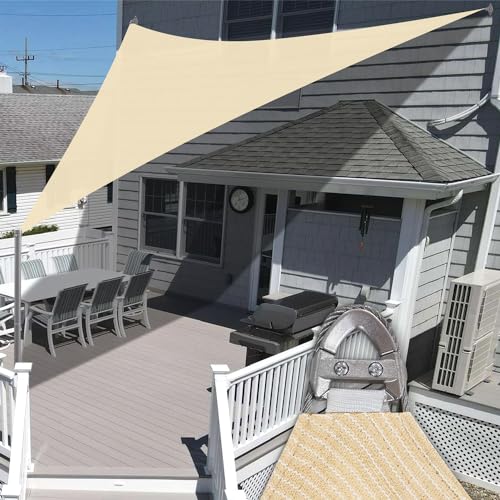
HIGH QUALITY MATERIAL - Our triangle sun shade sail is made of 260GSM high-density polyethylene, finished with the strong stitching seam and double webbing. It is durable and fade-resistant, but not waterproof.
Best Uses for Square Shade Sails

When placed over a 3–4.5 meter dining table, a square shade sail delivers even coverage and reduces glare for guests. It fits patios and decks well, providing a simple canopy that lowers surface temperatures by several degrees in direct sun. Square sails also transform your outdoor play areas into safe zones, blocking up to 98% of UV with high-density fabric ratings. They measure commonly from 2×2 m up to 5×5 m, matching pergolas or freestanding posts easily. For commercial seating, multiple squares can be overlapped to create continuous coverage, with stainless steel fittings recommended to resist corrosion. Installation requires tensioning from four anchor points, typically set 0.5–1 m higher than corners to shed water. Maintenance involves periodic inspection and fabric cleaning. When selecting a square shade sail, consider UV protection rating to ensure maximum safety and effectiveness in blocking harmful rays.
Recommended Products

【𝗛𝗘𝗔𝗩𝗬 𝗗𝗨𝗧𝗬】: our super ring shade sail exact 260 GSM permeable extra fabric, stainless mounting super rings, edges with cable wires built-in, integrate into the mounting rings, all pulling strength goes to the cable wires, making the edges more durable

Premium Material: Our sun shade sail is made of 260 GSM high density polyethylene fabric. The fabric design effectively blocks direct sunlight and UV rays, while its breathable properties promote air circulation, enhancing comfort in outdoor environments.

Durable Heavy-Duty Material: Crafted from 260 GSM high-density polyethylene, this sunshade is fade-resistant, deformation-proof, and stretch-resistant
When to Choose Rectangular Shade Sails

For larger or elongated outdoor areas, rectangular shade sails often come to the rescue. They suit decks, 10–30 ft dining areas, or 4–8 ft pathways that require continuous shade. Choose the right size by measuring length and width, allowing 2–3 ft extra for tension and mounting. Rectangles offer flexible layouts, combine easily with triangles, and can span 8–20 ft between anchors. Installers must evaluate anchor points, use stainless steel hardware, and set low and high corners for 1–2% slope to shed water. For backyard barbeque zones, two 10×15 ft sails can create layered coverage. For long walkways, a series of 4×12 ft sails works well. Consider maintenance access and clearances when planning anchor placements. When selecting shade sails, it’s crucial to consider the blade material used in tools for precision and durability, much like choosing high-carbon or stainless steel blades for gardening equipment.
Designing With Overlapping Triangle Sails

Because overlapping triangle sails can be arranged to follow sun paths and existing structures, they become a practical option for irregular patios and play zones. Designers recommend spacing attachment points 2.5–6 m apart, with sail edges of 3–5 m for small seating areas, and 6–12 m for larger zones, to balance tension and coverage. Multiple sails overlap to block sun at low and high angles, increasing shade by up to 30–50 percent when layered correctly. Varying peak heights by 0.6–1.5 m creates airflow and visual interest, peak-to-edge slopes of 20–35 degrees shed water. Use mixed colors and sizes to define activity zones, and attach to posts, walls, or beams with stainless steel fittings rated for 2–5 kN, for safe, durable outdoor installations. Incorporating adjustable handle lengths in the design of attachment mechanisms allows for greater flexibility and ease of use when setting up and adjusting the sails.
Custom and Irregular Shade Sail Configurations
A few custom and irregular shade sails can transform awkward outdoor areas into well-shaded, usable spaces. The designer assesses available anchor points, roof edges, posts, and trees, then maps desired coverage in square feet. Combine a 10×10 ft rectangular sail with two 6×8 ft triangular sails for poolside shade, ensuring 2–3 ft of tensioning perimeter for turnbuckles and pad eyes. Irregular polygons come to the rescue when standard panels do not fit. Fabrics are available in various size and shape options to match spans from 8 ft to 30 ft between anchors. Install angles should create 10–15 degree slopes for water runoff, and stainless steel D‑rings sized 6–10 mm handle loads with break strengths noted on engineering specs. Most shade sails block at least 95% of harmful UV rays, providing excellent sun protection and increasing the usability of outdoor spaces.
Material and Color Options for Shade Sails
When selecting materials and colors for a shade sail, consider HDPE (high-density polyethylene) as the common, practical choice because it balances UV protection and durability. HDPE fabric, typically 200–500 g/m², blocks 80–95% UV when knitted tightly, and resists stretching and mildew. Choose neutral tones like beige or gray for subtle integration, and vibrant red, blue, or green for accenting. Permeable weave allows airflow, reducing heat buildup while shedding about 70% of solar heat. UV stabilizers come to the rescue, extending life and reducing fading by roughly 30–50%. Select light colors to prioritize heat reduction, darker ones for privacy. Look for reinforced stitching and double-layered seams to ensure longevity. Follow a Step-By-Step Process: compare weight, UV rating, colorfastness tests, and warranty before purchase.
Planning Anchor Points and Slope for Drainage
Mapping locates sturdy supports and defines sail geometry. Evaluators should identify walls, posts, or trees able to withstand tension, and measure distances precisely. Make sure to allow for turnbuckles or D-rings in those measurements. Install slope for drainage with at least a 30-degree incline to prevent water pooling and sagging. One corner should be visibly lower to form a runoff gradient. Consider sun path when placing anchors to maximize shade coverage throughout the day. Inspect anchors and tension regularly, especially after storms, to maintain integrity. Use specific hardware rated for outdoor loads, and calculate expected tension based on sail area and wind exposure. Come to the rescue with proper planning. Implementing energy-efficient LED chips in nearby garden lights can reduce electricity costs and support environmentally friendly practices.
Maintenance Tips to Extend Shade Sail Lifespan
Although regular inspections seem simple, they come to the rescue by preventing small problems from becoming failures. Inspect sails monthly for fraying, UV fading, and loose stitching, addressing issues early to avoid tears. Clean sails twice yearly with mild soap and water, rinsing thoroughly to prevent residue that degrades fabric. Check anchor points and hardware regularly, confirm turnbuckles and shackles are tight to resist strong winds. Maintain a minimum 30-degree incline for proper drainage, which prevents water pooling and sagging. Store sails during harsh weather or winter, using dry, ventilated storage to prevent mildew. These maintenance essentials include routine checks, documented measurements, and prompt repairs, providing clear, stepwise actions to extend the usable life of triangle, square, and rectangle configurations. Additionally, using acid-free tapes ensures long-term preservation of important documents and archival materials, safeguarding them from damage over time.
Frequently Asked Questions
What Is the Difference Between Square and Triangle Shade Sails?
Square sails provide broad, uniform coverage with symmetrical Design Considerations and require more anchor points; triangle sails offer directional, flexible shading, creative arrangements, fewer anchors, and suit tighter spaces, emphasizing adaptability over expansive consistency.
What Shape of Shade Sail Is Best?
The best shape depends on site dimensions and anchor points; practicality guides choice. Shade Sail Aesthetics influence selection too, with compact areas favoring triangles, broad spaces liking squares, and long runs suiting rectangles for coverage and balance.
What Is the Most Effective Sail Shape?
A stitch in time saves nine: the most effective sail shape depends on area and use; material matters — Sail Material paired with rectangles for elongated spaces, squares for broad coverage, and triangles for versatile, tight-fit applications.
How Much Height Variation for Triangle Shade Sail?
A triangle shade sail requires about 30 to 40 inches of height clearance between highest and lowest anchors to guarantee proper drainage, reduced sagging, improved airflow, and adjustable tension responsive to rainfall and sun path considerations.


