As an Amazon Associate, we earn from qualifying purchases. Some links on this site are affiliate links at no extra cost to you. Our recommendations are based on thorough research and editorial judgment.


How to Combine Fairy Lights With Shade Sails for Evening Ambiance

A practical guide recommends routing low-voltage LED fairy lights (0.05–0.2 W per bulb) along shade sail edges and posts. Use outdoor-rated strings (IP44–IP65) and stainless steel hooks spaced 18–24 inches apart to prevent sag and corrosion. Keep wiring 6–8 inches from fabric and secure with UV-resistant zip ties every 12 inches for strain relief. Power from nearby outdoor outlets or solar panels, use 16 AWG extension cords under 50 ft. More tips follow.
Key Takeaways
- Choose outdoor-rated LED fairy lights (IP44 or higher) in warm white (2700–3000K) for weather resistance and flattering, low-heat glow.
- Plan light layout along sail edges or in a crisscross grid, spacing strands 12–24 inches apart for even illumination.
- Mount lights with corrosion-resistant hooks and UV-resistant ties, keeping wiring 6–8 inches from fabric and seams.
- Use dimmable or multi-level LED strings and place switches or dimmers near accessible power sources within 20–30 feet.
- Weatherproof all connections, elevate plugs 12+ inches off the ground, and use outdoor-rated extension cords and IP65 connectors.
Planning Your Lighting Layout and Power Sources
You may be interested


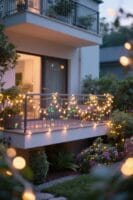
Before beginning, assess the size and shape of the shade sail to determine where strands will have the greatest visual and functional impact. The installer measures spans and apex heights, noting 10–15 ft edges for a standard patio sail, then maps possible routes. Identify nearby power sources within 20–30 ft to avoid long extension cords, and mark GFCI outlets for safety. Plan weaving lights along edges or in a crisscross grid 12–24 in apart for even illumination, integrating existing structures like posts and eaves for anchor points. Use outdoor-rated extension cords and IP65 connectors, weatherproof junctions with silicone and cover boxes, and choose specialty outdoor connectors to link multiple strands safely, minimizing exposed splices and tripping hazards. Adding decorative elements like adhesive Velcro strips can help secure the fairy lights in place along the sail, maintaining the desired pattern and reducing wind disruption.
Choosing the Right Fairy Lights and Fixtures

How should one choose fairy lights and fixtures for use with a shade sail to balance durability, performance, and appearance? Select LED fairy lights for long life, typically 20,000–50,000 hours, and low power draw of 0.05–0.2 W per bulb. Choose outdoor-rated strings, IP65 or higher, to resist rain and dust. Prefer warm white (2700–3000 K) for a soft, cozy glow that flatters fabric and skin tones. Look for adjustable brightness, with at least three levels or a dimmable driver, allowing 10–100% control for mood. Consider solar-powered options, typically 5–10 W panels with 2000–4000 mAh batteries, when outlets are distant. Use copper or PVC-coated wire for flexibility and UV resistance, matching fixtures to the sail’s mounting hardware and color scheme. Solar fairy lights with solar panel conversion efficiencies of 20% or more are preferable for effective charging in outdoor settings.
Recommended Products

MAGICAL LIGHTING: Replacement bulbs for outdoor string lights have never been more magical than with these Novelty Lights C9 LED bulbs. As outdoor string light replacement bulbs, they're not just for Christmas but perfect for creating a warm, inviting atmosphere at weddings, parties, or any outdoor event.

Product 1: WHAT’S IN THE BOX - Includes one Philips Hue 130-foot Festavia string light with 500 individual mini smart LEDs; Perfect for Halloween, Christmas, and any other holidays, it can be used to decorate both indoors and outdoors.

MAGICAL LIGHTING: Replacement bulbs for outdoor string lights have never been more magical than with these Novelty Lights C7 LED bulbs. As outdoor string light replacement bulbs, they're not just for Christmas but perfect for creating a warm, inviting atmosphere at weddings, parties, or any outdoor event.
Mounting Lights on Shade Sail Posts and Edges

When mounting fairy lights on shade sail posts and along edges, a systematic approach makes the installation secure and attractive. Use weatherproof hooks rated for outdoor load, spaced every 18–24 inches to support LED patio lights without strain, and choose corrosion-resistant stainless steel for longevity. Zip ties come to the rescue for temporary holds, but use UV-resistant ties every 12 inches on fabric seams to avoid tearing over time. Wraps around posts can cascade down for a magical evening effect, but keep wiring 6–8 inches from fabric to prevent heat transfer. Select energy-efficient LED strings, 3000K warm white, 2–3 watts per meter, for reduced consumption. Consider using battery operated fairy lights for flexibility and ease of installation, as they do not require a nearby power source. This dual purpose setup supports shade sail installation aesthetics by day and creates an outdoor oasis by night.
Recommended Products

OUTDOOR TV DESIGNED FOR PATIOS & COVERED SPACES: This outdoor TV is built for outside use on patios, decks, and covered porches. Unlike indoor TVs, this outdoor television is weather-resistant and outdoor-rated, perfect as a patio TV.

OUTDOOR TV BUILT FOR FULL-SUN AREAS & PATIOS: Built for reliable outdoor entertainment on patios, decks, and covered porches. Weather-resistant and outdoor-rated, perfect for enjoying movies, sports, or gaming outside.

160-Inch Outdoor Kitchen BBQ Propane Grill Island with Fridge and Wine Cooler - Transform your backyard with our complete outdoor kitchen station featuring 684 square inches of cooking surface, built-in refrigeration, and modular cabinets that arrive pre-assembled for hassle-free setup
Creative Draping and Wrapping Techniques

Drape fairy lights across the sail edges to form a soft canopy that defines the outdoor room. Use LED fairy lights rated IP44 for damp locations, spaced 10–15 cm between bulbs to maintain even glow. Wrap lights around posts every 20–30 cm for stability, securing with zip ties or fabric ties that are UV resistant. For a creative shade sail look, drape in a zigzag pattern across the fabric, keeping sag under 15 cm to avoid wind strain. Try cascading strands 60–120 cm long for a whimsical curtain effect that mimics natural light. In larger outdoor spaces, combine 5–10 m strands in parallel rows to cover 3×3 m zones. Wrapping lights around beams also adds depth and defines pathways. Consider using battery-operated lights like the Suddus 66ft 200 LED Outdoor String Lights for flexible placement without the need for electrical outlets.
Weatherproofing and Safety Best Practices

A few simple precautions make combining fairy lights with shade sails safe and durable. Choose weatherproofing-rated fairy lights and electrical components, labeled IP44 or higher for splash resistance, to handle rain and humidity. Use outdoor area-specific extension cords and connectors, three-prong grounded types, heavy-duty 16 AWG for runs under 50 feet, thicker 14 AWG beyond that. Inspect wiring monthly for frays or damage, replace compromised strands immediately to maintain safety. Elevate connections and power sources off the ground, mount at least 12 inches above grade to avoid puddles during storms. Prefer LED fairy lights, low-heat and energy-efficient, which come to the rescue by reducing fire risk near fabric shade sails. Some models offer remote compatibility for effortless control of lighting modes and settings. Follow manufacturer load limits and use outdoor GFCI-protected outlets.
Recommended Products

【Massive 400 LED Lights – 2.5X Brighter】Standing at 6FT (1.8m) with 400 warm white LEDs – that’s 2.5 times more lights than common 4FT/160-light eucalyptus trees. Creates a rich, cozy glow that fills your space, perfect for living rooms, bedrooms, or outdoor patios where you want real visual impact.

Pathway Lights with Snowflake Design : Dazzling 12-inch snowflakes with 22-inch stakes (Total height around 34 inch), spaced 2.6ft apart along a 16.4ft lead cord. Perfect for creating festive, eye-catching pathways.

The information below is per-pack only
Styling Tips for Different Evenings and Events
For intimate dinners, positioning fairy lights along the outer 6–12 inches of a shade sail creates a soft, focused glow. Use warm white LED strands, 5–10 lumens per bulb, spaced 4–6 inches apart for even coverage. For romantic backyard patio setups, cluster a small section with higher lumen bulbs to highlight a table, leaving surrounding areas dim for contrast. For festive events, intertwine colorful fairy lights and select programmable patterns, 50–200 LEDs per string, to add motion and celebratory ambiance. For casual evenings with friends, mix warm white and multicolored strands across the sail at staggered heights to encourage interaction. For tranquil retreats, place low-voltage, warm-toned fairy lights beneath the sail, dimmed to 10–30% output for a cozy, calming effect. Consider using waterproof options for outdoor settings to ensure durability and longevity in various weather conditions.
Recommended Products

MAGICAL LIGHTING: Replacement bulbs for outdoor string lights have never been more magical than with these Novelty Lights C9 LED bulbs. As outdoor string light replacement bulbs, they're not just for Christmas but perfect for creating a warm, inviting atmosphere at weddings, parties, or any outdoor event.

One-Piece 5MM Commercial Decoration LIGHTS : 600ft 1200 LED Lights (50 Lights 25ft X24Groups), 6-inch spacing. Green wires have a wide range of uses and are perfectly integrated with green plants or shrubs.no extra adapter is needed,bulbs are cool to touch,with the rectifier,keep the light steady (not twinkle).

Frequently Asked Questions
Where Not to Put Fairy Lights?
They should avoid locations under heavy rain, near flammable materials, low seating, high foot traffic, or wrapped tightly around posts. Emphasize outdoor safety, light intensity control, electrical hazards, surface compatibility, distance considerations, location avoidance and permitting issues.
How to Hang Fairy Lights Aesthetically?
Balance symmetry, balance contrast, balance flow: he plans fairy light placement along edges and zigzags, selects color combinations, sketches creative designs and lighting patterns, syncs with outdoor themes and seasonal adjustments, and follows safety tips consistently.
What Goes Well With Fairy Lights?
Garden pathways, outdoor dining, romantic settings, party atmosphere and festive occasions pair well with varying fairy light colors; seasonal themes and decorative accents enrich ambiance, while seating, planters, and textiles complete cohesive, inviting nighttime scenes.
How to Decorate Outside With Fairy Lights?
Use outdoor lighting design tips: string DIY projects, fairy lights along fences and pergolas. For event decoration, fairy lights enhance garden ambiance, romantic meals, festive parties; mix seasonal decor, fairy lights with lanterns and greenery for layered lighting ideas.


