As an Amazon Associate, we earn from qualifying purchases. Some links on this site are affiliate links at no extra cost to you. Our recommendations are based on thorough research and editorial judgment.


How to Calculate the Right Amount of Light Hours for Different Plant Types

To calculate light hours, first find a plant’s target DLI (mol·m⁻²·d⁻¹), which indicates daily photons for photosynthesis. Then measure average PPFD (µmol·m⁻²·s⁻¹) with a meter or app. Convert DLI to PPFD by dividing DLI×1,000,000 by 86,400 to get an average PPFD, or convert PPFD to DLI by multiplying PPFD×86,400 then dividing by 1,000,000. Use examples: seedlings 16–18 h at 200 µmol·m⁻²·s⁻¹, succulents 14–16 h at 400 µmol·m⁻²·s⁻¹, adjust with timers and spectrum, and learn practical tuning tips ahead.
Key Takeaways
- Identify the plant type (low, medium, bright, short-day, long-day) to determine its general photoperiod range.
- Convert target daily light integral (DLI) to average PPFD to set accurate light intensity and duration.
- Use DLI targets: low ~3–4, medium ~10–15, bright ~20–30 mol/m²/day to calculate required hours.
- Adjust hours based on light intensity: longer hours for lower PPFD, shorter for higher PPFD to reach DLI.
- Use timers, full-spectrum light, and monitor plant responses to fine-tune duration seasonally.
Why Daily Light Hours Matter for Plant Health
You may be interested


Although light quality and intensity matter, daily light hours—also called the photoperiod—directly signal plants when to grow, rest, and reproduce. Short-day plants flower with less than 12 hours, while long-day types need more than 12. Seedlings require about 16–18 hours to build strong stems before reduction. Most foliage plants do best with 10–14 hours daily to meet light requirements for plants and support steady plant growth. Duration adjustments depend on species and desired outcomes. Daily light integral (total light over the day) guides how long lights should run to meet DLI targets for flowering crops like tomatoes. Insufficient daily light causes leggy growth and poor health, because photosynthesis cannot supply needed energy, so adjust timing accordingly. Lightweight lawn edgers can help maintain garden aesthetics by precisely trimming edges, which complements the overall health and appearance of plants.
Understanding Light Intensity: PPFD and DLI Explained

When growers need to match lighting to plant needs, two measurements come to the rescue. PPFD measures the amount of light in µmol/m²/s that hits a plant, showing instant light intensity available for photosynthesis. DLI adds those seconds into a daily total, reported as mol/m²/d, indicating cumulative light a plant receives over 24 hours. Low light indoor plants often need about 3–4 mol/m²/d. Sun-loving species, such as fiddle leaf figs, may require 20–30 mol/m²/d. To plan light hours, convert target DLI to an average PPFD and divide by 1,000, then multiply by seconds of exposure. Understanding both values aligns light levels with plant needs for predictable growth outcomes. Many growers find energy-efficient LED grow lights to be beneficial, as they provide minimal electricity consumption while ensuring the proper light intensity needed for healthy plant growth.
Recommended Products

Features Samsung LM301H EVO LEDs each rated at 3.14 µmol/J PPE, the highest efficiency of LM301B, LM301H, and Bridgelux 3030 chips.

DR BRUCE BUGBEE: Apogee DLI PAR meters have been designed and refined by Dr. Bruce Bugbee, a world-famous crop physiologist
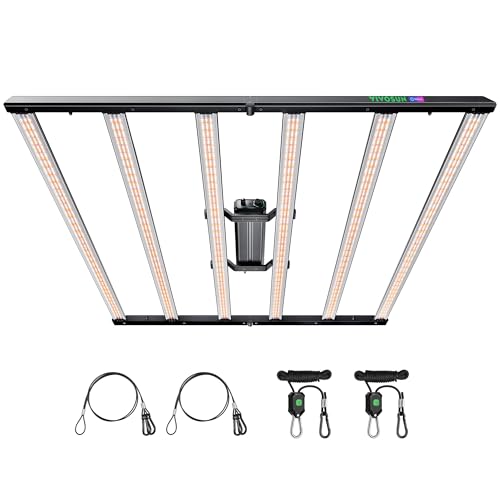
Even, Powerful Light for Full Tent Coverage: The scientifically-arranged light-bar matrix delivers uniform light across the entire canopy; With up to 0.89 uniformity, it reduces hot spots, giving every plant consistent light from edge to edge, ideal for large, high-yield grow setups
Measuring Your Available Light: Tools and Apps
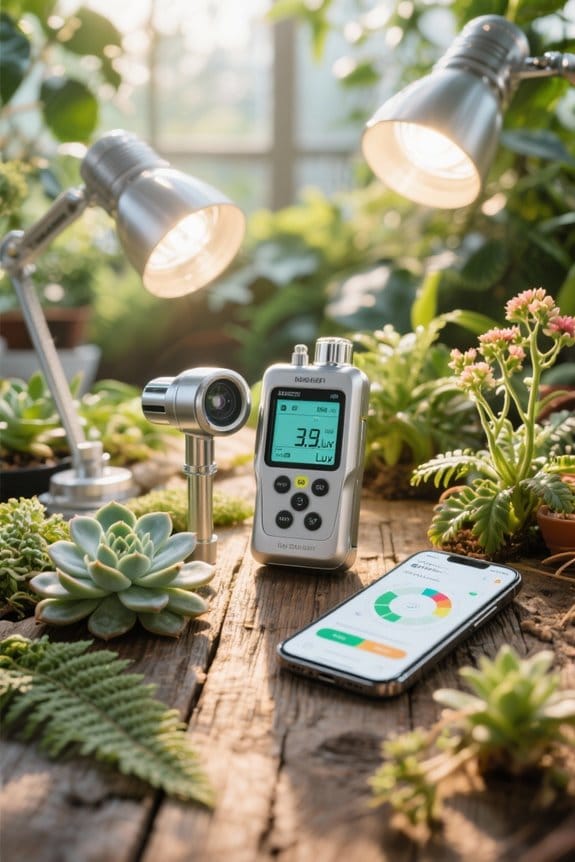
After calculating desired DLI and average PPFD, evaluating the actual light in a room is the next practical step. Use a light meter such as an LTH Meter to measure light intensity in foot-candles (FC) or lux, a clear numeric readout for placement decisions. Smartphone apps like Photone come to the rescue for quick checks, though dedicated meters are more accurate for technical work. Record readings across the day to aid monitoring natural light and track seasonal shifts that change available light. Note that under 100 FC is minimal, 100–400 FC is medium, and 400+ FC is high indirect light. Include artificial lighting measurements too, and log results to compare light conditions over time. For accurate indoor gardening, consider using full spectrum coverage LED grow lights to ensure plants receive the necessary light for all growth stages.
Recommended Products

Ultimate Tool for Color Control: The Spectrometer C-7000 is a portable handheld spectrometer, designed especially for industrial use, at home in any lighting designer’s firm or engineering lab, It provides an extensive selection of measuring modes for every application. Utilizing Sekonic’s CMOS linear image sensor design and software, the color light meter can measure every light source like LED, HMI, Fluorescent, Flash, & Natural Light spectrum with remarkable precision and data feedback.

PRECISE LIGHT MEASUREMENT: Advanced light meter measures up to 400,000 lux or 40,000 foot candles with ±(3% + 0.5% fs) accuracy for reliable results.

PRECISE MEASUREMENT: Accurately measure visible light levels in lux or foot-candles with a wide range from 0 to 400,000 lux. Ideal for industrial, environmental, and photography applications.
Matching Light Hours to Plant Types

Matching light hours to specific plant types begins with categorizing species by their light needs and translating those needs into hours and DLI (Daily Light Integral). Low light plants, like ferns and prayer plants, generally do well with about 10–12 hours and a DLI near 3–4 mol/m²/day. Medium light species require intermediate care, typically 12–14 hours and roughly 10–15 mol/m²/day, which balances growth without stress. Bright light or sun-loving plants such as succulents need 14–16 hours and a DLI of 20–30 mol/m²/day for ideal photosynthesis. Flowering plants differ; some long-day bloomers need extended photoperiods of 14–16 hours, while short-day types may perform best at 10–12 hours. Adjust to provide the right amount as plants mature. Full spectrum grow lights offer energy-efficient lighting options that can be adjusted to meet the varying light requirements of different plant types, ensuring optimal growth conditions.
Recommended Products

PREMIUM Foldable 1500W- LED lights specialty manufactured by Sinowell with Samsung LM301 diodes for FULL spectrum light, ideal for ALL STAGES of growth. Large 48x48 footprint for the best light spread and prenetration. Silent functions mean that no fans cause noise pollution in your home. 1500w output incentivizes low cost for the home and runs 50% less energy than “blurple” and other leading LEDs. UL, CE, ETL Certificated.

🌞 TRUE SUNLIKE SPECTRUM – The first LED grow light engineered to replicate a real CMH-style sunlight spectrum. Balanced White, Green, Dual Red (640nm + 660nm), Far Red, and optional UV deliver unmatched canopy penetration and plant performance.

Features Samsung LM301H EVO LEDs each rated at 3.14 µmol/J PPE, the highest efficiency of LM301B, LM301H, and Bridgelux 3030 chips.
Seedlings, Vegetative Growth, and Light Duration

Choosing the right light hours shifts as plants move from seed to mature stages, since seedling and vegetative needs differ from those of flowering or low-light specimens. Seedlings typically need about 14-16 hours of light per day to establish strong roots and leaves, which promotes a healthy plant. During vegetative growth, increase light duration to 16-18 hours daily to support leaf and stem development, using high quality LEDs or full-spectrum lamps for consistent intensity. Natural light can work, but monitor duration and supplement artificial light when daylight falls short. Watch for stretching; tall, spindly growth signals insufficient light duration or intensity. Adjust schedules in 1-hour increments and record responses, then choose the cycle that yields compact, vigorous vegetative growth before shifting to flowering. Consider energy-efficient designs like LED grow lights to minimize power consumption while maintaining the necessary light intensity for optimal plant growth.
Flowering and Fruiting: Adjusting Hours for Blooming
When plants move into flowering, light schedules become a critical trigger for bloom cycles. Flowering plants like tomatoes and orchids generally need 12–16 hours of light per day to bloom reliably. Short-day species, such as chrysanthemums, require less than 12 hours and need uninterrupted darkness to initiate flowering. Long-day herbs benefit from extended light, sometimes up to 18 hours, to stimulate blooms. Fruiting plants often need increased light hours during the vegetative stage, typically 16–18 hours, to build foliage and yield. Growers should monitor and adjust light exposure based on observed responses, using timers for consistent schedules. Full spectrum grow lights mimic sunlight wavelengths, enhancing photosynthesis and supporting optimal plant growth at all stages. Track specific light duration targets, note plant behavior, and modify hours incrementally to optimize both blooming cycles and fruit production.
Translating DLI Targets Into Daily Light Hours
A clear calculation turns a DLI target into actionable daily light hours. To convert daily light integral (DLI) into light hours, divide the DLI (mol/m²/day) by average PPFD (µmol/m²/s) adjusted to seconds, giving hours needed. For example, 15 mol/m²/day equals 15,000 µmol/m²/day; divide by 300 µmol/m²/s × 3600 to get about 14 hours. Low-light plant types, like ferns, often need 3–4 mol/m²/day, which can mean 6–8 light hours at moderate PPFD. High-light plants, such as succulents, may require up to 30 mol/m²/day, equating to roughly 12–16 hours. Regular PPFD measurement of photosynthetically active radiation guarantees calculations match real light exposure, come to the rescue when theory diverges from reality. Waterproof grow lights are ideal for maintaining optimal light conditions in moisture-heavy environments, ensuring plants receive consistent lighting without damage from humidity.
Using Timers and Schedules for Consistent Light Delivery
Although timers are simple devices, they come to the rescue by automating precise light schedules for plants. Timers reduce human error. Set daily light duration to match plant requirements; most plants need 12–16 hours. For short day plants, program 10–12 hours; for long day plants, 14–18 hours. Adjust seasonally, extending winter cycles by 1–3 hours when natural daylight drops. Use digital timers with minute resolution and battery backup for reliability. Monitor plant responses: yellowing suggests insufficient light, leaf burn indicates excess. Record each species’ photoperiod and placement, noting seedlings and flowering plants often need closer lights and longer exposure. Regularly verify schedules and power stability, to maintain consistent light schedules for ideal growth and sound plant care. To ensure energy efficiency, choose LED grow lights that cut electricity costs significantly compared to traditional lighting systems.
Recommended Products

Kit Included: 60"x60"x80" Grow Tent; Bar LED Grow Light 645W; 8" AeroZesh G8 Fan; GrowHub E42A Controller; 6" AeroWave E6×2; 8" Black Carbon Filter; 8" Prefilter; 8" 25ft Ducting; 8" Clamp×2; 5*5ft Trellis Net; 5Gal Black Grow Bag×10; 8" Vent Cover×2; Pruning Shears; 100m Twist Tie; Sticky Trap×20; Plant Tag×20; Hook & Loop Cable Tie×10; 5 ft Aluminum Ducting Tape; Gardening Gloves; Rope Hanger×2

Impact Resistant Structure: G-SHOCK's core technology for toughness and impact resistant construction protects modules with a unique uneven shape that prevents direct impact to the glass and buttons

Innovative halo design produces uniform coverage and deeper light penetration to maximize plant yields.
How Light Quality (Spectrum) Influences Hour Needs
Timers help keep hours consistent, but light quality also changes how many hours plants actually need. Different species respond to specific light spectrum ranges; blue (400–500 nm) aids vegetative growth, red (600–700 nm) triggers flowering and fruiting. Growers match spectrum to the plant to grow, reducing unnecessary duration (photoperiod). Full-spectrum lamps mimic sunlight, improving photosynthesize efficiency and often lowering required hours. Low-light ferns may thrive with 8–10 hours under balanced spectrum. Succulents and tomatoes need 12–14 hours, with some UV boosting pigment and hardiness. Poor light quality forces longer hours to compensate. Choose artificial grow lights with stated spectrum charts and PPFD values, run timers for precise photoperiods, and adjust hours based on observed growth and leaf response.
Compensating for Low Natural Light With Supplemental Lighting
Supplemental lighting comes to the rescue when natural light falls short for indoor plants. Choose a suitable light source, full-spectrum LED lights are recommended because they provide red and blue wavelengths needed for flowering and leaf growth. Many plants require 12–16 hours daily; use timers to set a consistent photoperiod that matches species needs. Seedlings often need 10–15 mol/m²/day, while fruiting plants may need 20–30 mol/m²/day, so adjust duration and intensity. Position lights 4–6 inches above seedlings, and keep larger plants 12–24 inches away to avoid burn while delivering bright light. Track signs like yellowing or burn, and change height, duration, or type of supplemental lighting accordingly for steady growth.
Recommended Products

IP65 Water Resistant Rating: Features IP65 water resistant rating to protect the LED system from moisture and dust in grow environments

【Maximize Yield & Crop Quality】The GP-4800 LED grow lights adopted with upgraded Samsung 281B ProVL & Osram 660nm chips in 6 passive-cooled led bars, professional SMD design offers even and broad canopy coverage, higher light intensity, less light decay. It's easily to achieve Max 2.9g yield per watt with 30% higher average PPFD, and boast the incredible high efficiency 2.9 µmol/J. Total 2016pcs LEDs consume 480W only over 4x4ft planting area, smaller footprint for better crop quality&quantity.
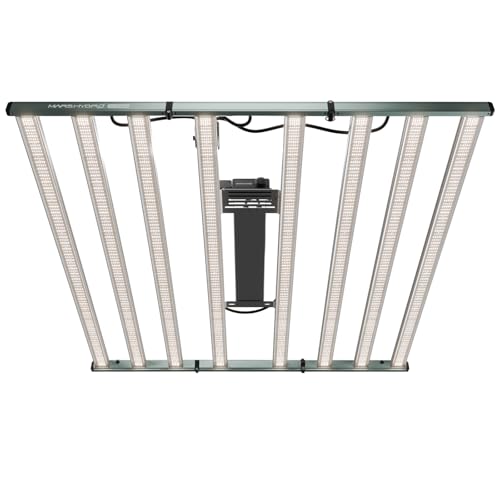
PRO PERFORMANCE & YIELD: Powered by premium Bridgelux 3030 diodes to deliver an impressive 2.9 μmol/J PPE. This high-efficiency 1000W grow light enhances par output, drives bud weight & increases overall crop density for indoor growing.
Monitoring Plant Responses and Fine-Tuning Light Hours
When plants show changes in growth or leaf color, regular monitoring helps pinpoint whether light hours are the cause. Use a log to monitor plant growth daily, noting stretch, leaf yellowing, and flowering onset, which indicate insufficient or excess photoperiod. Measure light levels with a light meter or app, recording PPFD or lux and converting to DLI (Daily Light Integral) to match plant type requirements. Make small light duration adjustments, for example 1–2 hours increments for seedlings or 2–4 hours for mature leafy greens needing 12–16 hours. Track responses over two weeks after each change, comparing stages and documenting correlations. Short day or long day species need tailored cycles, so adjust photoperiods while maintaining consistent intensity.
Common Mistakes When Setting Light Hours and How to Avoid Them
After observing plant responses and adjusting light hours, attention must turn to common setup errors that undermine those efforts. One common mistake is ignoring seasonal changes, plants need more light in winter when daylight shortens, and less in summer when days lengthen. Another is failing to match species requirements; low light levels plants like ferns need 6–10 hours, succulents often need 12–16 hours. Overestimating light duration causes stress, African violets bloom best under a maximum of 14 hours. Neglecting to monitor growth signs such as legginess or pale leaves prevents timely adjust light hours. Erratic schedules disrupt the photoperiod; timers come to the rescue, they provide consistent light exposure to stabilize flowering and growth.
Frequently Asked Questions
How Many Hours of Light Do My Plants Need?
Low-light plants need about 6–8 hours; medium-light 10–12; high-light and flowering types 12–16. Consider light intensity, plant types, growth stages, seasonal variations, indoor gardening, light spectrum and appropriate artificial lighting adjustments.
How Far Should a 300 Watt LED Grow Light Be From a Plant?
Like Icarus warned, a 300-watt LED light should sit about 24–36 inches from the canopy; adjusting LED light distances for seedlings (12–24 inches) balances ideal height, light intensity, heat management, plant growth stages, light spectrum, wattage conversion.
How Do I Know How Much Light My Plants Need?
Determine required light by matching plant photoperiod sensitivity and growth stage: assess natural sunlight, choose appropriate grow light types and light spectrum, monitor plant growth, adjust hours with timers, and use light deprivation for flowering control.
Is 10,000 Lumens Too Bright for Plants?
10,000 lumens can be too bright for some plants. Lumens definition noted, but plant sensitivity, light spectrum, growth stages, light sources, energy efficiency and ideal brightness determine suitability; measurement with PAR/PPFD guides proper adjustment.


